-
Topics
TopicsOur programs create spaces where open-minded leaders can gather for breakthrough conversations on pressing global issues – each aligned to one of the following pillars:Get Involved
-
Events
EventsExplore the variety of events Salzburg Global hosts within Austria and in the rest of the world. Learn more about our programs and what else happens at Schloss Leopoldskron.Upcoming EventsSep 06 - Sep 11, 2026EducationA Tale of 2000 Days: New Partnerships in Early ChildhoodEducation for Tomorrow's WorldOct 05 - Oct 07, 2026Finance & GovernanceA Multipolar & AI-Driven World: Are New Approaches Needed To Preserve Profit and Public Trust?Salzburg Global Corporate Governance Forum
- Insights
-
Fellowship
FellowshipSince 1947, more than 40,000 people from over 170 countries have participated in Salzburg Global's sessions. Collectively, these alumni are known as Salzburg Global Fellows.
-
About Us
About UsSalzburg Global is an independent, non-profit organization committed to creating spaces that overcome barriers and open up a world of better possibilities.Our Approach
-
Support Us
Support UsYour generosity helps us gather open-minded leaders for breakthrough conversations, while creating space for dialogue that overcomes barriers and opens up a world of better possibilities.
- Donate

- Published date
- Written by
Share
Health
Feature
Navigating the Noise: How the Digital Information Environment Shapes Our Health
Published date
Written by
Share
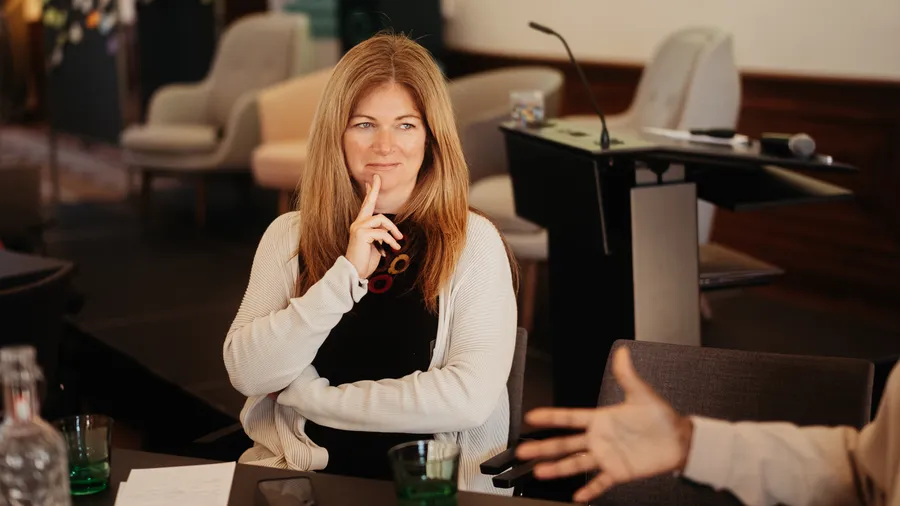
Dr. Becky White at Salzburg Global in October 2025. Photo Credit: Richard Schabetsberger
Key takeaways
- Health information is shaped by systems, not just individual choice. What people see and trust online is heavily influenced by algorithms, platform moderation, governance, and digital infrastructures - systems driven more by commercial incentives than public health needs.
- Infodemics make decision-making harder, especially during uncertainty. During acute health events like COVID-19, an overload of accurate information, conflicting guidance, and misinformation creates confusion.
- The information environment is a determinant of health. Access to trustworthy health information is intertwined with social, economic, and structural factors; people with lower education, lower health literacy or lower socioeconomic status may be more vulnerable to misinformation, underscoring the need for coordinated, equity-focused approaches to create healthier information environments.
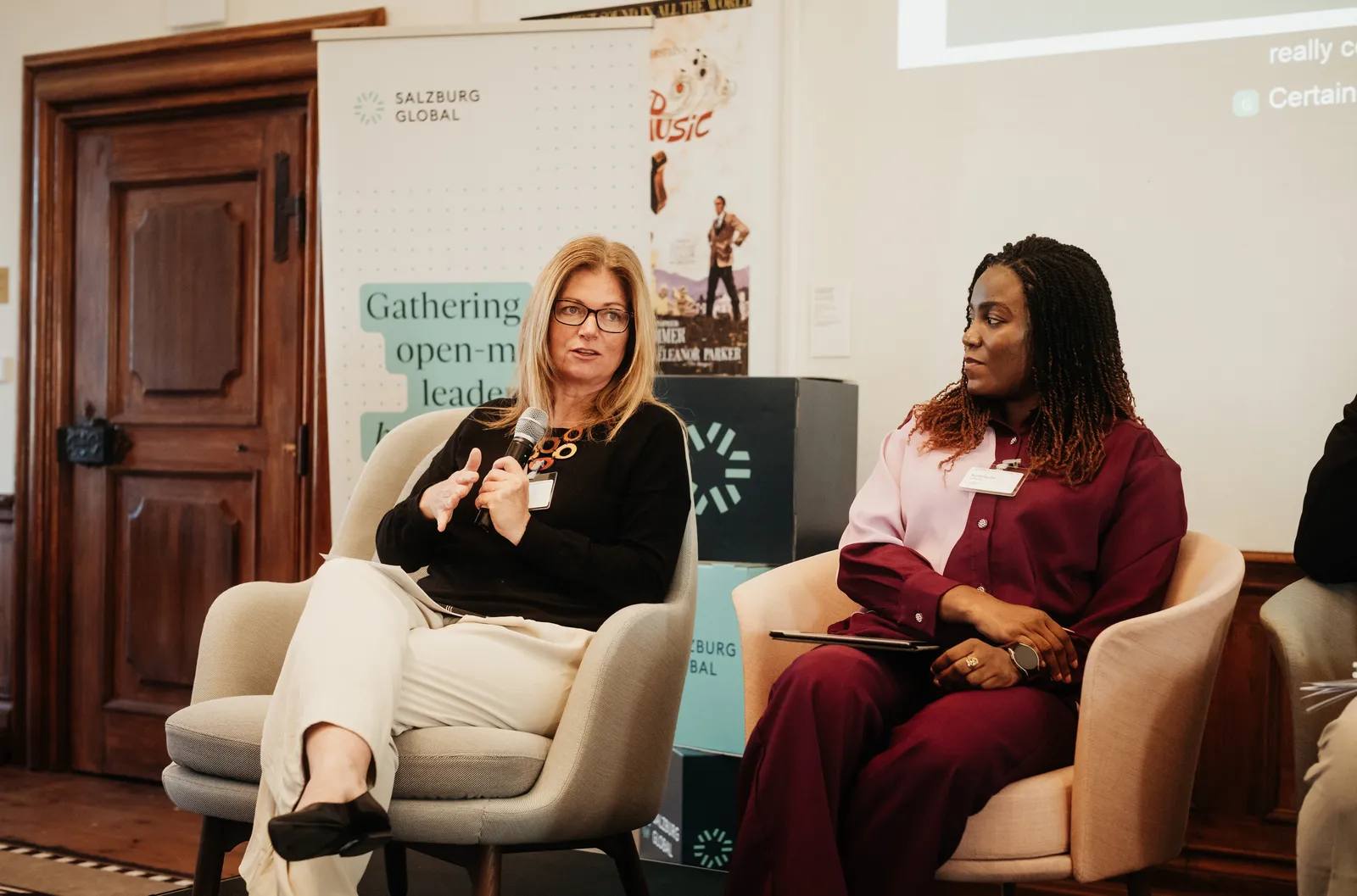
Dr. Becky White is a consultant and researcher in health promotion, digital health, and infodemic management. Dr. White has worked extensively with national and global stakeholders, including as part of the global COVID-19 response, researching information trends over the course of the pandemic, and vaccine-related narratives and misinformation. At the recent session, “Transforming Information Pathways for Health, Well-Being and Equity,” she spoke to Salzburg Global Fellow Kitty Eisele about the challenges of navigating health information.
This interview has been edited for brevity and clarity.
Kitty Eisele, Salzburg Global Fellow: What factors influence how people navigate health information today?
Dr. Becky White: When we talk about the different ways of reaching people, about transforming information pathways, it's important to understand that there are lots of factors that impact how an individual navigates their information environment. So, things like information seeking - how they look for information, how they exchange information, or how they create information - those are really important factors. But if we look beyond that, we can look at some of the supporting structures like governance, digital infrastructure, freedom of press, all of these surrounding things which impact an individual and the information environment.
What we have seen in the last while is this exponential growth in digital communication. And when we think about how digital technology, digital information is structured - platform moderation, algorithms, the use of AI - these things are all economically driven, not driven by public health.
And those are the things that impact what we see when we search for health information and what surfaces for us, what we trust and what we see. Because if I search for information on a certain virus and you do the same thing, we will have different answers, because our algorithms will give us different information. It's a real change that we've seen in the information environment.
KE: Can you say more about what an “infodemic” is?
BW: An infodemic is defined as the overabundance of information, accurate and otherwise, that accompanies an acute health event. We saw it a lot during COVID-19. It's where there's just too much information and people are really struggling to find answers. They might be wading through confusing information, conflicting information, and also misinformation. And it makes it really difficult for people to navigate and find what they need to keep themselves and their families healthy.
I've worked on infodemic management projects for the last few years, and more recently, doing research in Australia, looking at breastfeeding and the COVID-19 vaccine, looking at digital narratives.
And it's really interesting, for breastfeeding women, the introduction of the vaccine was really challenging because it happened really quickly and breastfeeding women weren't included in those initial clinical trials, which is normal, but it meant that there was this big information void.
So, women were trying to make decisions about what the best thing for themselves and for their babies was, on kind of a lack of information. And it occurred in a time when there was just so much information. At one point, we had the UK and the U.S. giving different recommendations for breastfeeding women. And trying to navigate that with all of the other stress just makes it really difficult, I think, for people to find what they need.
KE. Did you help create policy around that, or create guidelines for it?
BW: No, it was a research project, so we were just looking at how the narratives formed and moved over time in relation to key milestones. We did issue recommendations in the paper, but no policy. We were doing digital social listening, so looking at how people were talking about the vaccine on social media. And we call it a narrative when you're pulling, almost like a thematic analysis, you're pulling different pieces of digital intelligence together and seeing the narrative or theme that's emerging. So rather than just looking at individual pieces, you look at a broader sense of what people are talking about.
And there were common themes, themes of confusion, of concern. And it was interesting as we moved on, because we looked over a 13-month period, and then the vaccines did become available and we had a COVID-19 outbreak in Australia, so women started being vaccinated.
And then we had narratives kind of change – with narratives of pride and real happiness of being able to offer their infants some protection through their breast milk, which was a lovely change to watch over time.
But I think it really highlighted how complex the information environment is and how many different things people are navigating when they're trying to make those health decisions and find the information they need.
KE: What excites you about this work?
BW: What's exciting about the work is the potential, and the energy that people have. This field isn't new, but I think the experience that we had during the COVID-19 pandemic was so global and so universal and so fast that it really seemed to galvanize a lot of work and energy in this space, a lot of which is still going.
And it's exciting seeing new initiatives come up and lots of new thinking, new government policies, and everyone's got different ways of tackling it, which is really appropriate because countries and communities have different experiences of the information environment. But altogether, I think the excitement is in the energy to work together to create better information environments.
KE: What challenge is this moment presenting?
BW: Globally, we're seeing more instances of polarization in communication, in values, and in the way people think and interact. I think that can be a challenge in the information environment because we might navigate to one side of information or it might put up barriers around the ways that we engage and find health information.
I do think the polarization mixed with the influence of digital channels is making it more complex.
KE: What do you hope people leave this Salzburg Global session thinking about?
BW: As the impact of the information environment on public health is becoming more understood, there's been more call in the literature for an information environment to be a determinant of health. That's because it's a really complex phenomenon that impacts other health determinants and is also impacted by other health determinants. It impacts what we can see, how we experience information, but it's also shaped by the social determinants.
People with lower education, lower health literacy, or lower socioeconomic status may be more likely to be impacted by misinformation. Underlying all of that are those social, commercial, and structural determinants.
All of that put together helps give the context of how an information environment is complex. Working together and finding ways that we can navigate it and work towards making it a healthier information environment is really important.
There's such a broad range of factors that impact how people access information, how they understand it, how they share it, and how they create it. Looking really broadly at some of those can give us really good indications of where we might be able to define actions which might make it a healthier information environment.
Support for this program was provided by the Robert Wood Johnson Foundation. The views expressed here do not necessarily reflect the views of the Foundation.