
-
Topics
TopicsOur programs create spaces where open-minded leaders can gather for breakthrough conversations on pressing global issues – each aligned to one of the following pillars:Get Involved
-
Events
EventsExplore the variety of events Salzburg Global hosts within Austria and in the rest of the world. Learn more about our programs and what else happens at Schloss Leopoldskron.Upcoming EventsSep 06 - Sep 11, 2026EducationA Tale of 2000 Days: New Partnerships in Early ChildhoodEducation for Tomorrow's WorldOct 05 - Oct 07, 2026Finance & GovernanceA Multipolar & AI-Driven World: Are New Approaches Needed To Preserve Profit and Public Trust?Salzburg Global Corporate Governance Forum
- Insights
-
Fellowship
FellowshipSince 1947, more than 40,000 people from over 170 countries have participated in Salzburg Global's sessions. Collectively, these alumni are known as Salzburg Global Fellows.
-
About Us
About UsSalzburg Global is an independent, non-profit organization committed to creating spaces that overcome barriers and open up a world of better possibilities.Our Approach
-
Support Us
Support UsYour generosity helps us gather open-minded leaders for breakthrough conversations, while creating space for dialogue that overcomes barriers and opens up a world of better possibilities.
- Donate

Our Sustainability Journey
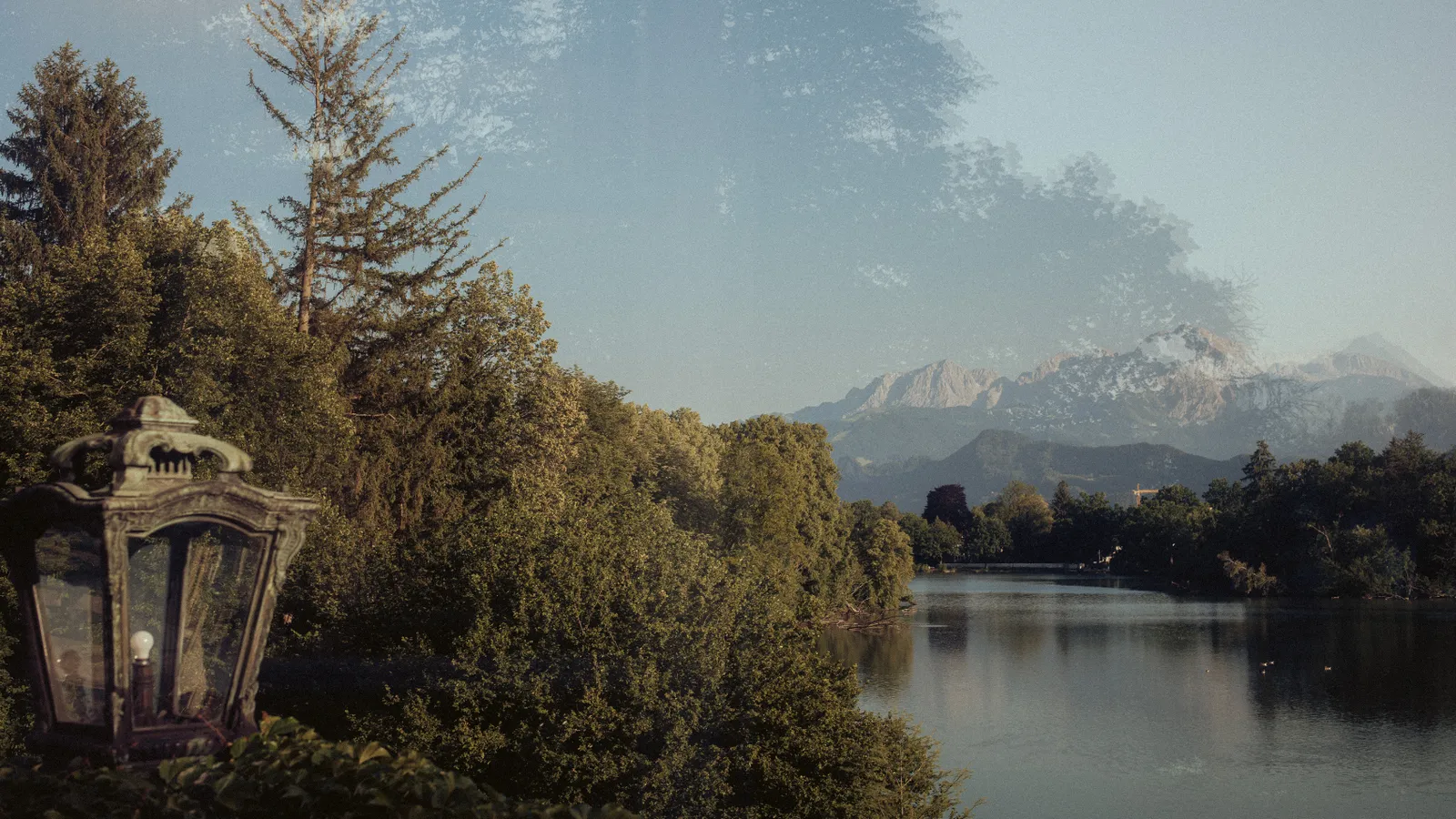
Proven since 1736. Recognized since 2026.
After eighteen months of preparation and a comprehensive independent audit, Schloss Leopoldskron was awarded the Austrian Ecolabel this year. The certification confirms that a 300-year-old historic landmark and modern environmental responsibility are not mutually exclusive, but mutually reinforcing.
The Austrian Ecolabel
The Austrian Ecolabel is awarded by the Federal Ministry for Climate Action and remains one of the few quality seals administered as an official state certification mark. Unlike many other labels, it certifies the entire operation rather than a single product or measure, covering energy and water consumption, waste, procurement, mobility, and the preservation of the historic building. An extensive catalogue of criteria is reviewed on site by independent auditors before certification is granted. The label is valid for four years, after which a new audit is required.
For our guests, fellows, program partners, and the institutions that meet at Schloss Leopoldskron, this replaces self-declared claims with independently verified facts. For us, it provides a framework that commits us to treating sustainability not as a one-time initiative but as an ongoing operational standard.
Sustainability in a Historic Landmark That Is Not a Museum
Schloss Leopoldskron is not a static museum but a historic property in daily use: home to Salzburg Global Seminar since 1947 and operating as a hotel since 2014. This is precisely what makes certification particularly challenging.
Many standard ecolabel criteria are based on options available only in modern buildings, such as replacing windows, fully insulating facades, or upgrading heating systems to current standards. Such solutions cannot simply be applied to stucco ceilings, frescoes, and protected historic fabric. The ecolabel guidelines explicitly recognize this and allow exemptions where compliance is demonstrably impossible due to heritage protection requirements.
Throughout the certification process, one key insight was repeatedly confirmed: preserving, maintaining, and continuously using a nearly 300-year-old building is itself one of the most effective forms of resource conservation. Preservation is the most original form of sustainability.
Measures
What began as individual sustainability initiatives has evolved through the work of our internal Sustainability Task Force into a concrete action plan. Supported by strong commitment and extensive expertise, including external advisors, these efforts have now been brought together within a verified and binding framework that is visible to everyone who enters the property and guides our actions every day.
Infrastructure Measures (including):
- Conversion of the heating systems in the Meierhof and the Palace from oil/gas to district heating
- Installation of a photovoltaic system (total output in 2025: 7.96 MWh) and two heat pumps
- Expansion of charging infrastructure for electric cars (5 charging points), e-bikes and e-scooters (10 charging points)
- Creation of two new garden areas featuring native, bee-friendly and insect-friendly plants, as well as 12 fruit trees
- Reforestation and annual tree planting within the palace park
Operational Measures (including):
- Revision of guest communications with a strong focus on the responsible use of energy, water, and resources
- Emphasis on a paperless office approach
- Restructuring of waste management with a focus on waste separation and reduction
- Introduction of refillable guest amenities in rooms and suites, partly organic-certified
- Implementation of sustainable procurement processes
- Greater focus in the palace kitchen on regional and seasonal organic products (30% organic share) as well as vegetarian and vegan dishes
- 100% of the honey served at the property is produced in the palace park
Every measure we implement demonstrates that historic heritage and environmental responsibility are not mutually exclusive but can create mutual benefits.
“Preserving a historic house means reimagining it for the future. The Austrian Ecolabel is the next step in a task that will never truly be completed at Schloss Leopoldskron.”
- Daniel Szelényi, Head of the Sustainability Task Force, Schloss Leopoldskron
A Continuing Story of Preservation
From Max Reinhardt’s decades-long restoration efforts to systematic object conservation and today’s Conservation Masterplan, preservation has always been a long-term, multi-generational undertaking at Schloss Leopoldskron. The Austrian Ecolabel brings this tradition together for the first time within a formal, independently verified framework, recognizing the preservation of historic fabric and the responsible use of resources as a shared responsibility.