-
Topics
TopicsOur programs create spaces where open-minded leaders can gather for breakthrough conversations on pressing global issues – each aligned to one of the following pillars:Get Involved
-
Events
EventsExplore the variety of events Salzburg Global hosts within Austria and in the rest of the world. Learn more about our programs and what else happens at Schloss Leopoldskron.
- Insights
-
Fellowship
FellowshipSince 1947, more than 40,000 people from over 170 countries have participated in Salzburg Global's sessions. Collectively, these alumni are known as Salzburg Global Fellows.
-
About Us
About UsSalzburg Global is an independent, non-profit organization committed to creating spaces that overcome barriers and open up a world of better possibilities.Our Approach
-
Support Us
Support UsYour generosity helps us gather open-minded leaders for breakthrough conversations, while creating space for dialogue that overcomes barriers and opens up a world of better possibilities.
- Donate

- Published date
- Written by
Share
Health
Where Art Meets Insight: Reimagining Health Information Pathways
Published date
Written by
Share
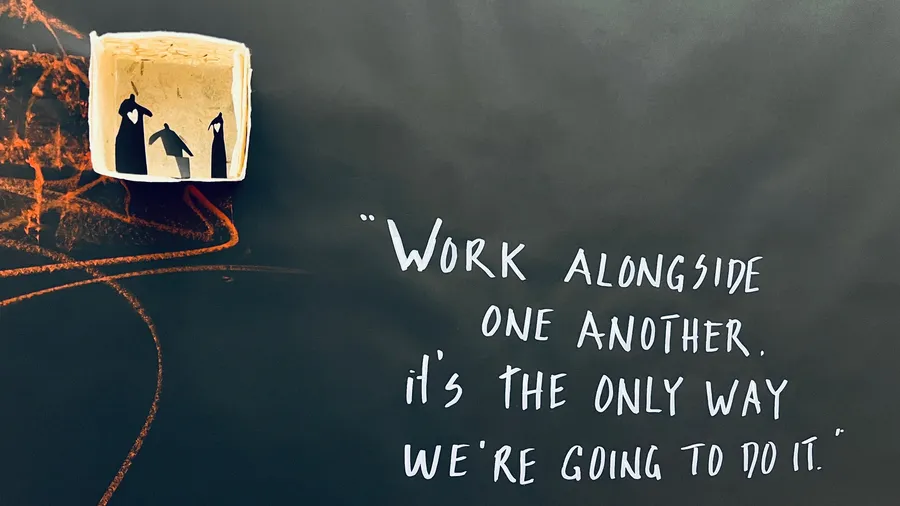
Illustration by Déline Petrone for Salzburg Global
This photo essay was written by Salzburg Global Impact Fellow Adriane Aguayo, who participated in the session on “Transforming Information Pathways for Health, Well-Being, and Equity.”
The following reflections are shaped by the dialogue and debate from the Salzburg Global session on “Transforming Information Pathways for Health, Well-Being, and Equity,” as well as by the generative drawings of Salzburg Global Fellow Déline Petrone, which she created in real time throughout the discussions. These renderings offered a parallel form of meaning-making – one that surfaced how we, as leaders working across sectors and regions, collectively approached the challenge of reimagining information pathways.
Déline's approach of generative scribing follows conversations as they unfold. Rather than documenting key points and conclusions, it attends to the process - paying attention to how ideas emerge, how energy shifts in the room, and how people relate over time. Through drawings, she captured moments of curiosity, hesitation, connection, and change. The results are not a fixed record, but a living reflection of collective thinking - one that lingers with uncertainty and transition, allowing meaning to surface gradually rather than forcing resolution.
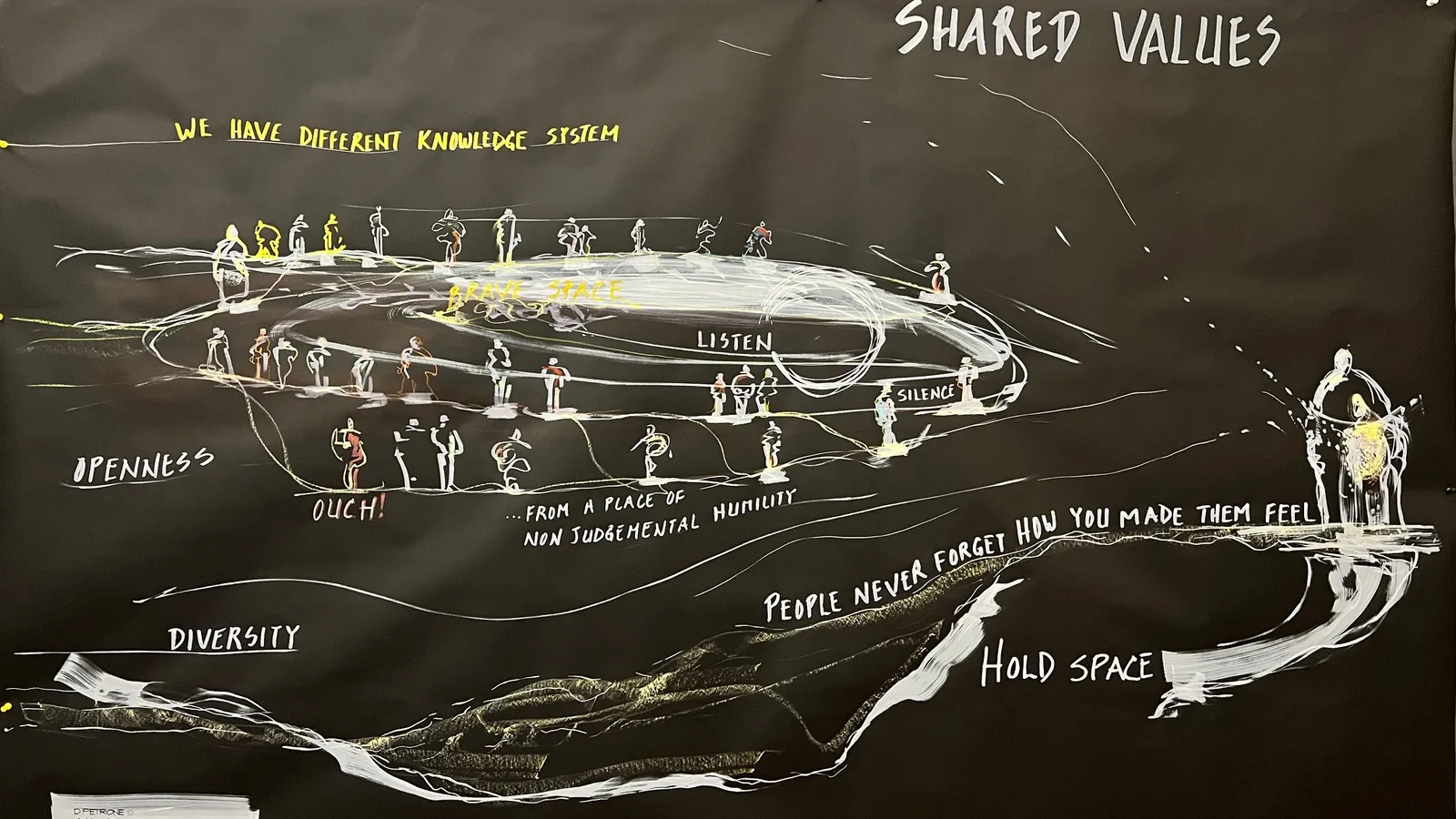
The Salzburg Global Session brought together leaders and innovators from different regions and sectors with a shared purpose: to reimagine how health information becomes meaningful, accessible, and trustworthy, especially for those historically marginalized. The program opened with a dedicated discussion on shared values and agreements - a space intentionally set aside to articulate how we as Fellows intended to work together as a team over the course of the week.
As the conversation developed, Déline’s drawing began to take shape. In the image above, figures appear at different distances, each representing a distinct knowledge system. Diversity is visible not only in who is present, but in how experience, expertise, and lived reality are held. Listening becomes an active posture. Silence is not a pause to be filled, but a space that allows meaning to surface.
Déline explained that her generative drawings emerge through full connection with the room’s energy. As she moved through the space, she listened to the words and how they land in the body: in breath, posture, small shifts of movement, and moments of quiet.
What stood out was a shared willingness to be vulnerable. People spoke thoughtfully, aware that contributing to more equitable information pathways requires acknowledging uncertainty as much as expertise. The space being formed was not about performance or consensus, but about responsibility - to hold space in different ways of knowing before attempting to connect with the group.
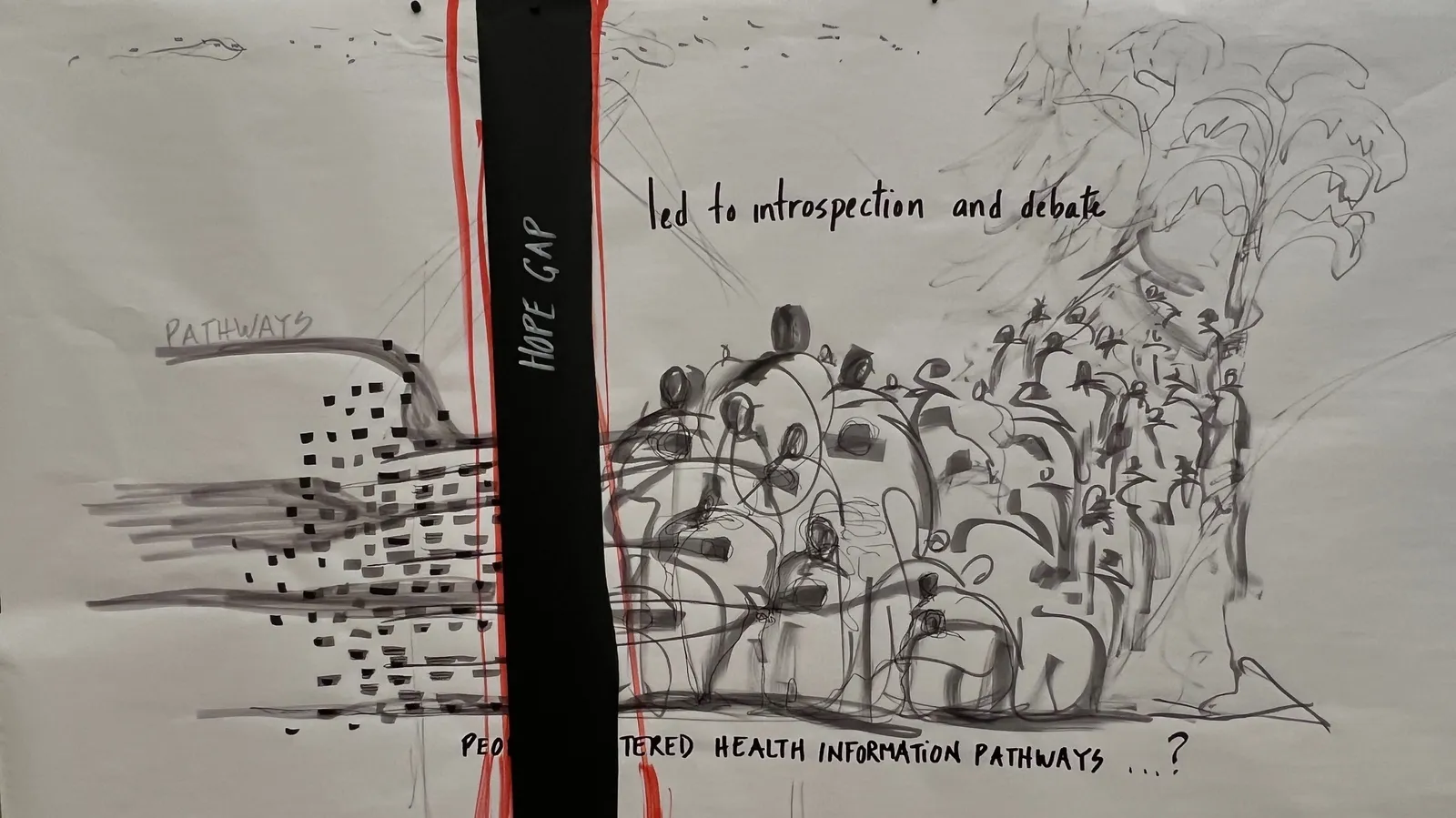
In an initial “Setting the Scene” discussion, the program turned to a planned moment of reflection on the disconnect many communities experience between what they hope for and what they believe is achievable. This moment created space for us, as leaders working toward health and equity, to step back and reflect on our own mindset about systems change. Work by the BLIS Collective refers to this disconnect as the “Hope Gap.” People may support change yet remain uncertain that institutions can deliver it. The issue is rarely a lack of interest - it is whether the path from information to action feels feasible within people’s circumstances.
Déline’s drawing on the discussion gives belief a spatial form, placing it as a threshold that shapes movement. Multiple pathways appear, tracing different points of entry shaped by context, experience, and access. At the center of the drawing, a black vertical column, representing the Hope Gap, cuts through red lines and interrupts the flow of the pathways – this shows how our inability to see possibility into the future inhibits the positive change we seek to achieve. The column marks a threshold, a place where movement slows before it can continue. It brings into focus an early obstacle, one that sits between intention and action, where doubt, history, and expectation gather before belief takes hold.
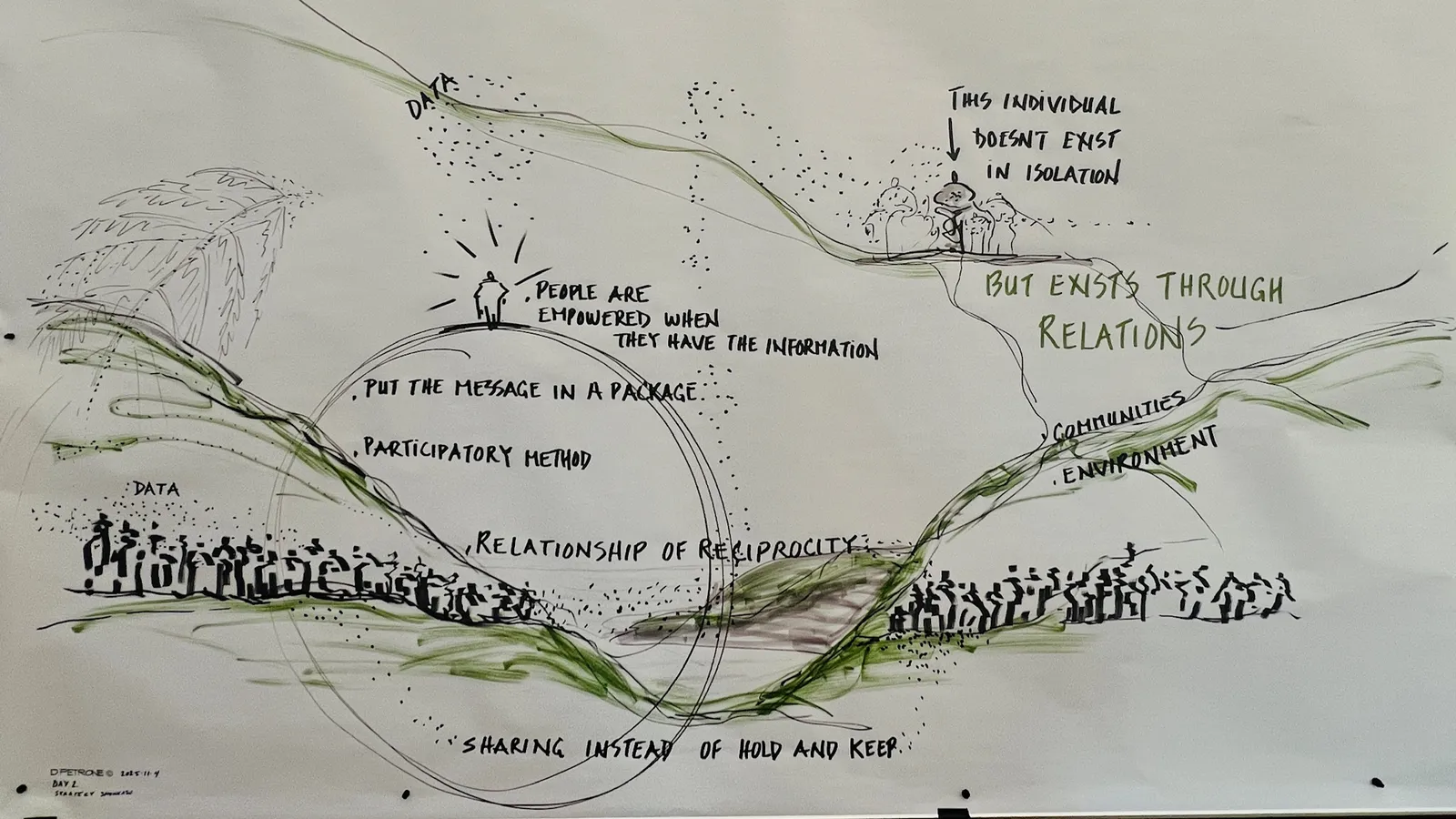
The next day moved leaders from shared reflection to close examination of how information systems function in practice. It then shifted into strategy showcases and discussions, where concrete examples from different regions showed how health information travels through data systems, media, governance structures, and communities.
Déline’s drawing reflects this new focus: layered environments shaped by community, context, and the flow of data around them. Information emerges from the ground of lived experience and moves across levels, carried through relationships rather than channels alone. Reimagining information pathways, then, requires attention to where decisions are made, which networks people rely on, and how collective understanding forms within the spaces.
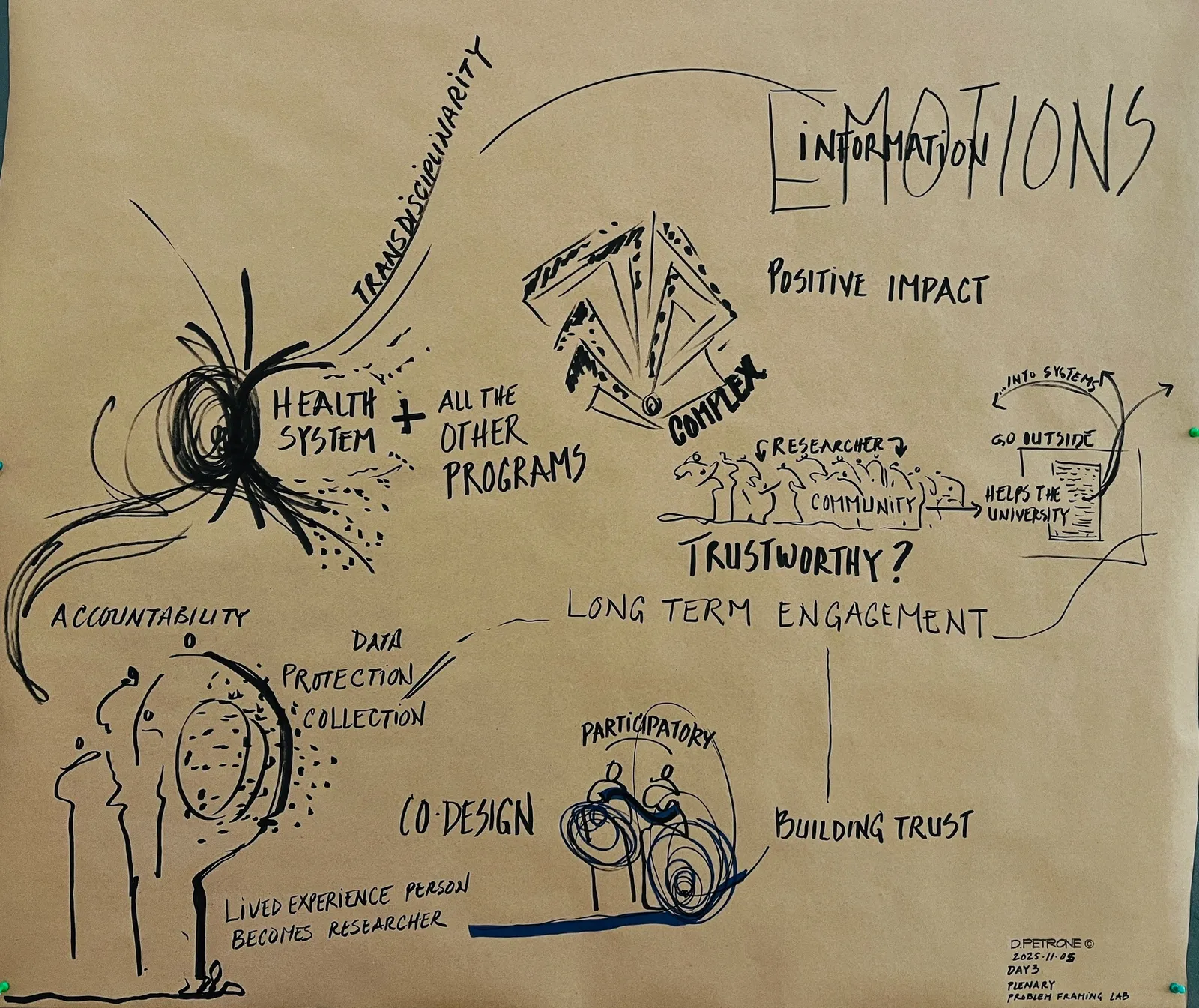
Our third day together focused on how public health engages young people in today’s digital information environment. Through problem-framing labs, Fellows worked in small groups to examine how health information is created, shared, and trusted. The insights in these discussions come from knowledge leaders drawing on their professional expertise, lived experience, and direct work with communities. Each group addressed a specific area that emerged in the co-development process prior to the gathering in Salzburg, with topics including community data and data protection, communication in crowded and algorithm-driven information spaces, research and evaluation of information pathways, and ways to embed participatory approaches within institutions.
The drawing above reflects what happens when Salzburg Global convenes leaders from different sectors. When people take part in shaping how information is created, interpreted, and used, engagement tends to last longer and remains more grounded in lived experience. Over time, this shared process supports trust in health systems through visible practices of transparency, reciprocity, and accountability. For this cycle to continue, health systems need to allow networks to function, recognize shared ownership of knowledge, and invest in participatory structures.
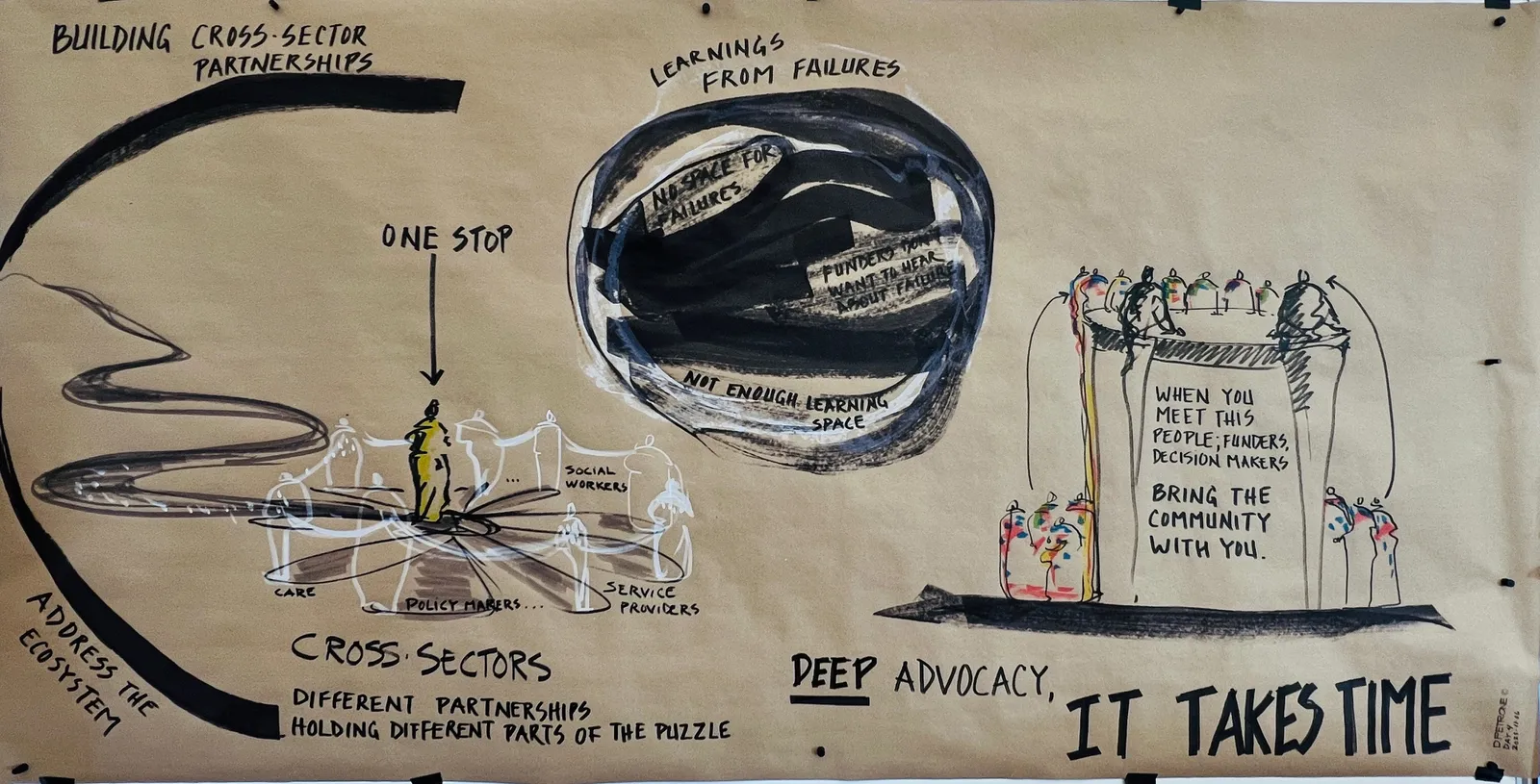
As the week turned toward longer-term commitments, the conversations deepened. Differences surfaced. Perspectives pressed against one another. The tension did not resolve itself immediately, and it did not need to. It pointed to something essential: Systems struggle with change because people struggle to move together as a group – to work out tensions and contrasting views, and to deeply listen to understand and with curiosity. Across the drawing, time remains present as a shared condition. Moments of friction became a call to shift our attention rather than signs of breakdown. In relationships, as in systems, tension creates space to reflect, adjust, and learn.
The session’s focus shifted from generating ideas to considering what allows work on health information pathways to endure beyond a single moment or intervention. No single actor holds a complete view of these pathways.
Policymakers, clinicians, researchers, civil society, and communities each see only part of the landscape. At the center of the drawing sits a shared pressure: the demand to demonstrate impact quickly, often before understanding has time to settle. This urgency shapes decisions and narrows what comes into focus, privileging speed over reflection. Time remains present as a shared condition. In relationships, as in systems, tension creates space to reflect, adjust, and learn. The drawing seems to suggest that progress grows through staying engaged, allowing differences to surface, and giving change the time it needs to take root.
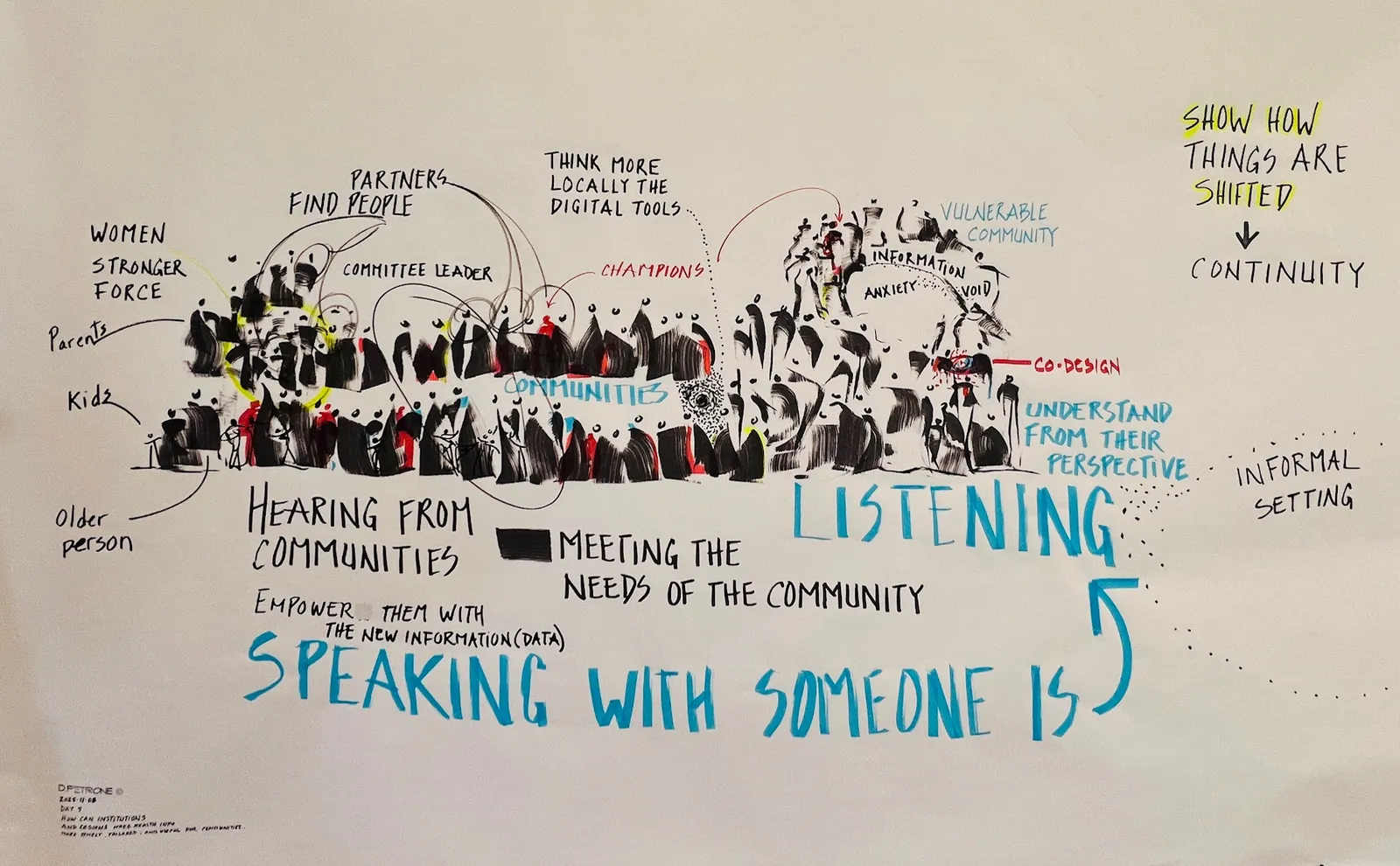
Across the week, Déline's drawings functioned as interpretive anchors, following how conversations unfolded and how shared understanding gradually took shape. They reflected a collective being, formed through dialogue across disciplines, sectors, and lived realities. In doing so, they made visible how trust was built, how perspectives shifted, and how common ground emerged among advocates, practitioners, researchers, and policymakers working toward a shared purpose.
This points to a central insight of the session: Health information supports equity when it attends to collective realities and structural forces, rather than focusing narrowly on individual behavior. For communities that have been historically marginalized, this requires information systems that value lived experience as knowledge, collect disaggregated and ethically governed data, and connect health outcomes to social, economic, and political contexts. It also demands communication practices that are accessible, culturally grounded, and attentive to how digital and algorithmic systems can reproduce bias.
What follows from this gathering of minds is not a single conclusion but a reframed way of understanding equitable information pathways. When there is a shift towards accountability and involvement by historically marginalized populations, new possibilities appear. The next steps as a group will take shape in the spaces where Fellows continue to meet, interpret, and design together. Multiple initiatives will build on this momentum, translating the reflections of the week into applied work across sectors and regions.
The drawings were created through a process known as generative scribing by Déline Petrone, an institute-trained visual scribe whose work accompanied this Salzburg Global session. Distinct from conventional graphic facilitation, this approach reflects careful listening across different forms of knowledge and experience, closely aligned with the session's focus on how understanding is built. Déline’s drawings capture not only what is spoken, but also shifts in mood, energy, and reflection, offering a visual record that holds both the content of the discussions and the atmosphere in which they take place.
Support for this program was provided by the Robert Wood Johnson Foundation. The views expressed here do not necessarily reflect the views of the Foundation.