-
Topics
TopicsOur programs create spaces where open-minded leaders can gather for breakthrough conversations on pressing global issues – each aligned to one of the following pillars:Get Involved
-
Events
EventsExplore the variety of events Salzburg Global hosts within Austria and in the rest of the world. Learn more about our programs and what else happens at Schloss Leopoldskron.Upcoming EventsOct 19 - Oct 22, 2026Peace & JusticeThe Collective Action Problem: How Should Democratic Societies Respond to Increasing State Violence without Exacerbating Polarization and Political Violence?Violent Threats to Democratic SystemsOct 21 - Oct 25, 2026Peace & JusticeDemocracy Across the Frontlines: How Can Democracy Movements Collaborate To Build Resilience Across Borders?Democracy Resilience Forum
- Insights
-
Fellowship
FellowshipSince 1947, more than 40,000 people from over 170 countries have participated in Salzburg Global's sessions. Collectively, these alumni are known as Salzburg Global Fellows.
-
About Us
About UsSalzburg Global is an independent, non-profit organization committed to creating spaces that overcome barriers and open up a world of better possibilities.Our Approach
-
Support Us
Support UsYour generosity helps us gather open-minded leaders for breakthrough conversations, while creating space for dialogue that overcomes barriers and opens up a world of better possibilities.
- Donate

- Published date
- Written by
Share
Health
Feature
Whose Knowledge Governs?: Community Power and Health Equity
Published date
Written by
Share

Fellows at the Salzburg Global session on "Transforming Information Pathways for Health, Well-Being, and Equity." Photo Credit: Richard Schabetsberger
Key takeaways
- Health equity requires information to be inclusive, credible, and shaped by communities themselves.
- Examples from Brazil and South Africa show how shifting knowledge production back to communities can transform health systems.
- When lived experience is treated as data, communities gain the power to define priorities and hold systems accountable.
Access to timely, trusted, and actionable health information is a cornerstone of advancing health equity. However, for communities historically marginalized by systemic inequities, the barriers to obtaining and using this information are steep. The systems designed to disseminate health knowledge often fail to prioritize their needs, instead reinforcing existing power imbalances. These communities face a dual challenge: navigating information pathways that are fragmented and disconnected from their lived realities, while simultaneously battling mis- and disinformation that exacerbate health disparities.
This transformation requires a fundamental shift toward making health information more inclusive, credible, and accessible - ensuring it is not just delivered to communities but shaped by them. At the Salzburg Global session on “Transforming Information Pathways for Health, Well-Being, and Equity,” Fellows explored how to make health knowledge more discoverable, culturally relevant, and reflective of lived experience. Salzburg Global Fellows Zoheb Khan from Brazil and Phinah Kodisang from South Africa shared powerful examples of information pathways benefiting the most marginalized when the power of knowledge production is shifted back to the community-level - ensuring that lived experience is treated as data that cannot be ignored.
The Brazilian Health Councils: When Participation Becomes Infrastructure
Brazil’s democratic renewal emerged after two decades of dictatorship. During the transition, health activists and community organizers pushed to institutionalize a participatory decision-making structure to prevent power from reconsolidating. In health, they sought a system where communities could shape policy priorities and hold public institutions to account.
The result was an innovation in deliberative democracy: a network of health councils at municipal, state, and national levels. Here, community members, professionals, and government representatives meet to review health plans, monitor public health outcomes, and approve budgets. These councils hold statutory authority. By law, half of all council seats must be held by community members. Crucially, councils have the power to withhold approval of a mayor's annual accounts until their concerns are addressed.
This arrangement transforms participation into a formal information pathway, whereby local experience and budgetary decisions are documented, debated, and used to steer national priorities.
For example, one of the successes of the participatory architecture was the recognition of Indigenous medicine in the health care system. In 1986, Indigenous leaders and the Union of Indigenous Nations convened the First National Conference on Indigenous Health. The document they produced became the cornerstone of a dedicated health subsystem established thirteen years later, which established differentiated care and, importantly, the independent collection of health data according to Indigenous territories rather than municipal boundaries, which often split communities and obscured the communities’ health trends.
More recently, at the 17th National Health Conference in 2023, more than 4,000 delegates - most of whom had risen through local and state councils - met in Brasília and voted on more than 1,000 proposals to shape the national health agenda.
As Zoheb Khan, a researcher at the Brazilian Center of Analysis and Planning (Cebrap), explained, the design makes community voices difficult to dismiss. “The council needs to have minutes. They need to be published. They need to be online. They need to approve the budget,” he said, “If you have those rules in place, it’s much harder to ignore them.”
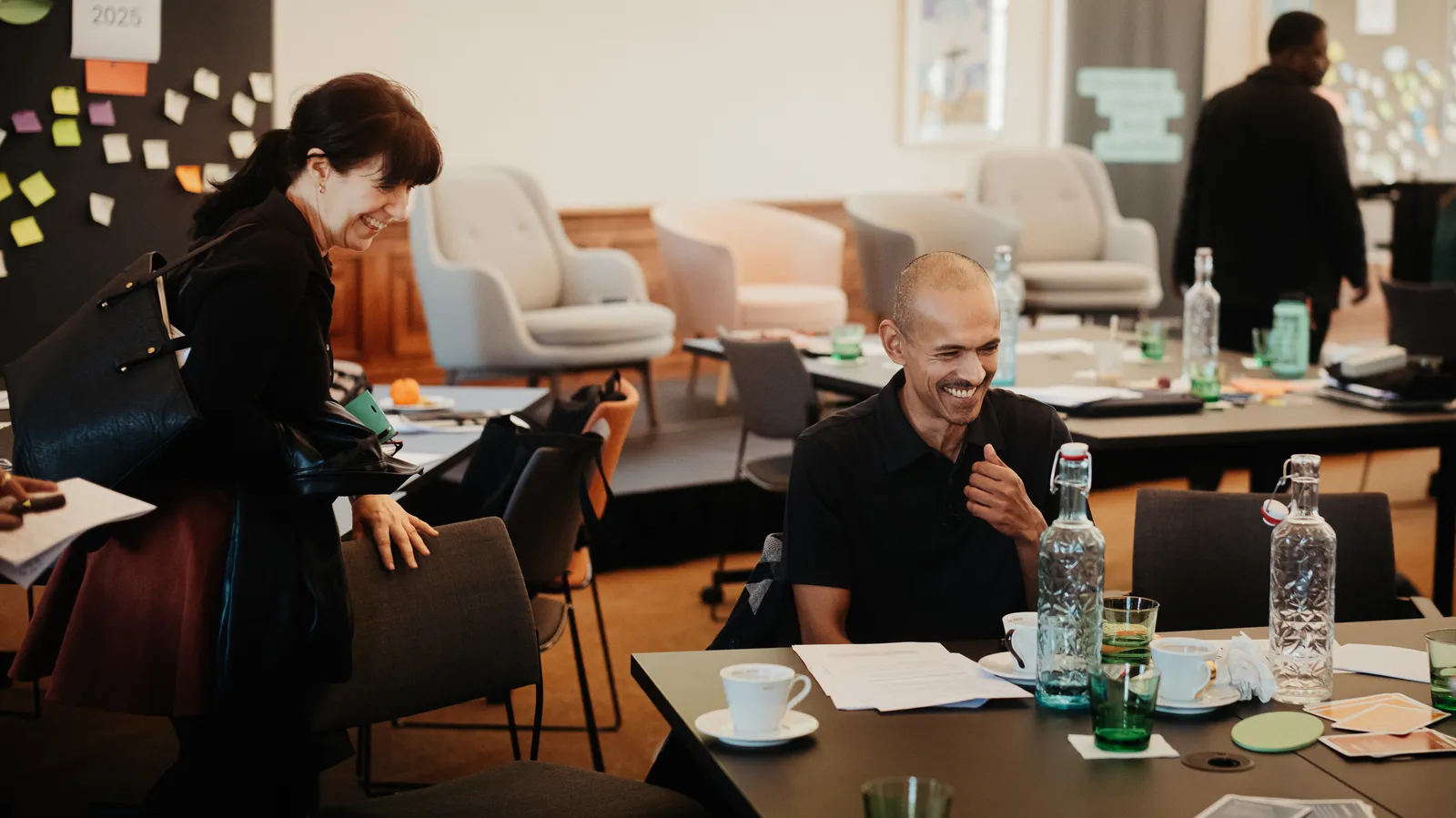
His research at the COMPLUS research consortium examines how participation can reduce inequalities in health systems marked by fragmentation and the coexistence of public and private providers, where the poorest are often most disadvantaged.
Zoheb collaborates with partners in India and South Africa to test ways communities can participate in improving primary care. When rules are enforceable, processes are transparent, and communities hold real decision-making power, participation can shape priorities, inform planning and monitoring, and sustain public accountability, even as political cycles shift.
Reflecting on Brazil's post-dictatorship period, Zoheb noted that these participatory structures emerged from a recognition that democratic accountability cannot be episodic.
"It's a mistake to think democracy is something we've achieved," Zoheb said, "It's daily work."
Part of that work, Zoheb noted, is confronting the real pressures the councils face today: underfunding, declining interest in collective forms of action and organizing, especially among the younger people, and the growing challenge of equipping community members for complex policy processes. But Brazil has something many countries do not: the institutional architecture already in place. It took decades to build, it has been proven to work, and it gives reformers something to strengthen rather than something to invent.
South Africa’s Soul City Institute: The Power of Co-Creating the Health Narrative
While Brazil built participation into its state infrastructure to articulate, prioritize, and monitor progress toward addressing community needs, South Africa’s Soul City soap opera championed a community-centered approach to health information for the most disadvantaged through the power of narrative.
Founded in 1992 as South Africa transitioned to democracy, the Soul City Institute, in partnership with Alexandra Clinic and University Health Centre, addressed a critical gap: accurate health information about HIV/AIDs. In the 1990s and early 2000s, South Africa had one of the highest HIV prevalence rates in the world. With government’s mixed messaging on the disease, Soul City became a vital and trusted source of accurate information, bypassing political bottlenecks.
As a national health promotion organization, the Institute’s education-entertainment (i.e. “edutainment”) strategy integrated accurate health information into popular prime-time dramas. However, Soul City was more than a TV show - it was a social mobilization movement which successfully reached 70% of South Africans.
The popular series involved a 13-part television drama, a 45-part radio drama in nine languages, and nationally distributed booklets, while also incorporating advocacy and community activities beyond the screen, such as the Soul Buddyz Clubs for children from 8 to 14 years old and the RISE Young Women’s Club. These clubs generated a form of evidence that formal health systems rarely produce: community-defined knowledge about needs, missing services, and routinely violated rights.
The aim was not about simply getting the message out. Soul City took up a "Jamboree" model designed to bring discussions or services (e.g. health screenings) directly to people, serving as a platform for listening and serving, especially in disadvantaged areas.
Over time, the show’s plot adapted and responded to issues raised and faced by communities. For example, in response to community experiences with domestic violence, the institute scripted a dedicated storyline and launched an abuse helpline receiving over 180,000 calls, while supporting the establishment of the Domestic Violence Act.
The effectiveness and popularity of Soul City also relied on an iterative 18-month development cycle involving expert and public consultation and feedback loops with communities on the script, which was later followed by an independent impact evaluation after distribution and broadcast. While the Institute engaged communities through the consultative and evaluative process to develop a methodically crafted script, it also actively sought to create dialogue and encourage agency.
Phinah Kodisang, CEO of Soul City, described the 30-year legacy as carrying health information into places formal systems have not yet found a way to carry itself - using the act of storytelling to tell people what they are owed and how to ask for it.
"Hopelessness is not a choice for us" - Phinah Kodisang

Reimagining Information Pathways for Health and Equity
In the face of structural inequity, one question keeps resurfacing: How can societies reimagine information pathways to incorporate lived experience and community needs? Brazil and South Africa offer two distinct and insightful responses.
Brazil approached this question through public sector design. Health councils do not merely invite communities to speak. They offer a formal route for bottom-up priority setting and accompanying monitoring and budgeting information to render accountability transparent.
Soul City approached the same question from a mass media perspective. Through narrative, in-depth public and community consultation, and the Jamboree model for change, the Institute galvanized a movement within and beyond South Africa that saved lives during times of misinformation and hesitancy of the public sector to act.
Together, these models show that a people-centered system does not merely feed information to marginalized groups or merely collect information from them; it cedes the power of definition to them and acknowledges their role as knowledge governors. This shift offers the prospect to dismantle structural exclusions by ensuring that those who live with these problems are the ones who define the solutions and hold the power to monitor their progress.
Support for this program was provided by the Robert Wood Johnson Foundation. The views expressed here do not necessarily reflect the views of the Foundation.