-
Topics
TopicsOur programs create spaces where open-minded leaders can gather for breakthrough conversations on pressing global issues – each aligned to one of the following pillars:
-
Events
EventsExplore the variety of events Salzburg Global hosts within Austria and in the rest of the world. Learn more about our programs and what else happens at Schloss Leopoldskron.
- Insights
-
Fellowship
FellowshipSince 1947, more than 40,000 people from over 170 countries have participated in Salzburg Global's sessions. Collectively, these alumni are known as Salzburg Global Fellows.
-
About Us
About UsSalzburg Global is an independent, non-profit organization committed to creating spaces that overcome barriers and open up a world of better possibilities.Our Approach
-
Support Us
Support UsYour generosity helps us gather open-minded leaders for breakthrough conversations, while creating space for dialogue that overcomes barriers and opens up a world of better possibilities.
- Donate

- Published date
- Written by
Share
Health
Feature
Turning the Tide: How Storytelling Becomes Health Education
Published date
Written by
Share
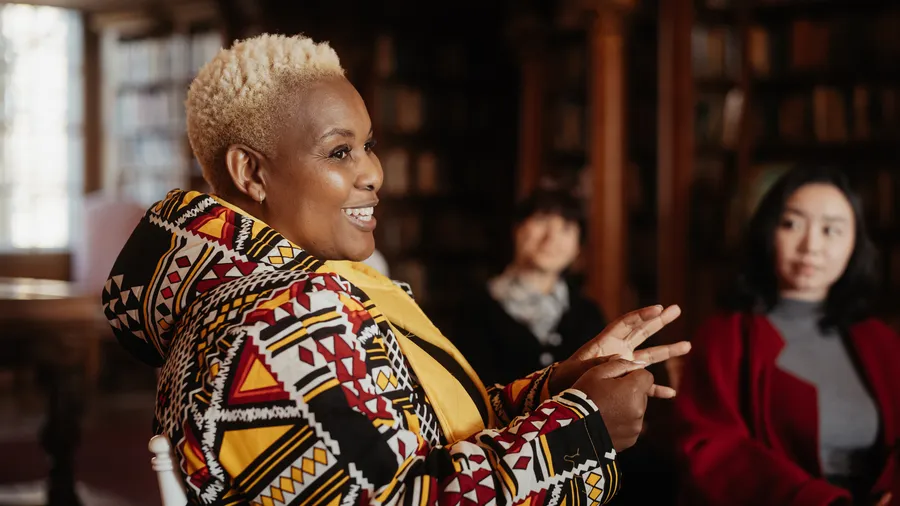
Phinah Kodisang at a Salzburg Global Health session in October 2025. Photo Credit: Richard Schabetsberger
Key takeaways
- South Africa’s popular Soul City TV drama translates complex health issues into emotionally resonant storytelling that creates empathy, corrects misinformation, and reshapes how families talk about HIV and care.
- Salzburg Global Fellow Phinah Kodisang, the CEO of Soul City Institute for Social Justice, believes that anchoring health education in relatable characters and lived realities builds trust and cultural legitimacy.
- In 2026, Soul City’s revival addresses gender-based violence and HIV risk. The new series combines storylines co-created by young women with programs that build agency, aspiration, and safer life choices.
Phinah Kodisang is CEO of Soul City Institute for Social Justice, in Johannesburg, South Africa. Soul City works to ensure that girls, young women, and gender minorities enjoy substantive equality, with a special focus on ensuring everyone has the right to access healthcare services, including reproductive healthcare.
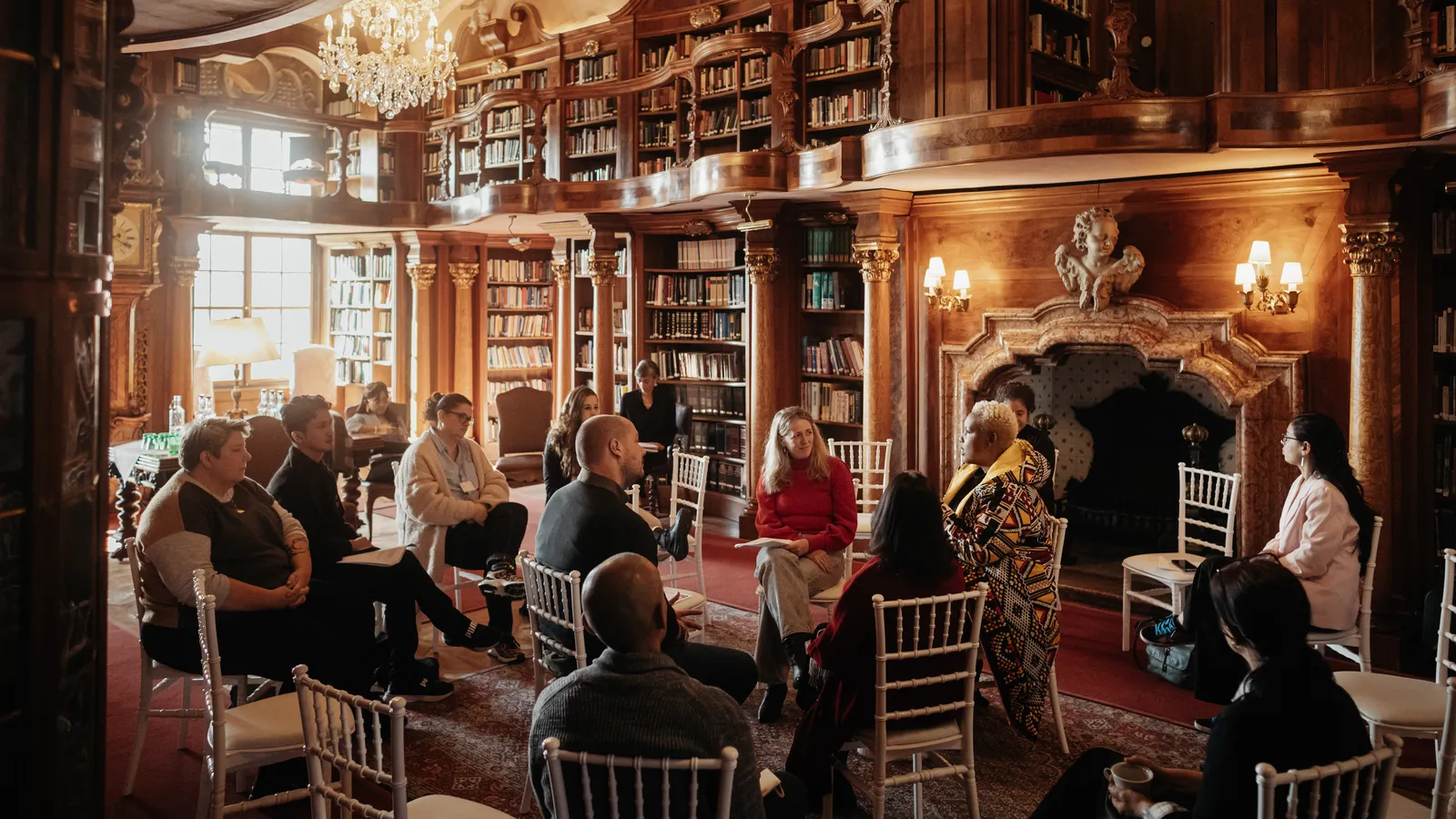
At the recent session, “Transforming Information Pathways for Health, Well-Being and Equity,” Phinah spoke to Salzburg Global Fellow Kitty Eisele about reviving the popular Soul City TV show with health storylines for a new generation.
This interview has been edited for brevity and clarity.
Kitty Eisele, Salzburg Global Fellow: Soul City got its start as a TV drama that ran for two decades. What made it so successful that you are bringing it back now?
Phinah Kodisang, CEO, Soul City Institute for Social Justice: In 1994, the first episode went live on TV. The story, as much as it was entertaining, was a message of transforming Black communities around HIV prevention. Because at that time, HIV was rife in South Africa. People were dying from it. There was a lot of stigma. There were a lot of confusing messages and myths around how you prevent it. What Soul City did very well, and that touched the hearts of many South Africans, was take a complex health issue and simplify it so that everyone can understand and see that, in fact, even if my brother or my mom has it, I can still love them. I can still share space with them. I won't die. Because families were breaking down. But now here's Soul City, a TV drama, building cohesion in families and in society, [and] shifting people's attitudes and behaviors around this disease.
KE: How does a TV show become a vehicle for sharing health information?
PK: Every season, the show came with new messages around issues that we grapple with: teenage pregnancies, contraceptives, HIV transmission from mother to child. Circumcision is a big issue for men, and it was also addressed, along with gender-based violence.
The storyline has always been that of centering people's lived realities. You would identify with a character – you would see yourself and remember a moment where you went to a clinic and a nurse would treat you in a bad way.
There was a nurse character on the show, Sister Bettina, who became a national icon and an advocate. She's the nurse we all would reference and say, “According to Sister Bettina, this is how a nurse should treat us.” And that helped many of us go back to clinics and say, “Sister Bettina says, ‘No one must turn us back.’ So I want my contraceptives. I'm not turning back!” While she was just a character on TV, she represented so much of what we wanted to see in public service. There was even a song dedicated to her, and it's a hit in South Africa. The national rugby team uses that theme song!
KE: And now you're renewing the series. How does community feedback and participation inform what you are putting on the screen?
PK: Interestingly, we've not had TV for the past, I would say 10 to 12 years, because of how much it costs.
But the beauty of what was done - the investment from 1994 to 2015 - was that Soul City had entrenched behavior change messaging that still resonated with different generations. You would have communities that still refer to what was said while Soul City was on TV, because people would be like, you know, if Soul City was here, we know that this is what they would have said.
Social mobilization became the vehicle through which we have sustained the organization. We go to schools, we go to communities, we have conversations around the very same issues, debunking the myths that still exist but also putting out calls to action, where we say to communities: If this is an issue you are grappling with, what is the solution? What do you want to do?
Over the past 10 to 12 years, we have recruited young people as champions. We invest in them, we capacitate them, we pay them stipends, and they are the ones that go back to their communities and mobilize young people to facilitate conversations that get documented. We then take those stories, and package them into interventions for the different communities, and we've done it so well, we now have communities building their own infrastructure around problem solving.
KE: What will the new season focus on, and what will the world look like if you succeed?
PK: It's a world where young women are thriving. Right now, they are still the face of poverty in my country, the face of gender-based violence, and the face of vulnerability to HIV.
Every quarter, between 1,000 to 1,500 young women aged 15 to 19 get new HIV infections weekly. And the pathway of their infection is older men who have money. There's a phenomenon in my country called, “bless us.” These are men with money who lure young women into this lifestyle of Louis Vuitton and international trips and whatever, in exchange for sexual favors, but no condoms, you know, no negotiation for safety whatsoever. And for me, if we do anything right in our new series, it’s to give young women that empowerment, to say, I don't need that kind of a lifestyle.
We've layered the TV production with social mobilization, where we run intense workshops with these young women, we call them self-actualization workshops. We want them to say, “Yes, I might not have a Louis Vuitton bag now, but it doesn't mean I won't have it in the future, you know?” And that's why I always start with my story. I was a 19-year-old mom, and now I'm a CEO. Because it's possible. I studied abroad. I'm pursuing my PhD right now. It's possible. It’s just the choices that you make, and the environment should enable you to make those choices and feel safe in the choices without the burden of saying, you know, you are delayed if by 23 you don't have an iPhone 17, and the quickest way to get it is this man who can just buy it for you. But at what expense?
KE: Who comes up with the stories?
PK: It's the young women who helped us co-create. We did focus groups, we went into communities, and we said to young women, if we were to tell the story, what should it be? So they helped us, but we hired a creative team. They take the focus group discussions, the message briefs that we've done with different experts and young people, and they are now turning it into entertainment that is layered with education.
KE: Will it be called Soul City again?
PK: This time we asked young people to choose the name, so we're still co-creating what the name will be. Right now, we just call the whole program Shay’indlela. It's Zulu for “turn the tide,” because we want to turn things around. We are at the turning point of changing the narrative where young women are no longer vulnerable, but they own the world.
Support for this program was provided by the Robert Wood Johnson Foundation. The views expressed here do not necessarily reflect the views of the Foundation.