-
Topics
TopicsOur programs create spaces where open-minded leaders can gather for breakthrough conversations on pressing global issues – each aligned to one of the following pillars:Get Involved
-
Events
EventsExplore the variety of events Salzburg Global hosts within Austria and in the rest of the world. Learn more about our programs and what else happens at Schloss Leopoldskron.Upcoming EventsOct 19 - Oct 22, 2026Peace & JusticeThe Collective Action Problem: How Should Democratic Societies Respond to Increasing State Violence without Exacerbating Polarization and Political Violence?Violent Threats to Democratic SystemsOct 21 - Oct 25, 2026Peace & JusticeDemocracy Across the Frontlines: How Can Democracy Movements Collaborate To Build Resilience Across Borders?Democracy Resilience Forum
- Insights
-
Fellowship
FellowshipSince 1947, more than 40,000 people from over 170 countries have participated in Salzburg Global's sessions. Collectively, these alumni are known as Salzburg Global Fellows.
-
About Us
About UsSalzburg Global is an independent, non-profit organization committed to creating spaces that overcome barriers and open up a world of better possibilities.Our Approach
-
Support Us
Support UsYour generosity helps us gather open-minded leaders for breakthrough conversations, while creating space for dialogue that overcomes barriers and opens up a world of better possibilities.
- Donate

Education
Social and Emotional Learning: A Global Synthesis
Social and Emotional Learning (SEL) is one of the hottest topics in global education today. Evidence shows that SEL can help young people acquire the skills to thrive in the fourth industrial revolution and shape new jobs and career pathways. SEL skills can also help communities and populations grapple with complex change and advance the Sustainable Development Goals.
On the demand side, there are compelling calls from around the world for the systematic development and embedding of social and emotional learning opportunities in education systems. Unusually, these demand side drivers are now coming from industry, private sector and economists as well as from education and civil society organizations
On the supply side, however, it is still rare to find SEL opportunities integrated at a system-wide level in national education sectors. At global level, the three most frequently cited barriers relate to teacher preparation, curriculum design, and perceived challenges around measurement and assessment. There are also significant constituencies who for different reasons do not consider SEL opportunities to be important and relevant in education.
A comprehensive evidence base now demonstrates the correlation between social and emotional skills and academic attainment. Recent years have seen the emergence and/or expansion of a number of national and regional SEL initiatives in different parts of the world. Despite this, there are few, if any, opportunities for leaders, influencers, researchers and practitioners from different networks to share their insights and learning. This program – the latest in Salzburg Global Seminar’s series on Education for Tomorrow’s World - connected key stakeholders across sectors, regions and cultures to share and critique a range of policies and practice, analyzing what has or has not worked in order to develop scalable recommendations for future educational reform.
Date
Dec 02 - Dec 07, 2018
Session no.
Session 603
Share
Salzburg Statement
Social and emotional skills are key human capabilities that allow individuals to manage their emotions, work with others, and achieve their goals. They are crucial for the wellbeing and success of every child and adult, and for the future of our societies and economies.
In a complex, fast-moving world, it is imperative that we equip all learners for new challenges and opportunities. Evidence shows multiple long-term benefits from embedding Social and Emotional Learning (SEL) opportunities in education in both formal and non-formal contexts. SEL can contribute to more inclusive, dynamic and productive schools, communities and workplaces, and can in the long term save governments money and accelerate productivity.
We, the Salzburg Global Fellows from the December 2018 program Social and Emotional Learning: A Global Synthesis, believe that global and national education policies, practices and systems should put SEL at the center of “whole person” development from birth.
Download the full Statement in English (PDF)
Download the full Statement in Arabic (PDF)
Download the full Statement in Spanish (PDF)
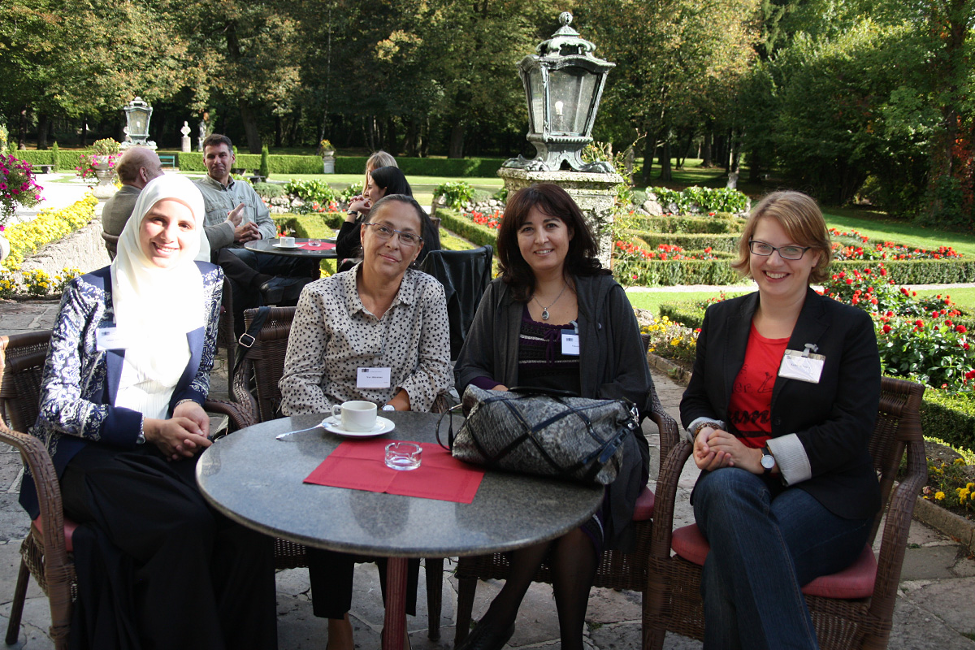
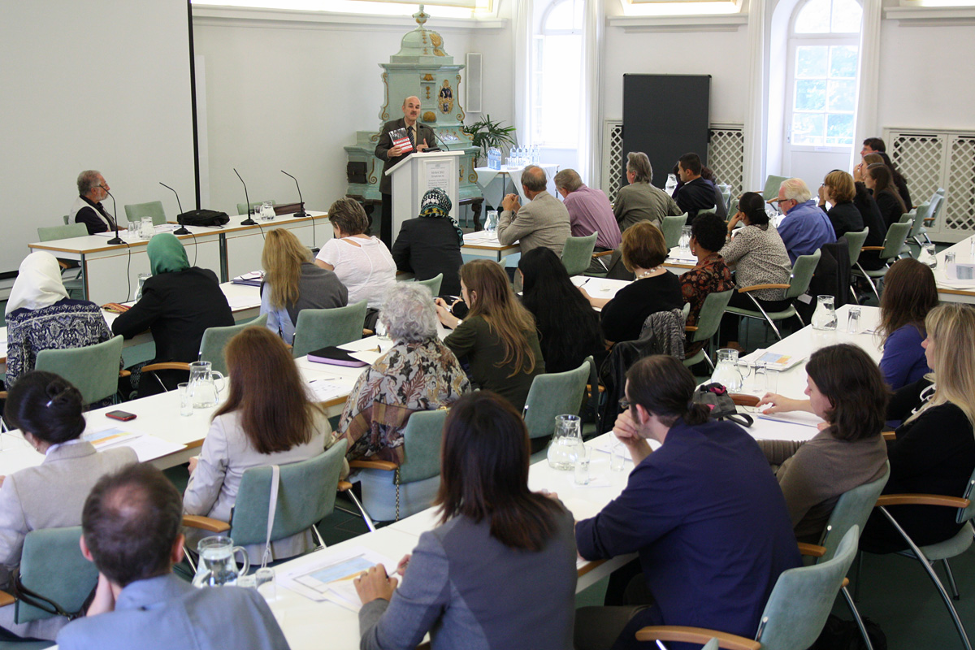
Photos
View full set on Flickr
All images are available for download. Please credit Salzburg Global Seminar. Unwatermarked images are available on request.
Graphics
View full set on Flickr
All images are available for download. Please credit Salzburg Global Seminar/Wolfgang Irber.
Daily Newsletters
Resources
Alliance for Excellent Education (All4Ed). "Science of Adolescent Learning Consensus Statements."
Alliance for Excellent Education (All4Ed). "Science of Adolescent Learning Infographic (1)."
Alliance for Excellent Education (All4Ed). "Science of Adolescent Learning Infographic (2)."
Askell-Williams, Helen. "Transforming the Future of Learning with Educational Research." Advances in Educational Technologies and Instructional Design (AETID) Book Series. 2015.
Blad, Evie. "Schools Should Teach (and Measure) 'Soft Skills,' Parents and Educators Agree." Blog. Education Week. August 2018.
Brackett, Marc. "The Emotional Intelligence We Owe Students and Educators." Educational Leadership. 2018.
Brackett, Marc. Patti, Janet. "Creating Emotionally Intelligent Schools." School Administrator. 2016.
Brackett, Marc. Rivers, Susan. Bertoli, Michelle. Salovey, Peter. "Emotional Intelligence." Handbook of Emotions. 2016.
Brackett, Marc. Dymnicki, Allison. Jones, Stephanie. Kidron,Yael. Osher, David. Weissberg, Roger. "Advancing the Science and Practice of Social and Emotional Learning: Looking Back and Moving Forward." Review of Research in Education, 40. 2016.
Cavioni, Valeria. Zanetti, Maria Assunta. Beddia, Giusy. Spagnolo, Mara Lupica. "Promoting Resilience: A European Curriculum for Students, Teachers and Families." 2018.
Cavioni, Valeria. Grazzani, Ilaria. Ornaghi, Veronica. "Social and emotional learning for children with Learning Disability: Implications for inclusion." International Journal of Education. 9: 2. 100 - 109. 2017.
CASEL. "Social and Emotional Learning Competencies." 2017.
Cefai, Carmel. "Strengthening Social and Emotional Education as a core curricular area across the EU." NESET II. 2018.
Cefai, Carmel. Ferrario, Erika. Cavioni, Valeria. Carter, Audrey. Grech, Tracy. "Circle time for social and emotional learning in primary school." Pastoral Care in Education: An International Journal of Personal, Social and Emotional Development. 2013.

Hart, Angie. Heaver, Becky. "Resilience Approaches to Supporting Young People’s Mental Health: Appraising the Evidence Base for Schools and Communities." University of Brighton/Boingboing. 2015.
Heinemeyer, Catherine. "Mental health crisis in teens is being magnified by demise of creative subjects in school." Blog. The Conversation. 2018.
Jones, Stephanie. Zaslow, Martha. Darling-Churchill, Kristen. Halle, Tamara. "Assessing early childhood social and emotional development: Key conceptual and measurement issues." Journal of Applied Developmental Psychology, 45. 42 - 28. 2016.
Kordich Hall, Darlene. "Compendium of Selected Resilience and Related Measures for Children and Youth." The Child & Family Partnership. 2010.
Korean Educational Development Institute. "A Window into Korean Education." 2018.
McEachen, Joanne. Kane, Matthew. "Cultural Competency Rubric." The Learner First. 2018.
McEachen, Joanne. Kane, Matthew. "Connection Learning Progression." The Learner First. 2018.
McEachen, Joanne. Kane, Matthew. "Self Understanding Learning Progression." The Learner First. 2018.
McEachen, Joanne. Fullan, Michael. Quinn, Joanne. "2018 NPDL Global Report." New Pedagogies for Deep Learning. 2018.
Murphy-Graham, Erin. Cohen, Alison K. "Life skills education for adolescents in developing countries: What are they and why do they matter?"
NESET II. "Strengthening Social and Emotional Education as a core curricular area across the EU." European Union. 2018.
OECD. "The Study on Social and Emotional Skills."
O'Donnell, Carol. "Science Education, Identity, and Civic Engagement: Empowering Youth through the UN Sustainable Development Goals." G7 Executive Talk Series. 2018.
Schick, Andreas. Cierpka, Manfred. "International evaluation studies of Second Step, a primary prevention programme: a review." Emotional and Behavioural Difficulties. 18:3, 241-247. 2013.
The Learner First. "Delivering Whole-System Change for Oklahoma City Public Schools’ Learners." 2016.
Partners & Co-Chairs
Partners