-
Topics
TopicsOur programs create spaces where open-minded leaders can gather for breakthrough conversations on pressing global issues – each aligned to one of the following pillars:Get Involved
-
Events
EventsExplore the variety of events Salzburg Global hosts within Austria and in the rest of the world. Learn more about our programs and what else happens at Schloss Leopoldskron.Upcoming EventsOct 19 - Oct 22, 2026Peace & JusticeThe Collective Action Problem: How Should Democratic Societies Respond to Increasing State Violence without Exacerbating Polarization and Political Violence?Violent Threats to Democratic SystemsOct 21 - Oct 25, 2026Peace & JusticeDemocracy Across the Frontlines: How Can Democracy Movements Collaborate To Build Resilience Across Borders?Democracy Resilience Forum
- Insights
-
Fellowship
FellowshipSince 1947, more than 40,000 people from over 170 countries have participated in Salzburg Global's sessions. Collectively, these alumni are known as Salzburg Global Fellows.
-
About Us
About UsSalzburg Global is an independent, non-profit organization committed to creating spaces that overcome barriers and open up a world of better possibilities.Our Approach
-
Support Us
Support UsYour generosity helps us gather open-minded leaders for breakthrough conversations, while creating space for dialogue that overcomes barriers and opens up a world of better possibilities.
- Donate

- Published date
- Written by
Share
Peace & Justice
Opinion
The Savior of Democracy Will Be Citizen Action
Published date
Written by
Share
Key takeaways
Mass protests are great "on-ramps" for civic engagement, but raw anger must be converted into structured, long-term strategy to prevent activist burnout.
Activism is increasingly hazardous due to aggressive state crackdowns, voter suppression, and advanced surveillance technologies.
While rebuilding civil institutions is the ultimate goal, strategic and inspired citizen action is the fuel required to drive that restoration.
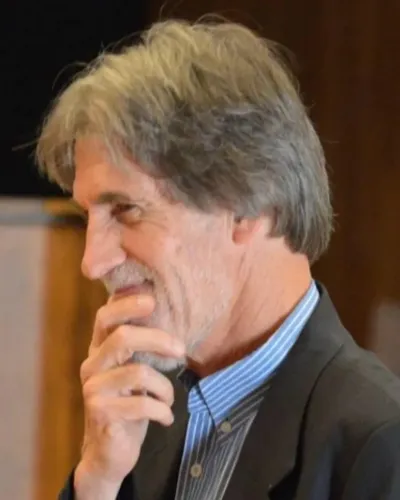
This article was written by Salzburg Global Fellow Jim Shultz, who attended the Pathways to Peace Initiative session on "Democracy on the Frontlines: How Can Democracies Defend Themselves?" in April 2026.
The views expressed here belong to this Fellow individually and should not be taken to represent those of any organizations to which they are affiliated.
I write from the United States, where democracy is under more threat than at any point in my lifetime. I write as an activist who has spent the last 50 years leading and supporting citizen action campaigns in the U.S. and across the world. And I write from the perspective of living in a county of small towns that Donald Trump carried in three elections by a wide margin, and where I write a column for the local daily newspaper.
In the United States, people have long had faith that our democracy was well protected by the guardrails of our public institutions and the U.S. Constitution. But Donald Trump and the right-wing authoritarianism known as Trumpism have proven that assumption wrong. Neither the courts, nor Congress, nor the public service system, nor the national media have been able to halt his relentless acquisition of power at home and abroad.
As a result, the U.S. is now a nation where immigrants live in fear of secret police, where we have launched a disastrous war based on the “gut feelings” of one man, and where the safety net underneath the most vulnerable is being dismantled.
The true power that we have left, and the one that I believe will ultimately keep us a democracy, is the power of the people. As dire as the situation here may look from abroad, what must not be missed is how President Trump has succeeded in igniting a wave of citizen action and civic engagement unparalleled since the days of the civil rights and anti-war movements of the 1960s.
Supporting and strengthening people power has been my life’s work for half a century, and it is my focus today as well. This leads to three questions that I think are fundamental to whether citizen action can be deployed successfully to save U.S. democracy:
1. How can we inspire and engage a new wave of citizen action?
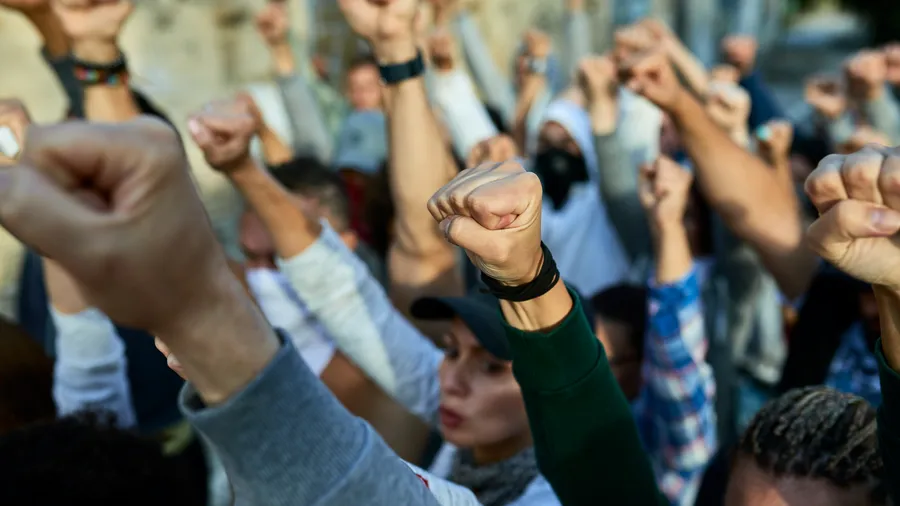
The on-ramp to an effective citizen-led democracy relies on giving people the belief that they can turn their anger or their hopes into concrete action that will make a difference. In the U.S. currently, that on-ramp has often been participation in mass demonstration events such as the No Kings mobilization last October that drew more than 7 million people across the country into the streets (and 600 in our small town in Western New York). But it is crucial that we find ways that move large numbers of those millions into organized, ongoing action.
2. How do we make sure that citizen action is strategic and effective?
As I work with citizen activists across the world, I tell them that my mantra is this piece of wisdom from Sun Tzu in “The Art of War”: “Tactics without strategy is the noise before defeat.” Nothing is more wasteful in democratic action than allowing the spark of activism to die out because it is not deployed in a strategic and effective way. In the U.S. and elsewhere, I think this is urgent in these areas of action.
One is civil disobedience and demonstrations. Absent the normal protections of the law, people in the U.S. have had to take matters into their own hands, especially in mounting a defense against the unlawful attack on the nation’s immigrants. Recent events in Minnesota showed us how urgent and how dangerous that avenue of citizen action can be.
A second key area is citizen advocacy, direct efforts aimed at public officials and how they exercise their power. In the conservative county where I live, we recently won a huge advocacy victory based on strong and strategic citizen advocacy. We convinced the Republican sheriff in a Republican county to no longer accept ICE immigrant detainees in the county jail who have been charged with no crime.
Lastly, citizen action needs to enter the electoral arena in a new and more powerful way. We can see in communities like the one where I live, and all across the country, a new generation of regular people willing to step up and run for office. But the obstacles in their way, money in particular, are daunting.
3. How do we protect citizen action?
Just as citizen action is becoming more urgent, it is also becoming more challenged and more dangerous. Events in Minnesota and elsewhere have shown us that the U.S. government has no qualms about jailing and even killing those who stand up for civil liberties and human rights. In the U.S. and elsewhere, new surveillance technologies are being deployed as the new tools of political repression. We need to find ways to make sure that exercising our freedoms is safe, that our elections are not stolen from us through voter suppression, and that citizen action is unfettered.
To be clear, the threat to democracy is by no means solely a feature of the U.S. in this moment. In fact, it is a threat at hand in nations across the world, including in many where we once assumed democracy was solid and safe. I see the same dynamics in my work across Latin America, Africa, Asia, eastern Europe, and elsewhere.
Strengthening civil institutions like the courts, the legislative branch, the press, and others remains the top priority everywhere. But the gasoline in the tank that will make that movement possible is going to remain effective, inspired, and strategic citizen action.