-
Topics
TopicsOur programs create spaces where open-minded leaders can gather for breakthrough conversations on pressing global issues – each aligned to one of the following pillars:Get Involved
-
Events
EventsExplore the variety of events Salzburg Global hosts within Austria and in the rest of the world. Learn more about our programs and what else happens at Schloss Leopoldskron.Upcoming EventsOct 19 - Oct 22, 2026Peace & JusticeThe Collective Action Problem: How Should Democratic Societies Respond to Increasing State Violence without Exacerbating Polarization and Political Violence?Violent Threats to Democratic SystemsOct 21 - Oct 25, 2026Peace & JusticeDemocracy Across the Frontlines: How Can Democracy Movements Collaborate To Build Resilience Across Borders?Democracy Resilience Forum
- Insights
-
Fellowship
FellowshipSince 1947, more than 40,000 people from over 170 countries have participated in Salzburg Global's sessions. Collectively, these alumni are known as Salzburg Global Fellows.
-
About Us
About UsSalzburg Global is an independent, non-profit organization committed to creating spaces that overcome barriers and open up a world of better possibilities.Our Approach
-
Support Us
Support UsYour generosity helps us gather open-minded leaders for breakthrough conversations, while creating space for dialogue that overcomes barriers and opens up a world of better possibilities.
- Donate

- Published date
- Written by
Share
Peace & Justice
Opinion
The Battle for Liberal Democracy
Published date
Written by
Share
Key takeaways
- The digital age democratized access to information but also accelerated polarization, eroded trust in institutions, and weakened the foundations of informed public discourse.
- As traditional sources of authority come under attack, citizens become increasingly susceptible to demagoguery, nationalism, and disinformation.
- The defense of liberal democracy depends on engaging in difficult debates, understanding the sources of public discontent, and championing free speech and factual discourse.
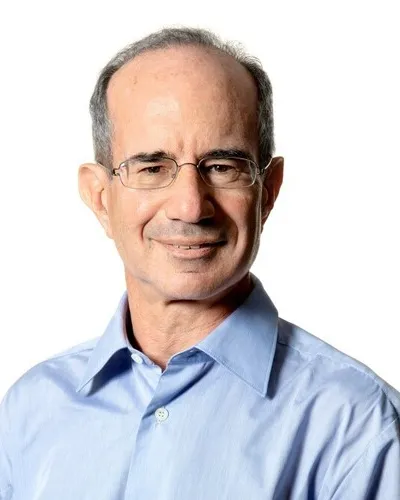
This article was written by Salzburg Global Fellow Eric Frey, who attended the Pathways to Peace Initiative session on "Democracy on the Frontlines: How Can Democracies Defend Themselves?" in April 2026.
The views expressed here belong to this Fellow individually and should not be taken to represent those of any organizations to which they are affiliated.
When the internet entered public consciousness about 25 years ago, there was a widespread consensus among authors and commentators who try to predict the future that the new technologies would expand the realms of democracy by breaking the stranglehold of elites, giving everyone a voice, and opening decision-making processes to the masses. Some of these predictions came true, as a whole range of elitist institutions lost some of their power and influence. However, the consequence was not a strengthening of democracy, but a weakening that eventually turned into a serious threat to the liberal model of society that underpins our idea of a well-functioning democracy.
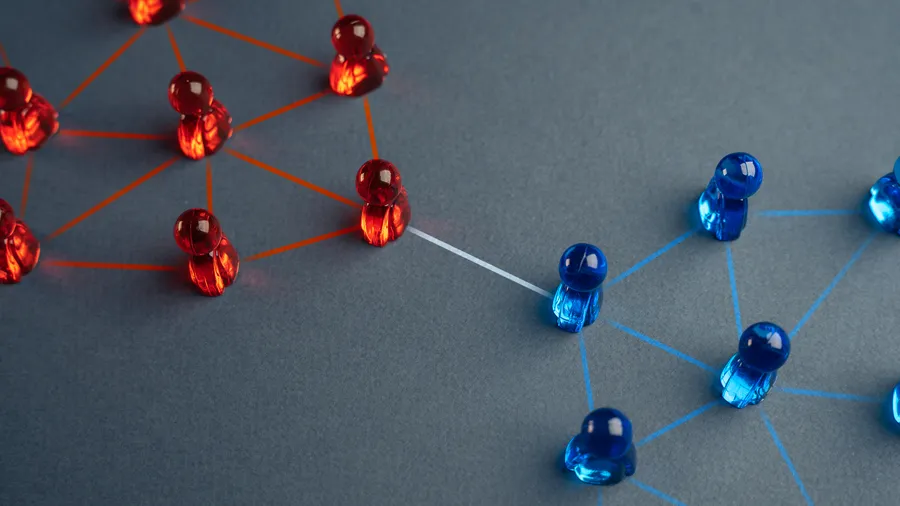
The gatekeepers of information withered away as mainstream media gave way to social media. It has not only opened up the public discourse but also radicalized and polarized it. As people lose trust in established institutions, they become vulnerable to manipulation and outright falsifications. The loss of authority of churches, political parties, and other old-fashioned systems that tend to impose their views on others may be beneficial an open society. At the same time, universities, the system of scientific study, and the principles of balanced journalism have also come under attack. This has opened the door to demagogues who appeal to nationalist longings, anger, and anti-elitist resentments, allowing them to take control of the levers of power and information in too many countries.
I am part of the world that is under attack, as a journalist of an established quality media and a commentator with centrist liberal positions, which seem out of date to some. I see myself as a soldier in this battle on an almost daily basis, but one who will not take orders from anyone, making myself an army of one. I strongly believe in the supremacy of free speech, which means I do not believe in restricting those voices that we need to battle to maintain freedom. I am frequently in debates with proponents of strongly opposing views, either in the public forum of my newspaper Der Standard or in TV confrontations. Back in the 1990s and 2000s, they came mostly from the left, but today they come almost exclusively from the right. They are well prepared and poised in their debating skills, but totally selective in their use of facts and not open to dissenting views, while accusing me and others of being unwilling to listen and learn.
I strongly believe that we need more people to throw themselves into these battles of ideas, to confront the views and arguments of the foes of liberal democracy, whether they come from the AfD in Germany, the FPÖ in Austria, Reform UK, MAGA-Republicans, or the toxic influence of Russian disinformation. We need to learn to understand their appeal to voters and not shy away from tough debates. It’s a difficult, often disillusioning experience, but it may be the only way to keep the democratic realm truly open.
Will it be enough? I don’t know. But in the countries where opposition and dissent are not repressed by force, the pen and the voice are the strongest weapons in the fight for a democratic society.