

Salzburg Global Fellows outline typologies and indicators of political violence in assessing the risk that political violence poses to democratic societies
This article explores the current and emerging threats of political violence within the context of advanced democracies and proposes framework for assessing political violence in democratic and semi-democratic societies, with a focus on key indicators and recommendations for preventing violence from undermining democratic processes. To assess these threats, it is important to first understand the different typologies of political violence, their enabling conditions, and how political violence manifests in societies where democratic institutions and norms are undermined.
Three Typologies of Political Violence
This project suggests that there are three primary typologies of political violence relevant to advanced democracies. Each represents a different interaction between state and non-state actors, with varying degrees of state control over the scale and tempo of violence:
- State-Sponsored or Mediated Violence: The direct or indirect involvement of the state in orchestrating violence, often through non-state actors or militias.
- State vs. Outside Groups: Where the state directly engages with non-state (or state adjacent) groups, leading to confrontation and violence. This is particularly acute in conflicts where governments suppress uprisings or insurgencies.
- Decentralized Social Violence: Violence arising from decentralized or socially diffuse sources, often with an ambiguous involvement of the state, and where local actors, including political parties or non-state actors, perpetuate violence across societies.
While there is a great deal of research on the first two typologies, assessing the risk of decentralized and distributed political violence is more difficult. It is often subtle and may be difficult to predict, and it can simmer for long periods before erupting into widespread violence. Therefore, understanding how this form of violence develops, and learning to identify the early warning signs, is critical to preventing political violence from escalating – particularly in advanced democracies that do not (yet) exhibit overt state-directed violence.
Indicators of Distributed Political Violence
In order to assess the threat of distributed political violence, it is essential to identify key indicators that signal the potential for violence to emerge and escalate. By examining these indicators, we can better anticipate when and how violence may occur. Some important indicators include:
- Understanding the Evolution of Polarization: This project identifies three critical forms of polarization that illuminate how political divides can evolve into violence: affective, pernicious, and toxic polarization. Affective polarization, driven by intense emotional contempt for opponents, intensifies political competition and can normalize violence as an acceptable outcome, fostering a climate where violence can potentially arise. Pernicious polarization and toxic polarization escalate affective polarization when political frame opponents as existential threats, thus positioning violence as a defensive, morally justified response. These more dangerous forms of polarization take root when political opponents are not only vilified but dehumanized, transforming them into perceived threats to society itself, which makes violence more likely and deescalation challenging. Understanding these forms is essential for recognizing how deepening political divides can ultimately threaten democratic stability.
- Increases in Online Dangerous Speech: The rise of dangerous speech on online platforms – specifically when it activates pernicious and/or toxic polarization - is often an early sign that violence may be on the horizon. This speech may begin as rhetoric but can evolve into more direct calls for action as tensions escalate.
- Mobilization and Planning for Violence: A key and important indicator to asses the risk of political violence is when speech moves from incitement to specific planning. This includes specific discussions on social media and alt-social media platforms about organizing, acquiring weapons, or coordinating “actions” on specific dates and time. The transition from speech to planning can be a key marker of impending political violence.
- Elite Endorsement of Violence: When political elites use dangerous speech to support or justify violence, either explicitly or through coded language, the risk of violence increases. These endorsements can create a sense of legitimacy around violence, framing it as necessary or righteous in the eyes of the public.
- Lack of Counter-Speech from Trusted Institutions: The absence of strong counter-speech from other elites or institutions can exacerbate the risk of violence. When trusted institutions or political figures fail to condemn dangerous speech or act to de-escalate tensions, there is a higher likelihood of dangerous rhetoric leading to violent acts.
- State Tolerance of Violence: Violence can become more likely when the state, either participates in or tolerates acts of violence. A breakdown in the impartial application of law signals that violence may be condoned by the state, further emboldening those who plan to engage in it.
- Powerful Actors Involved in Dangerous Speech and Planning Violence: Understanding who is inciting violence or engaging in planning is also crucial. Certain groups—in particular law enforcement officers, military veterans, or organized militias—may have both the capacity and training to carry out violence effectively. When these groups are involved, the potential for widespread violence increases.
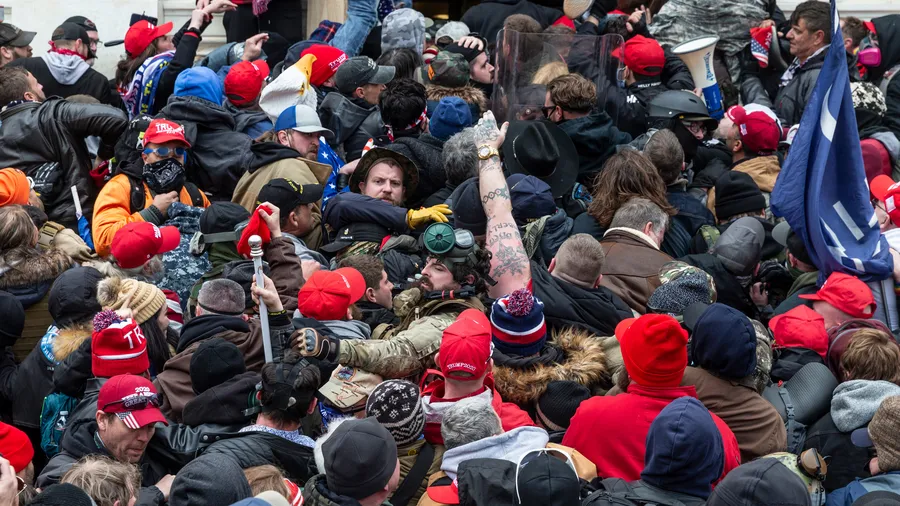
The events of January 6, 2021 in the United States displayed many of these indicators. Dangerous speech moved from online incitement to organized planning, with discussions on alt-social media platforms moving from dangerous speech to specific planning concerning the date, time, and requirements for disrupting the certification of the U.S. Presidential Election at the U.S. Capitol. Political elites – including the President of the United States – amplified and endorsed this message, serving to legitimize the violent actions of the crowd.
Recommendations for Threat Assessment
While the events of January 6, 2021 suggest these indicators may be an effective means of assessing violent threats democratic systems, this project suggests that we need to look beyond an interest in predicting isolated incidents and instead focus on the larger threat posed by serious episodes of violence. This involves developing more sophisticated research and information systems to identify the markers of escalation and planning for violence, and most importantly, to consider when incidents of political violence begin to undermine democratic processes and systems themselves.
Some markers of this deeper threat to democracy include:
- Clustering of Negative Social Cohesion Indicators: Violence tends to emerge when certain factors cluster together. For example, social inequality, political instability, and dangerous speech may all coincide, increasing the likelihood of violent outcomes. Increasing social inequality, the marginalization of certain groups, and a lack of social integration between "in" and "out" groups can all exacerbate the risk of political violence. Societies with high levels of segregation and distrust are more vulnerable to unrest. These clusters of indicators should be closely monitored.
- Shifts in Demographics and Political Preferences: In societies experiencing demographic changes or political shifts, the potential for violence may increase as dominant groups feel threatened. This sense of threat can lead to more extreme political preferences and actions, particularly when economic decline or other crises occur simultaneously.
- Perceived Threats of Violence: The perception that violence is widespread or that democratic institutions are failing can lead to reactionary behavior, even in the absence of (or reduction of) concrete violence. This phenomenon has been observed in numerous democracies, where political leaders use fear to mobilize support. The distinction therefore between the reality of violence and the perception of violence can be a critical indicator. In many cases, people's perception of violence, fueled by media narratives and political rhetoric, may differ from the actual level of violence occurring. This discrepancy can influence political behavior, as fear and insecurity drive people to support more authoritarian measures and/or engage in political violence.
- The Erosion of Democratic Norms: Repeated episodes of violence, or the perception of violence, can lead to a preference for authoritarianism as a means of restoring order. This erosion of trust in democratic processes poses a significant risk to the long-term health of democracies.
- Justifications for State Violence: In times of unrest, states often respond by constructing order through violence. When citizens perceive this violence as justified, it creates a dangerous cycle where violence is used to preserve the state at the expense of democratic norms.
Conclusion
These issues will form the basis for future work as part of this project. Our goal is to develop a framework to assess not only the risk of political violence within democratic societies, but the risk that political violence poses to democratic societies. The indicators outlined here may – with further research – serve as a guide to recognize and address these threats before they spiral out of control and threaten the integrity of democratic institutions and democratic norms.
The Salzburg Global Fellows who authored this article attended the Salzburg Global session on “Polarization and Violent Threats to Democratic Systems: Assessing the Threats and What We Can do About Them” from September 16 to 18, 2024.
The Polarization and Violent Threats to Democratic Systems project is developing an international, interdisciplinary network of researchers and stakeholders working on understanding and addressing rising polarization and political violence in a range of mature democratic systems. In addition, the project is defining a set of critical questions and objectives to inform and shape a new research agenda on the rise of polarization and political violence across selected countries.
Salzburg Global is grateful to the Harry Frank Guggenheim Foundation for their generous support and partnership that made this program possible.
