
-
Topics
TopicsOur programs create spaces where open-minded leaders can gather for breakthrough conversations on pressing global issues – each aligned to one of the following pillars:Get Involved
-
Events
EventsExplore the variety of events Salzburg Global hosts within Austria and in the rest of the world. Learn more about our programs and what else happens at Schloss Leopoldskron.
- Insights
-
Fellowship
FellowshipSince 1947, more than 40,000 people from over 170 countries have participated in Salzburg Global's sessions. Collectively, these alumni are known as Salzburg Global Fellows.
-
About Us
About UsSalzburg Global is an independent, non-profit organization committed to creating spaces that overcome barriers and open up a world of better possibilities.Our Approach
-
Support Us
Support UsYour generosity helps us gather open-minded leaders for breakthrough conversations, while creating space for dialogue that overcomes barriers and opens up a world of better possibilities.
- Donate

- Published date
- Written by
Share
Peace & Justice
Update
Charting the Future of the International Rule of Law
Published date
Written by
Share
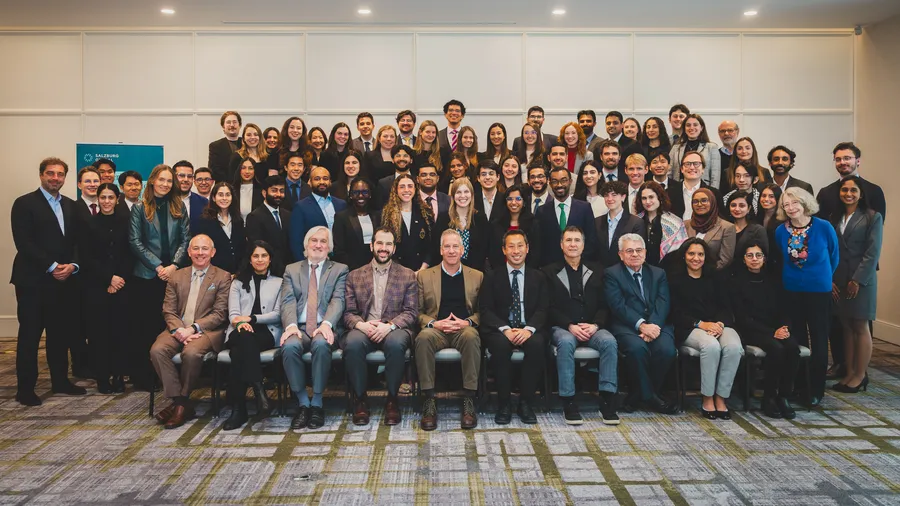
Fellows, faculty, and speakers at the Salzburg Cutler Fellows Program in February 2026. Photo Credit: Stefan Agregado
Key takeaways
- Cutler Fellows examined how shifting U.S. engagement is reshaping the international rule of law
- Through discussions and workshops, Fellows debated democracy, pluralism, and the future of global governance
- Panel discussions explored challenges in international trade law, climate policy, and digital regulation
This year’s Salzburg Cutler Fellows Program, “Disruption and Renewal: Charting the Future of the International Rule of Law, Democracy, and Pluralism,” took place in Washington, D.C. from February 5 to 7, 2026. Bringing together Cutler Fellows from 15 leading U.S. law schools alongside international law scholars and practitioners, the session created a dynamic forum for engaging diverse perspectives on international law.
The in-person program opened with a welcoming reception and fireside chat featuring John Bellinger III and Natalie L. Reid, moderated by Professor William Burke-White. The chat focused on what changing American engagement with international organizations means for the future of international law and the functioning of international institutions. Drawing on their experience in both government and private practice, panelists reflected on the United States’ longstanding role in shaping and adapting to international law. From there, they discussed the implications of U.S. disengagement from international legal institutions, noting how the realignment of actors contributes to international law today. Within the private sector, speakers emphasized that periods of uncertainty often generate new opportunities. Panelists encouraged aspiring international lawyers to remain optimistic and view challenges as opportunities for professional growth, even in periods marked by increasing unilateralism.
The following morning, Fellows participated in faculty-led paper workshops designed to support the development of their academic paper drafts for publication. In small groups, Fellows exchanged feedback, discussed drafting challenges, and received practical guidance on refining their arguments. Paper topics ranged widely, from national security and economic measures to investment law, climate change, and human rights.
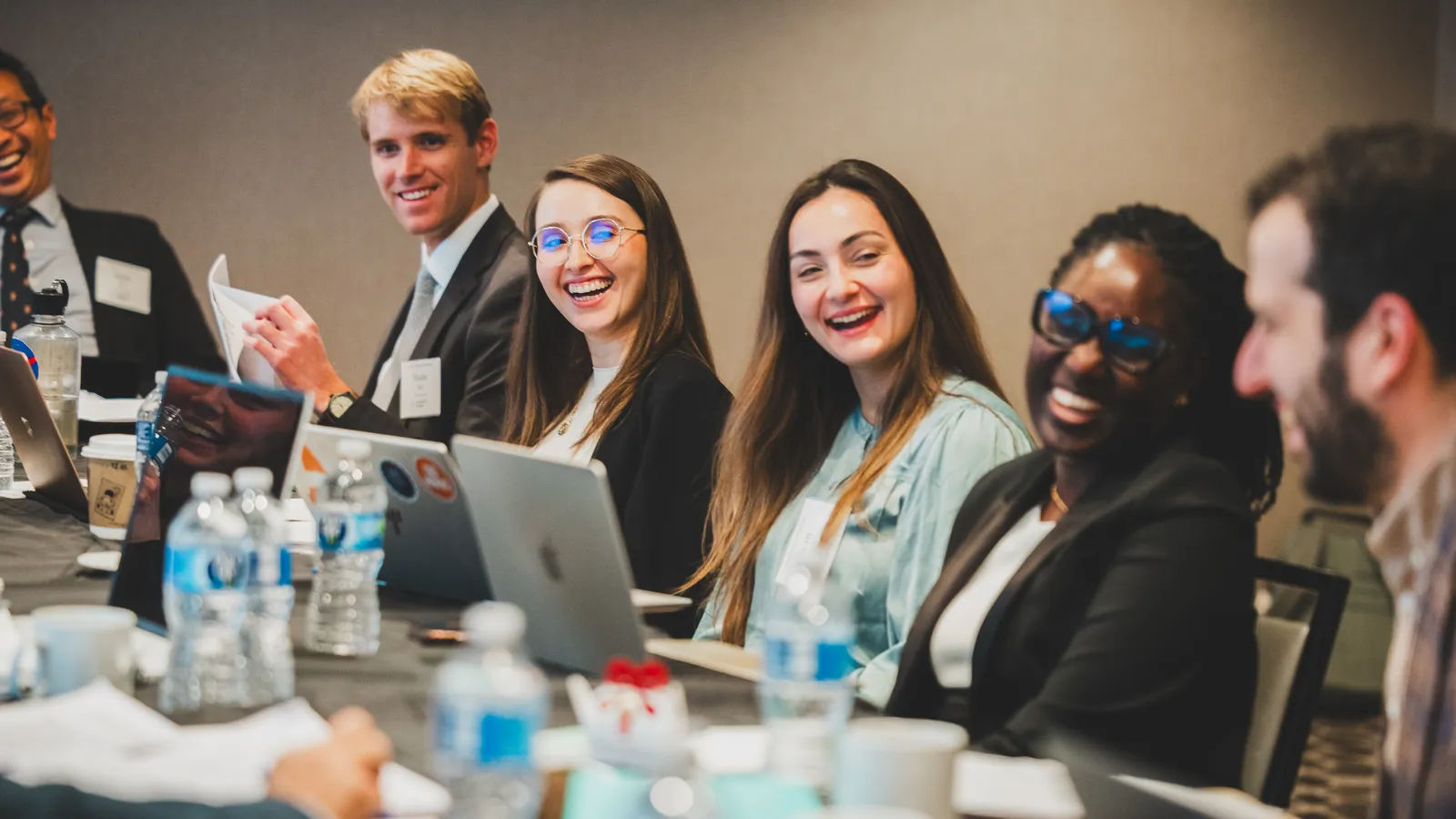
A panel on “The Shifting International Landscape under the Trump Administration,” moderated by Eric Feldman, brought together Mahnu Davar, Susan Benesch, and Ali Zaidi. The panel examined the transition from the Biden administration to the Trump administration through the lens of several policy areas. The discussion addressed developments in healthcare regulatory frameworks, climate policy focused on economic and environmental resilience, and the governance of hate speech and other forms of harmful content online.
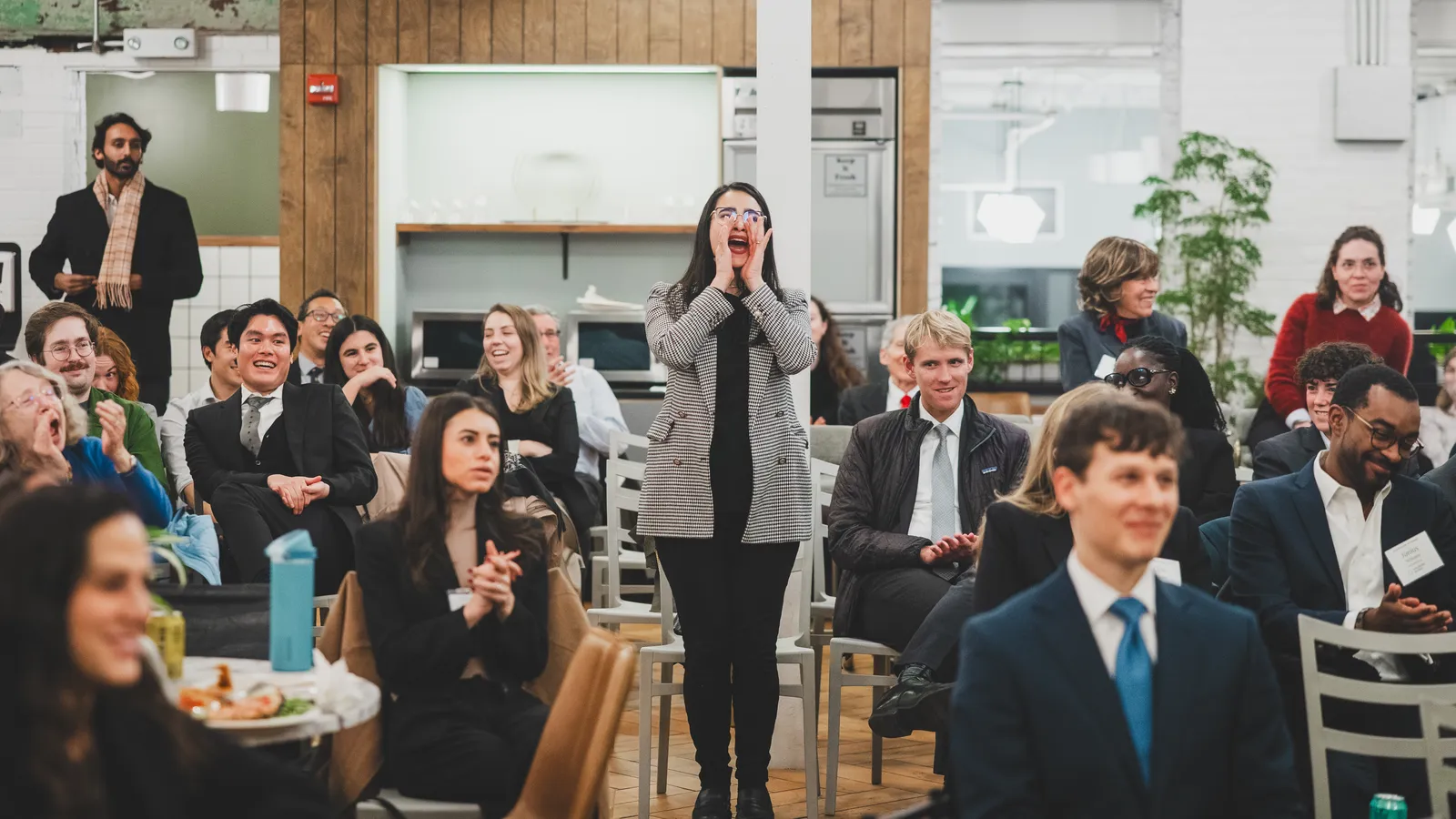
The panel was followed by one of the session's most memorable social-academic events: the “Salzburg Debate,” a night of lively discussions held over pizza. The debate considered a hypothetical restructuring of leadership and influence within the international legal order. Fellows and faculty on both sides delivered such passionate arguments that the audience found it nearly impossible to determine a winner.
Beyond academic writing, the session also offered valuable insights into career pathways in international law through its Knowledge Café mentorship sessions. Fellows rotated among small discussion tables with practitioners from the public sector, private practice, and international organizations. Hearing directly from professionals who had navigated similar paths proved both encouraging and inspiring.
The multi-day session concluded with a panel titled “The Future of International Trade and The Rule of Law” with Angela Ellard and Stephen Vaughn, moderated by Mark Wu. The panelists’ reflections on the WTO’s institutional challenges and the evolving landscape of international trade law were particularly illuminating. Audience questions included discussion of the then-pending U.S. Supreme Court decision concerning tariffs. As reflected throughout the session, the discussions were timely and directly engaged with the contemporary challenges facing the international trade order.
Although debate about the future of international law is unusually intense today, with some even speaking of its “end,” the Cutler Fellows Program concluded on a hopeful and forward-looking note. It offered a powerful reminder that, despite dystopian narratives, there remains strong commitment among scholars and practitioners to the international rule of law. Fellows left with renewed motivation to contribute to its preservation and development and to confidently pursue careers in international law.

