-
Topics
TopicsOur programs create spaces where open-minded leaders can gather for breakthrough conversations on pressing global issues – each aligned to one of the following pillars:Get Involved
-
Events
EventsExplore the variety of events Salzburg Global hosts within Austria and in the rest of the world. Learn more about our programs and what else happens at Schloss Leopoldskron.Upcoming EventsSep 06 - Sep 11, 2026EducationA Tale of 2000 Days: New Partnerships in Early ChildhoodEducation for Tomorrow's WorldOct 05 - Oct 07, 2026Finance & GovernanceA Multipolar & AI-Driven World: Are New Approaches Needed To Preserve Profit and Public Trust?Salzburg Global Corporate Governance Forum
- Insights
-
Fellowship
FellowshipSince 1947, more than 40,000 people from over 170 countries have participated in Salzburg Global's sessions. Collectively, these alumni are known as Salzburg Global Fellows.
-
About Us
About UsSalzburg Global is an independent, non-profit organization committed to creating spaces that overcome barriers and open up a world of better possibilities.Our Approach
-
Support Us
Support UsYour generosity helps us gather open-minded leaders for breakthrough conversations, while creating space for dialogue that overcomes barriers and opens up a world of better possibilities.
- Donate

- Published date
- Written by
Share
Peace & Justice
Opinion
As Cities Heat Up, Migrant Children Must Not Be Left Behind
Published date
Written by
Share
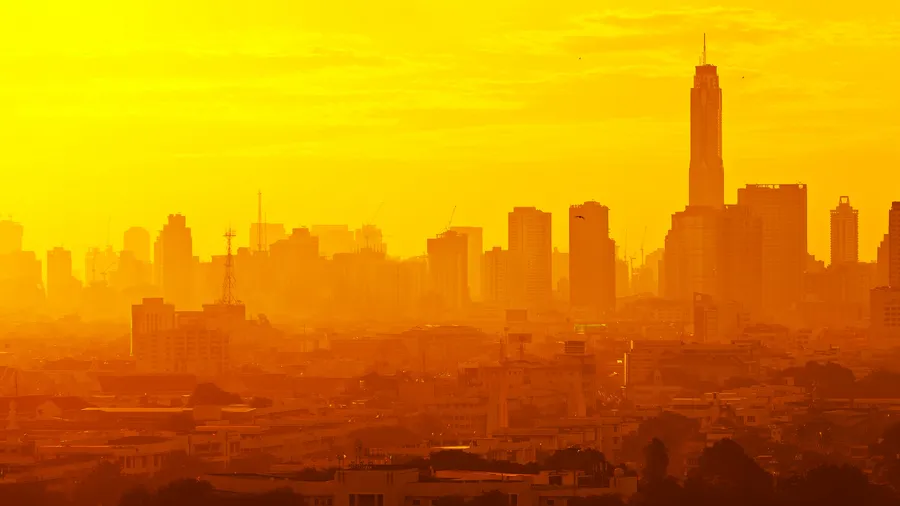
Sunrise over Bangkok, Thailand
Key takeaways
- Extreme urban heat hits migrant and displaced children especially hard, compounding existing inequalities in housing, health care, and public services.
- Cities can protect vulnerable children through cooler learning spaces, multilingual information, accessible health care, and inclusive heat planning.
- Climate resilience is meaningful only when it includes everyone, especially those who are easiest to overlook.
Extreme heat is quickly becoming one of the defining public-health challenges of urban life. But the burden is not shared equally. In cities from Bangkok to Barcelona, Delhi to Dar es Salaam, those least able to escape the heat are often the people with the fewest rights, resources, and choices: low-income families, informal workers, migrants, and displaced people.
Climate change and rapid urbanization are intensifying urban heat islands—areas where concrete, asphalt, dark roofs, traffic, and dense buildings trap heat. UN-Habitat notes that the combined effects of climate change and urban expansion will intensify urban heat islands, especially among vulnerable populations.
As cities heat up, the question is no longer only how to lower temperatures. It is whether city governments are prepared to protect all residents, including migrant and displaced children.
Climate stress increasingly intersects with migration. Families move for many reasons: conflict, lost livelihoods, economic pressure, education, safety, and family reunification. Rising temperatures, water insecurity, and failed harvests can deepen these pressures. But moving to a city does not automatically bring safety from heat. For many families, rural heat and drought are replaced by a new danger: humid, trapped heat in crowded urban neighborhoods.
Bangkok offers a clear example. Many families migrate to Bangkok seeking work and stability, including people arriving from Myanmar’s central Dry Zone, a region known for arid conditions, agricultural vulnerability, and high temperatures. Many settle in low-cost accommodation near factories, construction sites, markets, transport routes, or informal settlements. These areas are often far from green space and characterized by small rooms, metal roofs, limited ventilation, and costly electricity.
In urban areas like Bangkok, heat gets trapped in buildings and streets. Concrete and asphalt absorb sunlight during the day and release heat at night. Buildings restrict airflow. Traffic generates both pollution and heat. Families who cannot afford effective cooling may spend nights in rooms that remain dangerously warm.
Research examining land-use change and urban heat intensity in the Bangkok Metropolitan Area has documented the city’s urban heat-island effect, while the World Bank describes extreme urban heat as an urgent threat to lives, livelihoods, and Bangkok’s economic resilience. The city’s vulnerability is not only geographical; it is social. The ability to escape heat depends on income, housing quality, access to water and health care, information, and public space.
Children Are Especially Vulnerable
Children are especially vulnerable because their bodies regulate temperature differently from adults. They dehydrate more quickly, have less control over their environment, and rely on caregivers for water, shade, rest, and medical attention. Extreme heat is linked to dehydration, heat-related illness, respiratory problems, and increased health risks for infants and children with pre-existing conditions.
The effects extend beyond physical health. Hot nights damage sleep, leaving children tired before the school day begins. High temperatures impair concentration, memory, and classroom performance. Heat also restricts outdoor activity and safe play, which are essential for children’s social, emotional, and physical development.
For migrant children, these risks often overlap with other forms of exclusion. Language barriers can limit access to health information. Families may hesitate to use services because of cost, legal uncertainty, or unfamiliarity with the system. Children may attend learning centers or schools with poor ventilation and few cooling resources. They may live in neighborhoods that lack trees, shade, and safe public spaces.
This is why extreme heat must be treated as an issue of urban justice.
Five Steps for Urban Justice
A city’s heat-response plan should do more than set temperature thresholds and emergency services. It should ask: Who lives in the hottest neighborhoods? Which children have no safe place to cool down? Are heat warnings communicated in languages migrant families understand? Can people access health care without fear or unaffordable costs? Are schools, community centers, and public spaces prepared for extreme heat?
Five practical actions can make a meaningful difference.
- Map vulnerability. Cities should create inclusive heat-action plans that identify hot spots and map where children, migrant communities, and low-income families live, study, and work.
- Communicate clearly. Public-health information must be practical and multilingual. Families need clear guidance on hydration, warning signs, shaded travel, safe rest, and when to seek urgent care.
- Provide cool learning spaces. Invest in cooler schools and learning centers. Shade structures, trees, improved ventilation, light-colored roofs, drinking-water points, and adjusted activity schedules can reduce heat exposure without costly infrastructure.
- Ensure accessible health services. Community health workers and migrant-led organizations can bridge language and trust gaps, while frontline clinicians can identify heat-related symptoms early.
- Include children in planning. Young people know which streets lack shade, which classrooms are too hot, and where cooling spaces are needed. Their experiences should inform city planning rather than appearing only as tragic examples after a heatwave.
A cooler and just city is one with shade, safe housing, reliable water, accessible health care, inclusive schools, and public systems that treat every child as though they belong.
As temperatures rise worldwide, cities should increasingly be judged by how they protect those who are easiest to overlook. Migrant and displaced children must not be left outside cooling centers, outside clinics, or outside the plan.
Bangkok’s experience with migrants offers a lesson with global relevance: Climate resilience is meaningful only when it includes everyone.
Acknowledgment
This article was produced as part of the Media Fellowship under the Cities on Fire initiative in Bangkok, Colombo, Jakarta, and Manila, and the “Cooler Cities. Healthier Children. Brighter Futures.” initiative in India.