-
Topics
TopicsOur programs create spaces where open-minded leaders can gather for breakthrough conversations on pressing global issues – each aligned to one of the following pillars:Get Involved
-
Events
EventsExplore the variety of events Salzburg Global hosts within Austria and in the rest of the world. Learn more about our programs and what else happens at Schloss Leopoldskron.Upcoming EventsSep 06 - Sep 11, 2026EducationA Tale of 2000 Days: New Partnerships in Early ChildhoodEducation for Tomorrow's WorldOct 05 - Oct 07, 2026Finance & GovernanceA Multipolar & AI-Driven World: Are New Approaches Needed To Preserve Profit and Public Trust?Salzburg Global Corporate Governance Forum
- Insights
-
Fellowship
FellowshipSince 1947, more than 40,000 people from over 170 countries have participated in Salzburg Global's sessions. Collectively, these alumni are known as Salzburg Global Fellows.
-
About Us
About UsSalzburg Global is an independent, non-profit organization committed to creating spaces that overcome barriers and open up a world of better possibilities.Our Approach
-
Support Us
Support UsYour generosity helps us gather open-minded leaders for breakthrough conversations, while creating space for dialogue that overcomes barriers and opens up a world of better possibilities.
- Donate

- Published date
- Written by
Share
Culture
Opinion
Beyond Contestation: Climate Justice Across Continents
Published date
Written by
Share
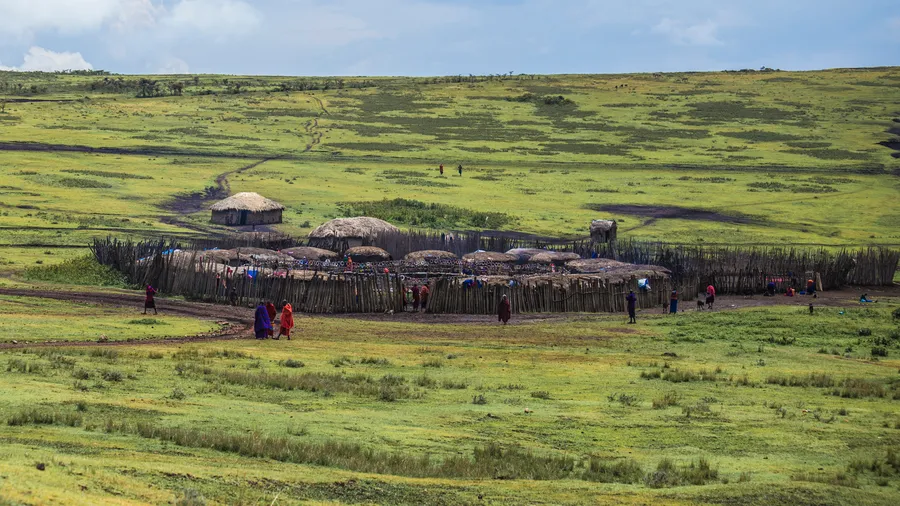
View of Masai Tribal Village at Ngorongoro Crater in Tanzania. Photo Credit: Envato.com/GreensandBlues
This article was written by Salzburg Global Fellow Ianira Vieira and her mentor, Sergio Rejado Albaina. They participated in the third cohort of the Public Policy New Voices Europe program throughout 2025.
The views expressed in this article are those of these Fellows individually and should not be taken to represent those of Salzburg Global or any organizations to which they are affiliated.
Ahead of the UN Climate Change Conference (COP26) in 2021, Articulação dos Povos Indígenas do Brasil, representing hundreds of Indigenous peoples from across Brazil, presented this decisive statement:
“There is no solution to the climate crisis without us.”
Indeed, according to the United Nations, “although Indigenous Peoples account for only around 6 per cent of the world’s population, they effectively manage and protect an estimated 80 per cent of the Earth’s biodiversity and about 40 per cent of protected areas and ecologically intact landscapes.”
Although these figures have received criticism, the role of Indigenous populations in protecting and conserving ecosystems and biodiversity is widely acknowledged. Moreover, over the last decades, Indigenous peoples have been increasingly active in the international climate policy arena, becoming key actors in climate negotiations and the global debate on climate justice.
What is Climate Justice?
The concept of climate justice is rooted in the wider environmental justice movement, which dates back to the landfill protests of 1978 to 1982 in Warren County against the dumping of highly toxic waste in a poor and predominantly African-American community. Its central tenet is that climate change impacts different individuals and groups unequally and disproportionately, among them Indigenous communities.
This movement has grown over the years, becoming central to international global climate debates and negotiations, and influencing international principles, practices, and policymaking. Although the concept has not been exempt from controversy, it has led to significant victories, such as the establishment of the Loss and Damage Fund in 2022.
Who is Indigenous?
But Indigeneity is also a disputed concept.
The UN, for example, does not have a definition of who Indigenous peoples are. However, it describes them as having "a historical continuity with a given region prior to colonization and a strong link to their lands. They maintain, at least in part, distinct social, economic and political systems. They have distinct languages, cultures, beliefs and knowledge systems. They are determined to maintain and develop their identity and distinct institutions, and they form a non-dominant sector of society.”
In the African context, the term has an even more contentious background. For example, under most European colonial regimes, people classified as “native” or “Indigenous” were subject to the provisions of the Indigenous Code, which considered them inferior beings and subjected them to systemic racism, marginalization, denial of fundamental rights, forced labor, and restrictions on movement. This has led to the term “Indigenous” acquiring primitivist connotations on the continent.
Today, some groups on the continent, such as the San or the Maasai, have been recognized in international fora as “Indigenous peoples.” However, most states have been reluctant to acknowledge claims to rights based on Indigeneity since gaining independence. After all, they argue, all black Africans are Indigenous to the continent.
Beyond Contestation: The Centrality of Land
Land, or rather a collective approach to land, is central to the demands of the Indigenous movement. In Latin America, this vision challenges the extractivist logic and export of primary goods, relegated as the only mode for developing countries to participate in the global economy. In Brazil, for example, protecting Indigenous land is one of the most decisive measures for mitigating the effects of climate change, including preserving the Amazon.
Much like in South America, African states are moving towards carbon-intensive development pathways fueled by unsustainable forms of natural resource exploitation, often leading to gross inequality and marginalization. However, in Latin America, Indigenous populations legally and effectively own land that is disputed by large-scale economic activities such as mining and monoculture farming. In contrast, in most African countries, land is owned by the state in the name of “public interest,” while traditional customary governance systems regulate land use at the community level.
Hence, multiple legal systems co-exist within a single geographical space, known as legal pluralism, in which local communities acquire rights to use land through “concession.” However, a combination of ineffective policies, lack of law enforcement, and weak state control over the territory means that customary institutions do de facto regulate land use in rural areas, but without a legal basis to do so. The consequences of this system are well documented: people are left vulnerable to various forms of land dispossession, often resulting in flagrant human rights violations, as seen in the cases of northern provinces in Mozambique and the Niger Delta.
It is disputable that categorizing people in Indigenous terms in Africa is the correct approach to addressing climate justice, particularly redistributive justice. This is especially pertinent in countries where the colonial logic of identity governance and social differentiation persists (resulting in the reproduction and perpetuation of institutionalized forms of marginalization and exclusion) and where attempts to create a common national ground for equal treatment (not anchored on ethnicity or religion) of citizens have repeatedly failed.
However, climate justice in Africa can still draw valuable lessons from the Latin American Indigenous-led climate justice movement:
- Oppose extractivism as the primary development paradigm: Growth is necessary to address deep poverty, improve well-being, and increase communities' capacity to adapt to climate change. Nevertheless, growth should also be guided by the conscious recognition that we live in an ecosystem of limited resources, avoiding the pitfalls of extractivism and greenwashing.
- Implement land reform and provide legal recognition of land ownership and customary and access rights for local communities, accompanied by robust transparency and accountability mechanisms: Legal frameworks that recognize local land ownership empower local communities, contributing to the alleviation of poverty and land stewardship (and, hence, to sustainable use of natural resources). However, this must be paired with land governance frameworks that recognize customary governance customs, while establishing transparency and accountability frameworks. This two-pronged approach is necessary to eliminate current sources of vulnerability and dispossession, while preventing abuse and capture of power by both local and external elites and groups.
- Recognize the right to free, prior, and informed consent: To further address the roots of vulnerability and dispossession, local communities must be placed at the core of decision making for projects on their lands. A legal requirement to undertake free, prior, and informed consent (FPIC) protocols and meaningful consultations would enhance transparency and accountability in development decisions, while addressing the needs and desires of affected local communities.
The adoption of these principles, taking into account local realities, would help mitigate the environmental damage, loss of livelihoods, and risk of violence occurring under the current African paradigm, thereby reducing vulnerability and protecting community interests.
In Africa, where the concept of “Indigenous” is politically contested and land is governed through plural systems, these principles intersect with the influence of ethnic and traditional leaders, whose authority must be paired with mechanisms of accountability to prevent elite capture and protect community interests. And, in many forms, these reflect the same challenges observed in other contexts.