
-
Topics
TopicsOur programs create spaces where open-minded leaders can gather for breakthrough conversations on pressing global issues – each aligned to one of the following pillars:Get Involved
-
Events
EventsExplore the variety of events Salzburg Global hosts within Austria and in the rest of the world. Learn more about our programs and what else happens at Schloss Leopoldskron.
- Insights
-
Fellowship
FellowshipSince 1947, more than 40,000 people from over 170 countries have participated in Salzburg Global's sessions. Collectively, these alumni are known as Salzburg Global Fellows.
-
About Us
About UsSalzburg Global is an independent, non-profit organization committed to creating spaces that overcome barriers and open up a world of better possibilities.Our Approach
-
Support Us
Support UsYour generosity helps us gather open-minded leaders for breakthrough conversations, while creating space for dialogue that overcomes barriers and opens up a world of better possibilities.
- Donate

Education
Feature
Why Climate Policy Must Not Only Focus on Greenhouse Gases
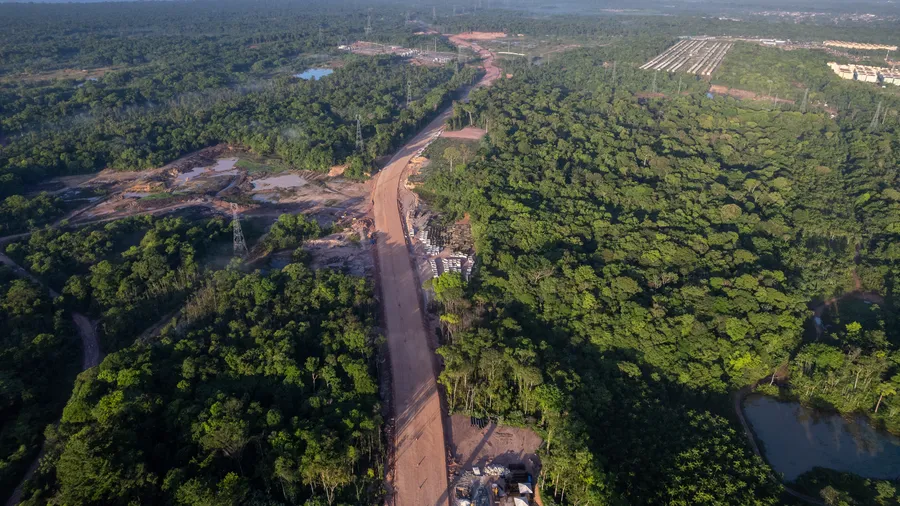
Deforestation to build a road in the Amazon rainforest for the UN Climate Change Conference (COP30) in Belém, Pará, Brazil. Photo Credit: Shutterstock.com/2668529049
This article has been translated from German and was originally published by the Salzburger Nachrichten. The original article can be downloaded here.
When Melina Sakiyama thinks of her homeland of Brazil, images from her past come to mind: colorful birds in the Amazon, the lush green of the trees, and the chirping of insects. It's the sound of her childhood.
Melina actually grew up in the metropolis of São Paulo, where there is not much greenery. But her father repeatedly took her to his homeland in the Amazon - not far from where, in November 2025, tens of thousands of people from all over the world gathered to participate in the COP30 World Climate Conference.
“Is That All There Is?”: Why the Young Activist Founded a Network
It has now been 15 years since Melina herself participated in the World Climate Conference in Nagoya, Japan – and there she realized: She didn't want to just be a spectator. “We were a group of youth delegates at the COP and asked ourselves: Okay, we were there for a week and that's it?” Therefore, she and other young activists decided to found a network: the Global Youth Biodiversity Network, or GYBN for short. The organization is intended to be a bridge: It connects local environmental initiatives with the bodies of the United Nations.
Young people often find it difficult to make their voices heard in the climate debate, Melina reported. Many paragraphs and guidelines are worded in a complicated way. “We wrote our own handbook, ‘CBD in a Nutshell.’ It explains how negotiations under the UN Convention on Biological Diversity work, what issues are negotiated there, and what opportunities exist to participate,” said Melina. The handbook was intended as an introductory guide for young environmental activists – “today, government representatives use the book to train new delegates.”
The GYBN movement has also motivated many people within 15 years to commit to preserving nature and biodiversity. While there were only a handful of activists at COP 2010, thousands of people in 60 countries are now active in the network. This is a huge success for these environmental activists.
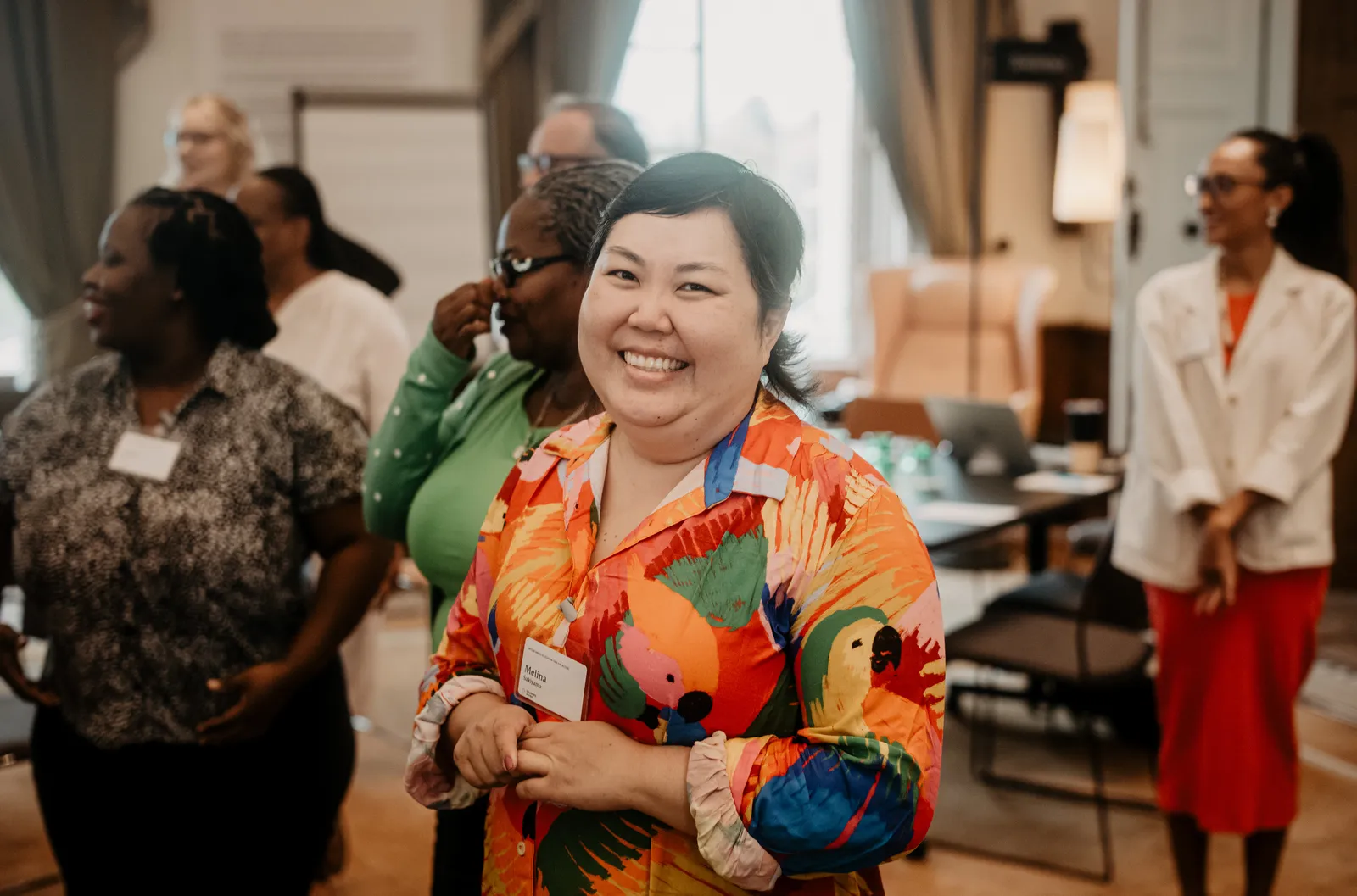
Melina Did Not Attend the COP in Belém
In her home country of Brazil, Melina decided not to attend the World Climate Conference. "I have mixed feelings," she said. "What if it becomes a show?" Many large oil and agricultural corporations will have their say – but Melina feared that the very people who should have a voice, the Indigenous population, would hardly be represented.
Brazil is using the World Climate Conference as a platform – but the closer you look, the more contradictions emerge, said the activist. Just a few weeks ago, the government of left-wing President Luiz Inácio Lula da Silva granted licenses for oil drilling in the Amazon basin. For Melina, it's almost ironic that the World Climate Conference will be held in Belém. "Pará is the deadliest state for environmental defenders," she said. "And now the World Climate Conference is taking place right there – in the heart of the conflict."
Of 486 documented acts of violence against human rights activists in 2023 and 2024, over 80 percent targeted environmental activists, according to a study by the Brazilian NGO Terra de Direitos. Indigenous people are particularly victimized.
It is precisely the Indigenous communities who are the guardians of the Amazon. "If we want to preserve biodiversity, we must strengthen Indigenous voices," said the 39-year-old, who attended the Salzburg Global session on “Nature-Based Education: Time For Action.” "They bear the responsibility, not because they have to – but because they have never stopped living in harmony with nature."
Climate Protection Without Nature Conservation Cannot Work
Climate protection without nature conservation simply cannot work, said Melina. Ultimately, global warming and species extinction are two sides of the same coin – they result from deforestation, industrial agriculture, and the unchecked consumption of natural resources. Even as a teenager, she wondered: "We live on a single planet – how can it be that our economy only functions linearly and we simply produce, produce, produce, consume, consume, and throw everything away, throw it away, throw it away?"
Focusing solely on greenhouse gases narrows our perspective. “Everything - trees, forests, entire ecosystems - is reduced to a single metric: carbon. That may be easier for politicians, but it’s not the best way,” she asserted.
Because a forest isn’t just important for the climate. “Biodiversity is everything - it’s our food, our medicine, our spiritual connection, our space for recreation,” said Melina. “The tragic thing is: The solutions lie within nature itself. Only by preserving nature can we become resilient to disasters and extreme climate events.”
