
-
Topics
TopicsOur programs create spaces where open-minded leaders can gather for breakthrough conversations on pressing global issues – each aligned to one of the following pillars:Get Involved
-
Events
EventsExplore the variety of events Salzburg Global hosts within Austria and in the rest of the world. Learn more about our programs and what else happens at Schloss Leopoldskron.
- Insights
-
Fellowship
FellowshipSince 1947, more than 40,000 people from over 170 countries have participated in Salzburg Global's sessions. Collectively, these alumni are known as Salzburg Global Fellows.
-
About Us
About UsSalzburg Global is an independent, non-profit organization committed to creating spaces that overcome barriers and open up a world of better possibilities.Our Approach
-
Support Us
Support UsYour generosity helps us gather open-minded leaders for breakthrough conversations, while creating space for dialogue that overcomes barriers and opens up a world of better possibilities.
- Donate

Education
Update
Nature-Based Education: Time for Action
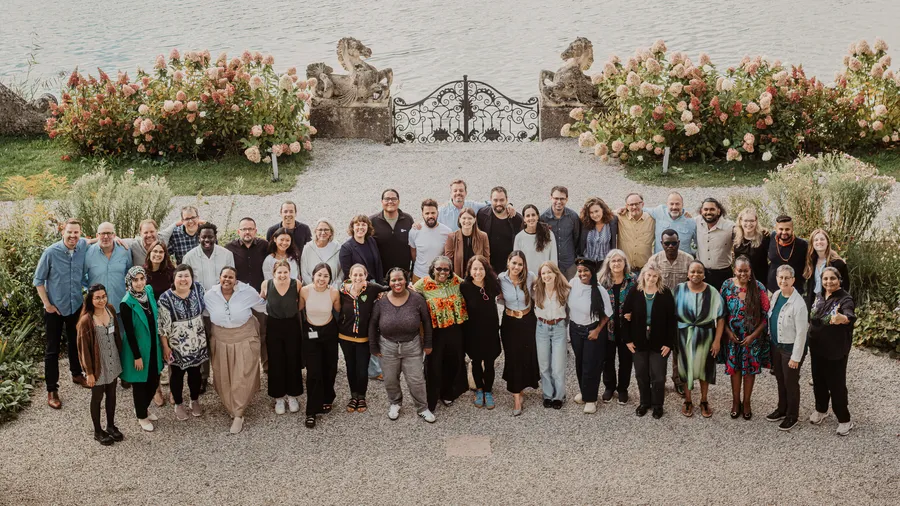
Photo Credit: Richard Schabetsberger
The severity and urgency of the climate crisis require a “whole of society” response. Education has a key role to play, both as a sector and as part of national responses to other initiatives.
In reimagining how education systems serve life and nature, Salzburg Global convened a session on “Nature-Based Education: Time for Action.” 47 Fellows from more than 20 countries convened at Schloss Leopoldskron from September 8 to 12, 2025. Fellows included key stakeholders from education and conservation, including policymakers, academics, funders, and educators.
Nature-based education is part of an ecosystem of blended educational strategies encompassing environmental education, Indigenous ways of knowing, climate and biodiversity education, education for sustainable development, outdoor education and experiential education, mindfulness, and socio-emotional learning, among others. This holistic approach to education combines both formal and non-formal activities such as creativity and wild play, while integrating climate biodiversity and nature education.
This session aimed to address the climate crisis by integrating environmental themes into education systems and reconnecting students with their natural surroundings. The director of the Center for Education Transformation at Salzburg Global, Dominic Regester, emphasized the importance of convening innovators to align education with environmental goals. “For so many people, education is a critical component of the process that shapes their mindset, values, and capabilities for the future. Education has the power to shape future generations, and when aligned with environmental goals, it becomes a force for equipping people and societies to sustain, restore, and reimagine our world."
In this way, education plays a pivotal role in fostering action on sustainable development across areas, regions, and sectors. This program was designed in partnership with the TUI Care Foundation, International Union for the Conservation of Nature Commission on Education and Communication, Canadian Wildlife Federation, and other partners. Veronika Blach, the Head of Environmental Programs at TUI Care Foundation, noted that “by connecting communities with their natural heritage, we cultivate not only environmental awareness, but also the foundation for resilient, thriving destinations. Nature-based education needs to be a priority to address the planetary crisis.”
This Salzburg Global session is part of a continuous and expanding conversation about prioritizing nature and climate in education systems worldwide. To continue conversations beyond the session, Fellows are preparing action-oriented recommendations in the form of a Salzburg Statement and other creative outputs. These recommendations will be brought forward at the United Nations General Assembly in September 2025, the IUCN World Conservation Congress in October 2025, and other international forums.
Sean Southey, CEO of the Canadian Wildlife Federation and Chair of the IUCN Commission on Education and Communication, reiterated, “We convened this special group of education practitioners to generate insights and strategic recommendations, drawing on diverse perspectives from across countries, to provide meaningful input supporting the creation of the Global Plan of Action on Education for Biodiversity.”
The “Nature-Based Education: Time for Action” session and its outcomes aim to enhance learning, well-being, and climate action, thus building a more resilient, just, and sustainable future for all.
"Nature-Based Education: Time for Action" is part of the Nature-Based Education program in the Salzburg Global Center for Education Transformation.
