-
Topics
TopicsOur programs create spaces where open-minded leaders can gather for breakthrough conversations on pressing global issues – each aligned to one of the following pillars:Get Involved
-
Events
EventsExplore the variety of events Salzburg Global hosts within Austria and in the rest of the world. Learn more about our programs and what else happens at Schloss Leopoldskron.Upcoming EventsOct 19 - Oct 22, 2026Peace & JusticeThe Collective Action Problem: How Should Democratic Societies Respond to Increasing State Violence without Exacerbating Polarization and Political Violence?Violent Threats to Democratic SystemsOct 21 - Oct 25, 2026Peace & JusticeDemocracy Across the Frontlines: How Can Democracy Movements Collaborate To Build Resilience Across Borders?Democracy Resilience Forum
- Insights
-
Fellowship
FellowshipSince 1947, more than 40,000 people from over 170 countries have participated in Salzburg Global's sessions. Collectively, these alumni are known as Salzburg Global Fellows.
-
About Us
About UsSalzburg Global is an independent, non-profit organization committed to creating spaces that overcome barriers and open up a world of better possibilities.Our Approach
-
Support Us
Support UsYour generosity helps us gather open-minded leaders for breakthrough conversations, while creating space for dialogue that overcomes barriers and opens up a world of better possibilities.
- Donate

- Published date
- Written by
Share
Peace & Justice
Opinion
We Know How To Safeguard Democracy. But Why Aren’t We Doing It More Effectively?
Published date
Written by
Share
Key takeaways
- Democracy cannot survive on civic education alone, people need to actively experience participation, empathy, and community engagement.
- Young people want to shape the conversations around them, but many feel unheard, creating space for frustration and extremist narratives.
- Stronger communities can be built through dialogue, arts, solidarity, and shared purpose. They are essential to rebuilding trust in democratic societies.
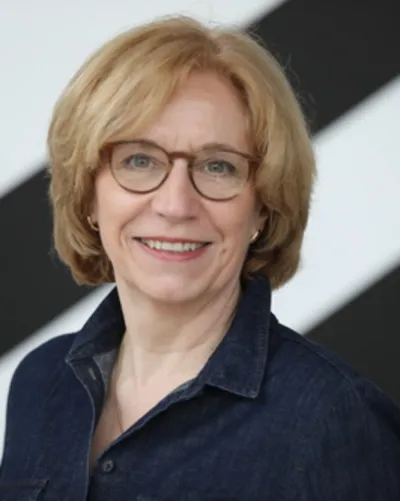
This article was written by Salzburg Global Fellow Martina Kohl.
The views expressed here belong to this Fellow individually and should not be taken to represent those of any organizations to which they are affiliated.
“Neighboring” is a new verb Thomas Friedman recently discussed in a New York Times op-ed. He reported on how the community in his hometown of Minneapolis had stood together to confront U.S. Immigration and Customs Enforcement (ICE) raids on their immigrant neighbors. Friedman describes citizen participation, or lived democracy, as a community coming together to protect their most vulnerable members.
But why does it take an outside threat, such as masked ICE agents, to bring a diverse and demographically evolving citizenry together? What if the threat were diffuse and not so “in-your-face”?
Across Europe and the U.S., we are witnessing a surge to the right socially and politically. Easy answers are offered in the face of global economic, environmental, and social challenges. A vague yearning for a mythical “better past” fuels anti-feminist and anti-foreigner sentiments. The price of voting these extreme voices into power is a dismantling of the law-based guardrails of our democracies such as a free press and independent branches of government.
Civic education is key. But it is not enough.
In Germany, known for its memory culture, civic education is mandatory to provide students with knowledge about the principles of citizenship, ethics, and democratic participation. Yet, as worthy and essential as these non-partisan, fact-based, federally- and state-funded efforts in cooperation with civil society are, they don’t seem to be enough.
One challenge might be that how we talk about democracy and democratic values is too abstract.
Listening to the Young and Filling Democracy With Life
Filling democratic ideals with life needs to start with the young, but it is a lifelong commitment for all of us. According to the annual school survey by the Bosch Foundation, three quarters of students aged 11 to 17 would like to be able to influence topics discussed in schools, but 80 percent don’t feel like they are being “heard.” In other words, while civic education still has its place, civic participation doesn’t take place to a large part during these formative years. Add to that the impact of the COVID-19 pandemic years, climate change, and an increasing threat of armed conflict around the world, and the yearning for easy answers might provide a fertile ground for attracting young people to extremist ideologies.
Civic participation requires the ability and willingness of citizens to think critically and question answers which are suspiciously easy for complex issues. Educators and civil society need to work together inter-generationally to engage the young in practicing these skills. They also need to be given a voice.
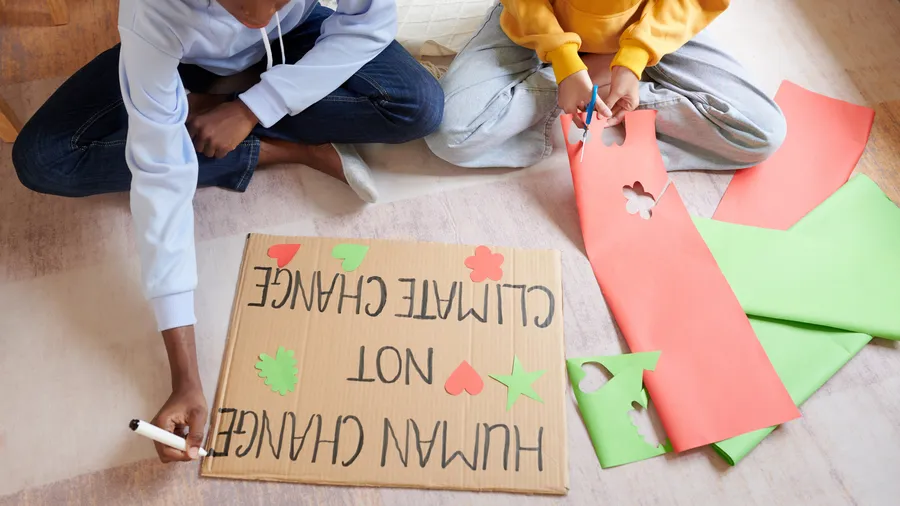
One concrete example: March 18, 2026 commemorated a country-wide “Day of the History of Democracy” in Germany for the first time with locally organized events under the patronage of Germany’s Federal President Steinmeier. In Thuringia, a German state where the right-wing party Alternative für Deutschland (AfD) has reached 37 percent approval ratings, fifteen-year-old high school students worked with local artist Anne Zimmermann to create a graphic novel on the theme of democracy. Zimmermann is helping students move beyond the abstract and make democracy a personal experience: “They ask themselves specifically, what does this mean for me? Not what democracy means in general. . . And then I can tell a story about it.”
One of the students is exploring women’s political rights by drawing “a polling station where women were given the right to vote for the first time.” Another student reveals her thinking about the project: “Without justice or a sense of justice among the population, you can’t achieve anything, I would say. And without civic courage and solidarity, certainly nothing.”
While connecting an abstract concept with the personal, the students are discovering what the Minnesotans felt when they were protecting their neighbors: empathy that fills democracy with life.
The students in Thuringia will share their work with the wider community - which is key. They are motivated because their engagement is not restricted to the classroom. It has a purpose.
What We Can Do
Strategically and purposefully strengthening our communities is the basis for safety and prosperity and takes the oxygen out of extremism. The goal is to rebuild trust in our democratic societies from the ground up though the arts, sports, social, and political engagement.
Each of us can be part of this. So, let’s do a little "neighboring".