-
Topics
TopicsOur programs create spaces where open-minded leaders can gather for breakthrough conversations on pressing global issues – each aligned to one of the following pillars:Get Involved
-
Events
EventsExplore the variety of events Salzburg Global hosts within Austria and in the rest of the world. Learn more about our programs and what else happens at Schloss Leopoldskron.Upcoming EventsSep 06 - Sep 11, 2026EducationA Tale of 2000 Days: New Partnerships in Early ChildhoodEducation for Tomorrow's WorldOct 05 - Oct 07, 2026Finance & GovernanceA Multipolar & AI-Driven World: Are New Approaches Needed To Preserve Profit and Public Trust?Salzburg Global Corporate Governance Forum
- Insights
-
Fellowship
FellowshipSince 1947, more than 40,000 people from over 170 countries have participated in Salzburg Global's sessions. Collectively, these alumni are known as Salzburg Global Fellows.
-
About Us
About UsSalzburg Global is an independent, non-profit organization committed to creating spaces that overcome barriers and open up a world of better possibilities.Our Approach
-
Support Us
Support UsYour generosity helps us gather open-minded leaders for breakthrough conversations, while creating space for dialogue that overcomes barriers and opens up a world of better possibilities.
- Donate

- Published date
- Written by
Share
Culture
Opinion
The Data Knows Us, But Does It Understand Us?
Published date
Written by
Share

Key takeaways
- At the Creative Bureaucracy Festival in Berlin, Salzburg Global’s Public Policy New Voices Europe (PPNVE) Fellows contributed to discussions on the challenges and opportunities of digital governance.
- People who do not fit neatly into digital categories risk being misunderstood, overlooked, or excluded from public services and decision-making.
- Digital public leadership requires using technology effectively while building trust, involving citizens, and recognizing the limits of data.
Digital systems used for governance know a remarkable amount of information about us. They may know key details like age, employment status, location, financial transactions, and interactions with public services.
Increasingly, they can also infer things about us from the patterns in our data. But does that give public institutions the full picture of who citizens are and what they need?
For example, a system may know that someone frequently uses healthcare services without knowing that they are caring for an elderly parent. It may identify irregular income without knowing that the person is an artist who is also spending their time building a community. It may register missing documentation without understanding the circumstances behind it.
This is the paradox of increasingly digital societies: We have more information about people than ever before, but understanding their lived realities remains difficult.
This was one of the provocations that surfaced repeatedly at the 2026 Creative Bureaucracy Festival (CBF) in Berlin. Through its partnership with Salzburg Global, CBF provided a platform for members of the fifth cohort of the Public Policy New Voices Europe program to participate in wider conversations on public policy, bureaucracy, and democracy.
When We Become a “Digital Shadow”
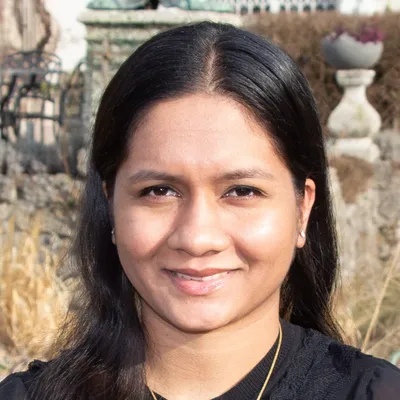
This year, 13 selected Fellows from the Public Policy New Voices Europe cohort attended sessions and panels across the festival, while two of them, Ruby Haji Naif and Shawgi Omer Nawai, also hosted a cruise workshop titled “Who Gets Seen in Digital Systems?”
The workshop by Fellows Naif and Nawai challenged participants to look closely at how digital systems represent us - what they know about us, what they miss, and what they may misunderstand.
By collecting information about people, data systems also create interpretations of them. In a sense, this gives each of us a “digital shadow”: a version of ourselves assembled from government databases, financial systems, platforms, social media, and algorithms. The shadow can be useful, but it is never a comprehensive picture of the whole person.
The danger of digital systems, therefore, is not only bias. It is false certainty, as incomplete information can lead to overly confident conclusions.
This raises an ethical dilemma for citizens and governance systems alike: If institutions collect more information to make better decisions, where does the citizen's right to privacy begin and end? An even more useful question may be: What do institutions need to know to be most effective, and what should they accept that they cannot know?
The People Missing From the Data
The question of who gets seen is also a question of who gets left out of the data used to make policies for everyone. Digital exclusion is often discussed in terms of access: who has a device, connectivity, or digital skills. Conversations at CBF pointed out another form of exclusion: being visible to a system but still being misunderstood by it. When institutions design services around fixed categories, people whose lives do not fit neatly into those categories can fall through the cracks.
The question for digital governance is therefore not only, “Do we have enough data?” but also, “What realities disappear when we decide what counts as data?”
Creative Bureaucracy Means Making Room for Uncertainty
Traditional bureaucracy is built around rules, procedures, and predictability. But technological change is increasingly rapid, while social problems rarely follow neat timelines. As technology is changing faster than institutions can regulate it, the most important institutional capability is adaptation.
Instead of less bureaucracy, the answer may be bureaucracy that can learn and adapt to the people it serves. This is where creative bureaucracy moves from an idea to a practice: creating enough room within institutions to question rules, experiment with alternatives, and continuously learn from what happens.
Working With and for Citizens
Digital transformation is ultimately not just a technology story, but a broader story about how institutions relate to citizens. There is a lesson here for public leadership. The most successful digital institutions will be those that understand the limits of what they know and create opportunities for citizens, practitioners, and communities to question and improve the systems that serve them.
As emerging leaders working across public policy and the digital space, this year’s cohort of Public Policy New Voices Europe Fellows will be the ones designing policies and governance systems for the future. For this generation of public leaders, the challenge will be to shape institutions that recognize the limits of data, bring in perspectives that data cannot capture, and listen when the data does not tell the whole story.