

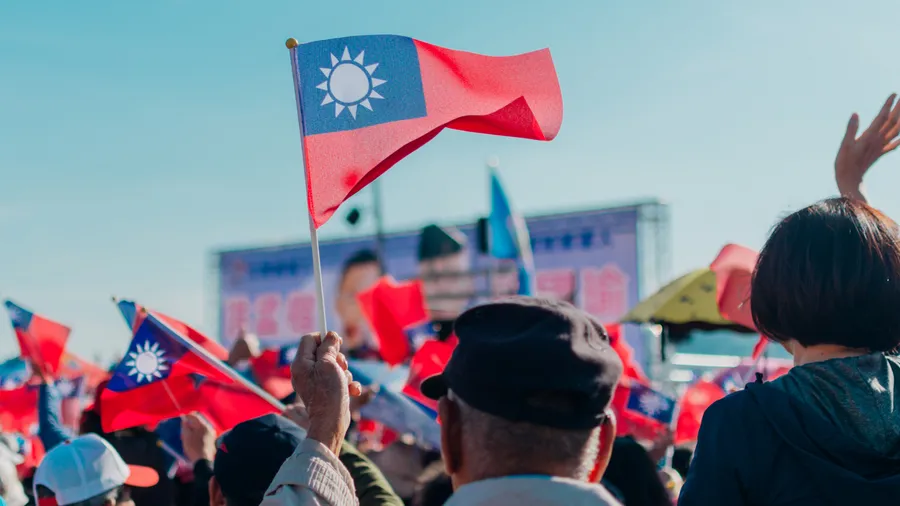
Salzburg Global Fellow Jun Kajee reflects on Taiwan’s role as a pillar of democratic resilience in the Indo-Pacific region
This op-ed piece is part of a series, written by Fellows of the Salzburg Global program "Democracy on the Front Lines: Polarization, Culture and Resilience in America and the World."
Looking Back to the Lessons of World War Two
World War II stands as a grim testament to the consequences of democratic collapse. In the interwar period, many European democracies faltered under the weight of economic instability, political extremism, and disillusionment with liberal governance. Liberal democracies, unable to address the immediate needs of their populations during crises, lost public trust. This erosion of faith created fertile ground for authoritarian regimes like Mussolini’s fascist Italy and Hitler’s Nazi Germany to rise. Promising national revival and decisive action, these regimes exploited the failures of democratic systems to consolidate power and pursue aggressive expansionist policies, ultimately plunging Europe into war.
The lessons of this period remain strikingly relevant today. Just as the failure to protect democracy in interwar Europe led to catastrophic consequences, contemporary challenges in the Indo-Pacific demand vigilance and resilience. Taiwan, a modern-day example of democratic fortitude, offers a compelling case study in how democracies can withstand external pressures and internal challenges while safeguarding their sovereignty and values.
Taiwan’s Democratic Journey
Taiwan's journey from authoritarian rule to vibrant democracy is a testament to the resilience and vision of its people. The island's transition began in the late 1980s, following decades of heavy-handed administration under the Kuomintang regime. In 1987, martial law was lifted, paving the way for political pluralism and the formation of opposition parties. The 1990s saw rapid democratization, with the first full legislative election in 1992 and the first direct presidential election in 1996.
Unlike many countries in Asia, Taiwan's democratic evolution was largely peaceful and gradual, driven by internal pressure from civil society and a growing middle class. This organic democratization, reflective of the will of its people, sets Taiwan apart in a region where democratic systems were often imposed by external powers. Today, Taiwan stands as a beacon of democracy in the Indo-Pacific, consistently ranking as one of the most free and democratic nations in the region.
Taiwan’s Global Engagement Amidst U.S.-China Tensions
In the face of heightened global tensions, Taiwan is adapting its strategy to navigate the fraught relationship between the United States and China. The island's strategic importance is highlighted by its critical role in global trade, with the Taiwan Strait serving as a crucial shipping route for almost half of the global container fleet. Taiwan's semiconductor industry, producing 60% of the world's integrated circuit chips and over 90% of the most advanced ones, further underscores the island’s pivotal role in the global economy.
Taiwan continues to face a complex "China Dilemma," balancing economic ties with China against escalating security threats. In 2024, China's gray-zone tactics intensified significantly, particularly following the election of Lai Ching-te as Taiwan's president. China launched two major military exercises, dubbed "Joint Sword-2024A" and "Joint Sword-2024B," in response to Lai's inaugural speech and National Day address. These full-scale drills involved the PLA army, navy, air force, and rocket force, representing a new chapter in cross-strait tensions.
China's military activities around Taiwan have increased dramatically, with 1,709 Chinese warplanes tracked entering Taiwan's air defense identification zone in 2023, doubling the record set in 2021. This trend has continued into 2024, with China aiming to establish a "new normal" that undermines Taiwan's defense posture and erodes public confidence in the island's security.
In response, Taiwan is diversifying its economy and strengthening ties with global partners. The New Southbound Policy has significantly enhanced economic engagement with Southeast Asia and South Asia, with Taiwanese investments in these regions surpassing those made in China for the first time in 2022. Taiwan is also pursuing membership in the Comprehensive and Progressive Agreement for Trans-Pacific Partnership (CPTPP) to secure broader market access.
Reshaping Taiwanese Identity
Standing at an important juncture in its history, Taiwan embodies the struggle between democratic values and regional tensions. A recent Pew Research survey highlighted that 67% of Taiwanese identify primarily as Taiwanese, with only 3% considering themselves primarily Chinese. This strong sense of national identity is not just a statistic; it is a powerful testament to Taiwan's resilience against external coercion. The Democratic Progressive Party’s third consecutive electoral victory underscores this sentiment, as the party has long advocated for a distinct Taiwanese identity.
Moreover, educational initiatives like the Bilingual Nation 2030 policy aim to enhance English proficiency among Taiwanese citizens, preparing them for greater global participation. This ambitious policy is reshaping Taiwanese identity in significant ways. By emphasizing English alongside Mandarin, the government is subtly shifting the linguistic landscape away from a purely Sinitic focus. This aligns with the broader trend of "Taiwanization," which refers to the process of self-identification for Taiwanese people and the revitalization of local identity that was suppressed under Kuomintang governance.
A Call for Vigilance
The decline of democracy in interwar Europe provides a cautionary tale as to what happens when liberal systems fail to meet their citizens’ needs or respond effectively to external threats. The resulting collapse paved the way for authoritarian regimes whose unchecked aggression led to one of the deadliest military conflicts in history.
As it continues to assert its identity amidst external pressures, Taiwan serves as a model of democratic resilience. The island's commitment to maintaining its sovereignty while fostering international relationships highlights the importance of collaboration and solidarity among democracies worldwide.
This ethos of democratic cooperation echoes the postwar efforts in Europe, when alliances like NATO were forged to counter Soviet influence and safeguard emerging democracies. Today, as authoritarian powers pose renewed threats to democratic nations, similar partnerships are more crucial than ever. Taiwan's situation exemplifies the ongoing need for robust international support systems to protect vulnerable democracies from existential threats.
Taiwan’s journey from authoritarianism to vibrant democracy demonstrates that safeguarding freedom requires constant effort—and that even small nations facing significant geopolitical challenges can play outsized roles in upholding and advancing global democratic values.
Jun Kajee is a lecturer and adjunct faculty member at Ling Tung University in Taiwan, where he specializes in internationalization and intercultural communication. He has contributed to the academic field through various publications focused on bilingual education, international program development, and cross-strait relations. His research has received funding from the European Commission, the Erasmus Mundus Association, the United States Bureau of Educational and Cultural Affairs, and the United Nations Sustainable Development Solutions Network (UN SDSN).
