-
Topics
TopicsOur programs create spaces where open-minded leaders can gather for breakthrough conversations on pressing global issues – each aligned to one of the following pillars:Get Involved
-
Events
EventsExplore the variety of events Salzburg Global hosts within Austria and in the rest of the world. Learn more about our programs and what else happens at Schloss Leopoldskron.Upcoming EventsSep 06 - Sep 11, 2026EducationA Tale of 2000 Days: New Partnerships in Early ChildhoodEducation for Tomorrow's WorldOct 05 - Oct 07, 2026Finance & GovernanceA Multipolar & AI-Driven World: Are New Approaches Needed To Preserve Profit and Public Trust?Salzburg Global Corporate Governance Forum
- Insights
-
Fellowship
FellowshipSince 1947, more than 40,000 people from over 170 countries have participated in Salzburg Global's sessions. Collectively, these alumni are known as Salzburg Global Fellows.
-
About Us
About UsSalzburg Global is an independent, non-profit organization committed to creating spaces that overcome barriers and open up a world of better possibilities.Our Approach
-
Support Us
Support UsYour generosity helps us gather open-minded leaders for breakthrough conversations, while creating space for dialogue that overcomes barriers and opens up a world of better possibilities.
- Donate

- Published date
- Written by
Share
Peace & Justice
Opinion
The Future of U.S. Leadership in a Fractured World
Published date
Written by
Share
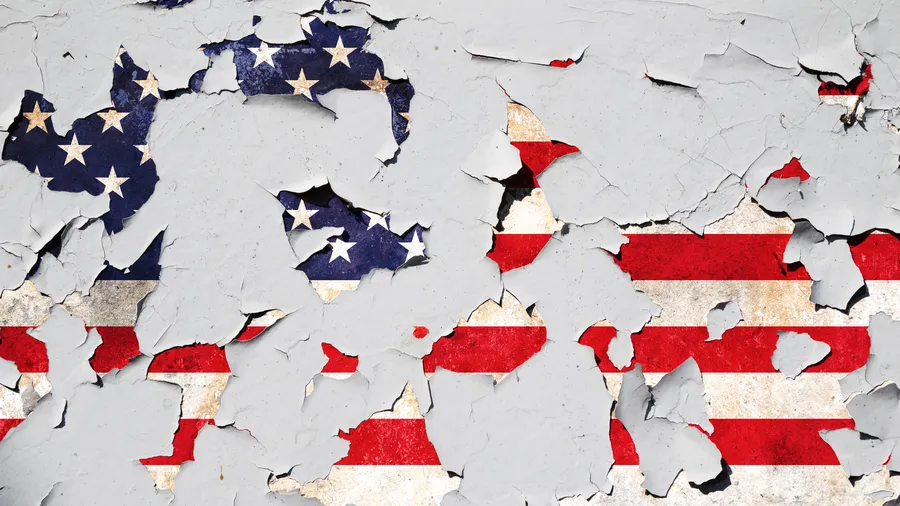
Shutterstock.com/1443084785
Key takeaways
- The post-1945 world order was created to rescue the world from the same sort of pernicious forces we see all around us today.
- What sustained America’s leadership were not only its presidents, but the willingness of the American people to believe the U.S. could use its moral, economic, and military strength to build a more secure and just world.
- Former President Roosevelt understood that America’s rightful place in the world depended on ensuring economic security at home, for “unless there is security here at home, there cannot be lasting peace in the world.”
This article was written by Salzburg Global Fellow David Woolner, who attended the Salzburg Global American Studies program on “What Next for the U.S.? What Next for America in the World?” in September 2025.
The views expressed here belong to this Fellow individually and should not be taken to represent those of any organizations to which they are affiliated.
When TIME magazine once asked preeminent historian Arthur Schlesinger Jr. to reflect on the forces that shaped the twentieth century, he responded with a simple observation.
“Take a look at our present world,” he wrote. It is “manifestly not Adolf Hitler’s world. His thousand-year Reich turned out to have a brief and bloody run of a dozen years. It is not Joseph Stalin’s world. That ghastly world self-destructed before our eyes.” Nor, he continued, “is it Winston Churchill’s world. Empire and all its glories have long since vanished into history. The world we live in today is Franklin Roosevelt’s world.”
Schlesinger’s observation highlights something that is often overlooked in the current discourse over the potential demise of the post-1945 world order that has emerged with the return of Donald J. Trump to the White House. The most glaring example of this stems from the widespread tendency to speak about the post-1945 world order as something that sprang up in the aftermath of the Second World War. It is almost as if the American-led rules-based international system we live in today simply dropped out of the sky or shot up from the earth like an artesian spring. But nothing could be further from the truth.
The creation of the post-1945 order was no accident. It came about by design - before and during the war - and it was created to rescue the world from the same sort of pernicious forces we see all around us today: the belief that might makes right - best exemplified by Vladimir Putin’s invasion of Ukraine; the vast disparity of wealth between the top 1% and the millions of people around the world who struggle to earn a living wage; the adoption of “beggar thy neighbor” trade policies that set former friends and allies against one another. Meanwhile, anti-democratic authoritarian regimes strengthen their hold on power and seek further opportunities to expand their territory. This world order was also specifically designed to counter the America First movement that emerged with the outbreak of the Second World War and the all-too-common tendency of the American people to see themselves as living in a world apart, protected by the seemingly endless expanse of the Atlantic and Pacific oceans.
To America’s allies, the overt dismantling of the international rules-based order that was established under Roosevelt’s leadership has come as a profound shock. As the former head of the NATO, Anders Fogh Rassmussen recently put it, Europe has suddenly come to the realization that the security architecture it “has relied on for generations is gone and is not coming back.” But what is even more alarming, he noted, is the abandonment of America’s long-standing values at the very moment at which we face “a new global conflict of ideals.” These values were espoused by every other president that followed FDR, including Ronald Reagan, who, in his 1985 State of the Union Address said,
“America’s mission was to nourish and defend freedom and democracy and to communicate these ideals everywhere we can.”
What sustained these values, however, was not just the leadership provided by the various individuals who have occupied the White House over the past eighty years, but the willingness of the American people to embrace the belief that the United States, by virtue of its unique place in history, had a special responsibility to use it moral, economic, and military strength to help rid the world of the economic forces that led to the Great Depression and the concomitant rise of the fascist regimes that propelled the world into the most destructive war in human history.
This conviction largely stemmed from the lessons FDR and his contemporaries gleaned from the Depression, which included stark recognition of the link between the collapse of the global economy and the outbreak of the war. As FDR said in his famous Economic Bill of Rights speech in January 1944,
“We have come to the realization of the fact that true individual freedom cannot exist without economic security and independence. ‘Necessitous men are not free men.’ People who are hungry and out of a job are the stuff with which dictatorships are made.”
Of all the challenges we face today, it is the struggle to determine how the American people will respond to this “new global conflict of ideas” that will ultimately determine the nature of U.S. leadership over the course of the next ten years. Gaining a deeper understanding of the root causes of the social and economic hardships that have helped fuel the rise of right-wing populism in the U.S. - and elsewhere - will form a crucial part of this effort.
FDR understood that America’s “rightful place in the world” depended in large part upon how fully the social and economic reforms called for in his January 1944 address were implemented.
“For unless there is security here at home,” he observed, “there cannot be lasting peace in the world.”