

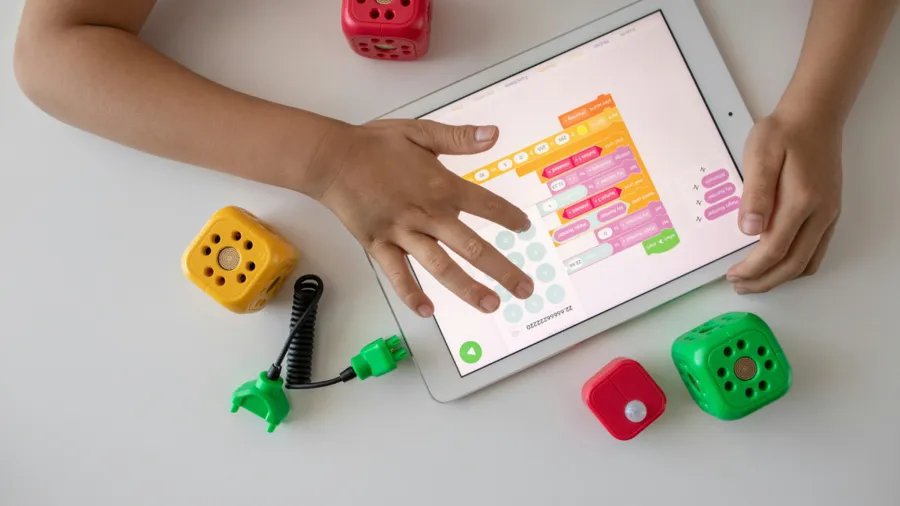
Technology is being used to enhance accessibility and improve treatment for children with disabilities
In Japan and other Asian countries, societal perceptions of children with ADHD (attention-deficit/hyperactivity disorder) and ASD (autism spectrum disorder) remain biased. Although social awareness of disabilities has improved over the past decade, the term “disorder” continues to rigidly define the experiences of Japanese children with ADHD and ASD. Trapped within the stigma and misconceptions perpetuated by society, these children are often alienated from group activities, exacerbating an already fragmented social life.
Mami Takesada, manager at Code for Japan, an open-source development organization that supports the use of digital tools in local governments, shared the societal stigmas that impact treatment for children with disabilities. “It’s very important for them to get treatment as soon as possible, but because parents don’t want to show that their children have disabilities, it’s difficult,” she said. While societal stigmas can take generations to overcome, Mami believes that significant work can be done now to improve the lives of children with disabilities. Through digital tools, Mami and Code for Japan work to incorporate technology into treatment through development and collaboration with local governments.
Digital tools can also improve the quality of treatment. Mami referred to the success of the Individual Education Plan (IEP), a system that aids therapists by recommending effective courses of treatment. She explained, “Before the IEP, therapists had to learn so many things: brain functions, social skills training… but now, after initial rounds of testing, AI can assist therapists in making plans for individual patients.” Although the IEP was developed by combining existing technologies, it is still challenging for care workers who are unfamiliar with digital tools to implement them.
“We (Code for Japan) try to communicate with the local government, train them, and help them train citizens and care workers,” explained Mami. Indeed, systemically introducing the IEP into care facilities could expand treatment for children with disabilities, especially in Japan, where the need for care surpasses its availability. Therefore, for Mami, harnessing the efficiency and remote capabilities of digital tools is crucial to improve the scope of support and shorten waiting times, which can last years for some children.
In addition to the IEP, Code for Japan is currently developing an app that records sleep. Simplifying health data collection allows parents to communicate their child’s conditions to health professionals more effectively and accurately, thereby indirectly improving diagnosis and care. Yet, the impressive range of digital tools can also directly help children with disabilities. For instance, some students with ADHD struggle to absorb content verbally. The solution Mami provides is simple and effective: a transcription application. “If they have some prompts on the screen, they can understand the lecture,” said Mami, illustrating the power of digital tools in creating more inclusive learning environments.
As Code for Japan continues to promote and develop digital tools locally, Mami is also exploring international collaborations. Reflecting on her time at the in-person meeting of the Japan-India Transformative Technology Network, Mami noticed common challenges between Japan and India, such as issues on gender, youth mobility, and income disparity, and the opportunities for collaboration it entails. “If something works for one country, maybe it can affect other countries,” said Mami, hoping to generate a ripple effect with digital tools and challenge long-standing stigmas around disability in Asia.
There will be challenges, but Mami is optimistic that new ideas and solutions can be found through collaboration between Japan and India. However, as the term "tool" implies, technology is merely an aid. Mami reminds us that “for broader inclusion, each person needs to redefine their own biases and experiences”.
Mami Takesada is a manager at Code for Japan, an open-source development organization supporting the use of digital tools in local government. Mami is also pursuing a doctorate, researching brain function and sleep in children with ADHD and ASD. She has experience working in an institution for children with disabilities, providing support and developing services.
Mami is a member of the third cohort of the Japan-India Transformative Technology Network, which connects and empowers outstanding change-makers in two countries on the forefront of technological progress in Asia – India and Japan. The program offers a platform for those working towards social good to maximize the benefits of various forms of new technologies.
