
-
Topics
TopicsOur programs create spaces where open-minded leaders can gather for breakthrough conversations on pressing global issues – each aligned to one of the following pillars:
-
Events
EventsExplore the variety of events Salzburg Global hosts within Austria and in the rest of the world. Learn more about our programs and what else happens at Schloss Leopoldskron.
- Insights
-
Fellowship
FellowshipSince 1947, more than 40,000 people from over 170 countries have participated in Salzburg Global's sessions. Collectively, these alumni are known as Salzburg Global Fellows.
-
About Us
About UsSalzburg Global is an independent, non-profit organization committed to creating spaces that overcome barriers and open up a world of better possibilities.Our Approach
-
Support Us
Support UsYour generosity helps us gather open-minded leaders for breakthrough conversations, while creating space for dialogue that overcomes barriers and opens up a world of better possibilities.
- Donate

Health
Feature
Roots and Resilience: How Mangrove Ecosystems Strengthen Financial Stability
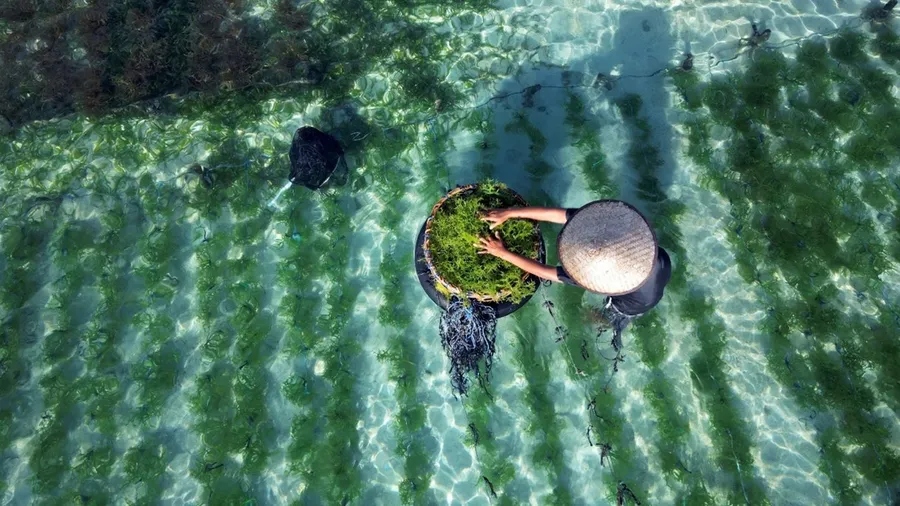
Photo Credit: Ashwin Bhagavatula
Key takeaways
Mangrove restoration becomes an economic engine for coastal communities when paired with suitable insurance models and sustainable community businesses.
The Restoration Insurance and Financial Services Company (RISCO) reinvests insurance revenue into projects that protect and restore ecosystems.
Aligning ecological health with economic opportunity creates a self-sustaining cycle benefiting both vulnerable communities and nature.
RISCO’s Approach
When people think about economic stability and financial resilience, very few would connect them to ecosystem restoration. In fact, in many places, restoration is still seen as an economic burden - a cost that governments and NGOs must bear to repair or protect nature. Ashwin Bhagavatula, Salzburg Global Fellow and founder of the Restoration Insurance and Financial Services Company (RISCO), is changing that perception. With this initiative, he is proving that ecosystem protection can serve as a foundation for economic prosperity. What is the key to protecting natural ecosystems while still ensuring economic development?
Incubated at Conservation International, RISCO works to build the financial resilience of vulnerable coastal communities by insuring them against natural catastrophes. But insurance is inherently reactive and usually comes into play only after a disaster happens. That’s why RISCO focuses on parametric insurance products, which trigger payouts automatically once a certain threshold is reached -for example, when a typhoon exceeds a specific wind speed.
At the same time, RISCO reinvests the money it earns from its insurance products, together with income from blue carbon credits, which are payments companies make for restoring coastal ecosystems like mangroves that absorb carbon, and from philanthropic funding. This combined revenue allows RISCO to take preventative action as well as to channel funds into projects that strengthen and protect natural ecosystems before disasters occur, rather than only covering losses afterwards. Together with local communities, they invest in and support mangrove-positive businesses that restore and protect mangrove ecosystems. Part of the profits from these businesses flow back into community funds that provide training and low-interest loans, helping more people start or grow similar ventures.
A Self-Sustaining Cycle
This creates a self-sustaining virtuous cycle where insurance, nature restoration, and community empowerment feed into each other, protecting coasts, growing mangroves, and building long-term resilience. “We wanted to make nature a driver of opportunity that aids toward economic activity,” explained Ashwin, “because then the communities have an incentive to protect these natural ecosystems.”
Most of the communities Ashwin and his team work with are in coastal regions across India and the Philippines. These are often marginalized groups living under harsh economic conditions. When people struggle to meet basic needs, they may turn to their surrounding ecosystems for survival, cutting mangroves for charcoal or other immediate necessities. “When you don’t have food on the table, you won’t prioritize protecting the ecosystem,” Ashwin said. “But if you can work with these communities to improve their livelihoods while using natural ecosystems as a core productive asset, there’s far less likelihood of them harming it. Instead, they have a reason to protect it.”
In RISCO’s case, the focus is on mangroves - vital natural buffers that protect coastal areas from strong typhoons, reduce flooding, purify water, and serve as nurseries for fish and other marine life. RISCO helps communities develop mangrove-positive businesses, such as through initiatives like Mangrove Aquaculture for Resilience, Inclusion, and Sustainability (MARIS). MARIS combines aquaculture, such as raising fish, shrimp, or other aquatic species, with mangrove restoration. “We work with these communities, especially those managing aquaculture ponds that are prone to flooding,” Ashwin explained. “We train and fund them to build ring embankments, slightly raising the land, then planting mangroves and Nipa palms, which are sustainable and effective in reducing flood risks.”
Long-Term Viability
Through this process, mangrove trees not only protect against floods but also improve local fisheries and water quality, creating a direct incentive for communities to maintain them. Local communities often understand these ecosystems better than anyone else. “Since they live with them, they also depend on them”. What they often lack, Ashwin noted, is not knowledge but resources and financial flexibility. By working with local leaders and aquaculture groups, RISCO ensures that restoration projects are co-designed, community-led, and financially viable in the long run.
Ashwin’s philosophy is that “financially resilient communities lead to healthy mangroves, and healthy mangroves lead to financially resilient communities.” This shows how aligning ecological health with economic opportunity can create lasting resilience for both people and nature - a vision that could inspire future initiatives in coastal regions around the world.
The Salzburg Global session on "Building Resilient Communities: Insurance Solutions for Vulnerable Individuals and Communities" took place from October 5 to 10, 2025. Support for this program was provided by the Robert Wood Johnson Foundation. The views expressed here do not necessarily reflect the views of the Foundation.
