-
Topics
TopicsOur programs create spaces where open-minded leaders can gather for breakthrough conversations on pressing global issues – each aligned to one of the following pillars:Get Involved
-
Events
EventsExplore the variety of events Salzburg Global hosts within Austria and in the rest of the world. Learn more about our programs and what else happens at Schloss Leopoldskron.Upcoming EventsSep 06 - Sep 11, 2026EducationA Tale of 2000 Days: New Partnerships in Early ChildhoodEducation for Tomorrow's WorldOct 05 - Oct 07, 2026Finance & GovernanceA Multipolar & AI-Driven World: Are New Approaches Needed To Preserve Profit and Public Trust?Salzburg Global Corporate Governance Forum
- Insights
-
Fellowship
FellowshipSince 1947, more than 40,000 people from over 170 countries have participated in Salzburg Global's sessions. Collectively, these alumni are known as Salzburg Global Fellows.
-
About Us
About UsSalzburg Global is an independent, non-profit organization committed to creating spaces that overcome barriers and open up a world of better possibilities.Our Approach
-
Support Us
Support UsYour generosity helps us gather open-minded leaders for breakthrough conversations, while creating space for dialogue that overcomes barriers and opens up a world of better possibilities.
- Donate

- Published date
- Written by
Share
Health
Feature
Rethinking Our Information Diet
Published date
Written by
Share
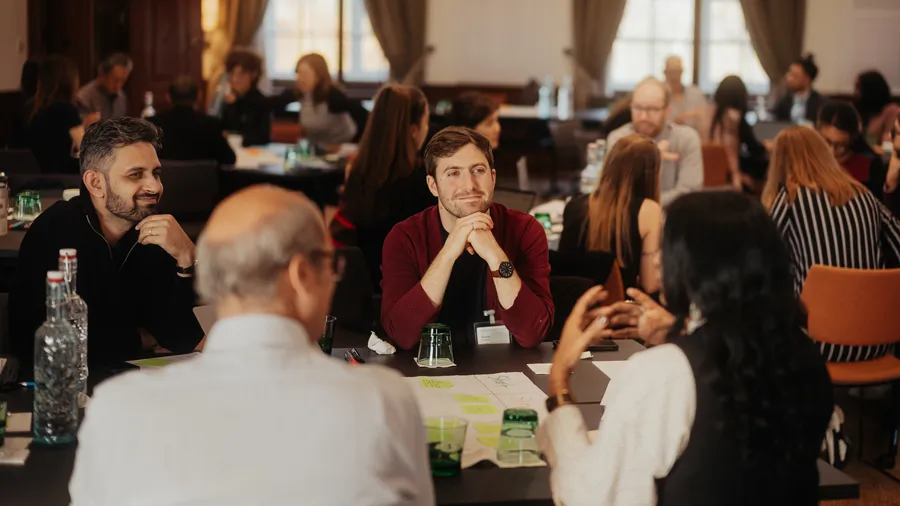
Mario Vasilescu (center) at Salzburg Global in November 2025. Photo Credit: Richard Schabetsberger
Key takeaways
- Our “information diet” affects our health. By treating information like nutrition, we can make healthier choices about what we read, watch, and share.
- Tools that measure media use can show the impact of information consumption and motivate better decisions in a noisy media landscape.
- Improving “information health” is essential for public health and democracy, as a more coherent, measured information environment can reduce manipulation and support healthier choices.
Digital designer and engineer Mario Vasilescu helps people care about how they inform themselves. As co-founder and CEO of Readocracy, he and his team create programs that help people improve how they use the online world. As a Salzburg Global Fellow at the session on “Transforming Information Pathways for Health, Well-Being and Equity,” he spoke to Salzburg Global Fellow Kitty Eisele about measuring and improving our “information diet.”
This interview has been edited for brevity and clarity.
Mario Vasilescu: Today, the idea of misinformation or just our time spent with media is this nebulous thing that we don't define. But what would happen if we had concepts like “info-trition?” You obsess how you feed your body. How do you feed your mind?
When we think of our physical health, it's now well understood that we can name ingredients, we can name toxins, we can name what goes into our body, how our activity affects that, [and] measuring our steps. Everybody's got, what, 50% penetration of Fitbits and Apple Health? So, because of that, our behavior changes. You become more mindful, you make different decisions. With information, it's the idea that you can apply those concepts to our information choices to motivate us differently.
It's like, yeah, I shouldn't litter or the water I drink might make me sick and I should think about that. These ideas seem straightforward, but that's because we have a system in place, an education in place, and policy in place that has been going on for decades that has made it clear to us. And it's, I think, really instructive to take this thinking and apply it to information, because it can take something that feels so nebulous, like disinformation or news fatigue, but make it clear and understandable and something we can wrap our arms around.
KE: Do you have an example of how this applies to public health?
MV: If we don't have a coherent information environment, it doesn't matter what you put out about health because nobody will hear it or see it or think about it. If we take a specific example, anything that is being manipulated by a rich company that is trying to drive certain unhealthy behaviors, whether it's vaping or whatever, when somebody is mindless about their consumption, they're easy prey.
If it's something like being targeted by companies or campaigns that are supposed to make you act in an unhealthy way, or you're careless about where you choose to get your information in a world that is flooded with noise, having that understanding that there are consequences or you can have motivations around what you're consuming will help you make better decisions instead of just being careless about it. You can have meaningful outcomes when people are choosing the right information or hesitating that extra step instead of just going down a horrible rabbit hole.
We already know that the current information environment and our media choices do lead to stress and anxiety. And then we conversely know that stress and anxiety lead to disease. So, when people say, oh, I can't stand being online, I don't even want to, you know, see what's going on in the news, it's making me sick, we should take that quite literally. People in a health context tend to think of “health information.” And what I'm really interested in is “information health.” The broader health of the ecosystem of information and how information affects our health.
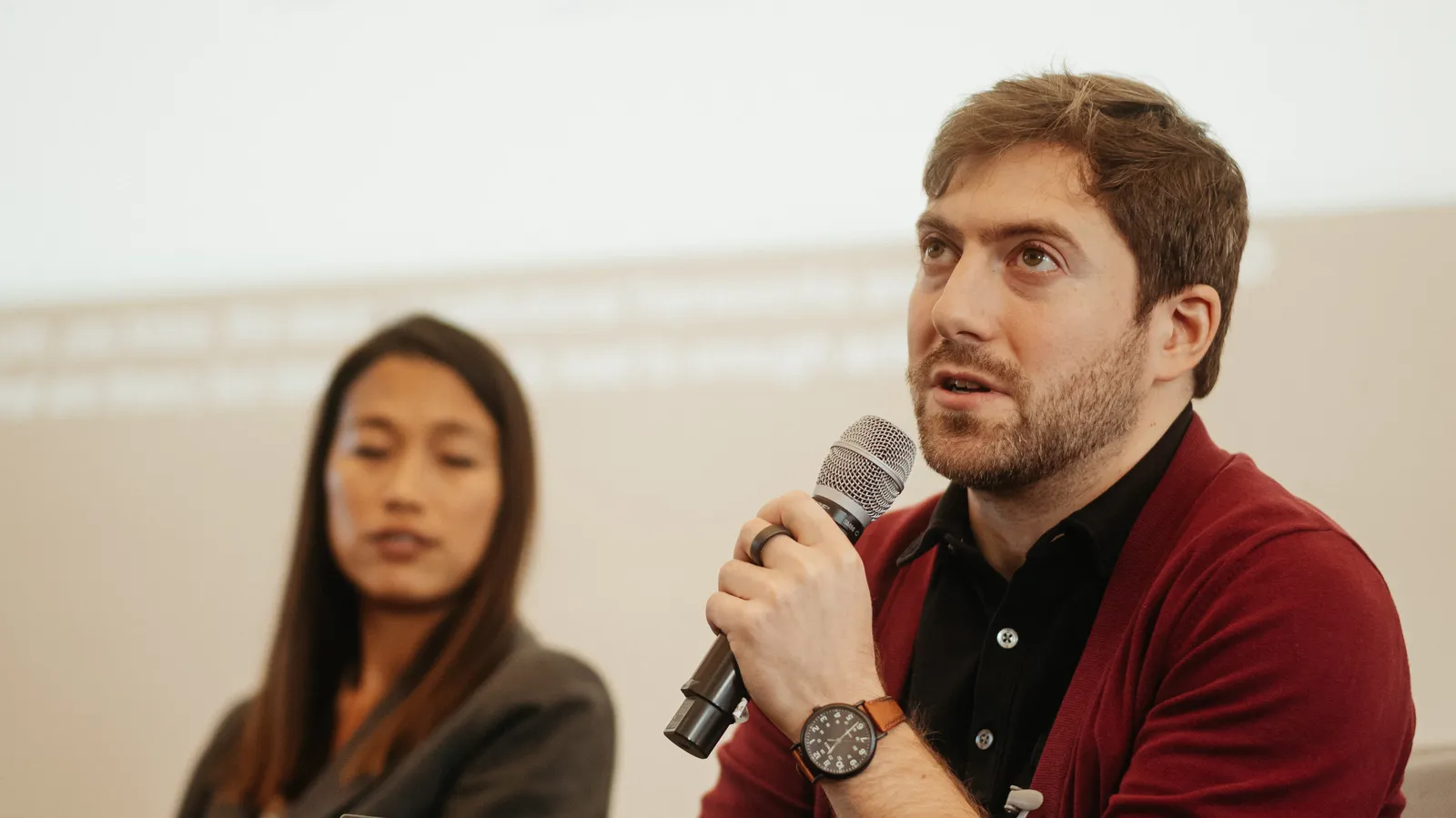
KE. You have a company, Readocracy, that helps users identify, and be rewarded for, the quality of their online activity. Can you say more about this?
MA: Through Readocracy, one of the things we do is provide insights. In the same way you have Apple Health or things that show you your heartbeat and how you slept, we give you that data in a deeper way so you can say, hey, based on how I've been spending my time with media, it seems like this is probably affecting my mood in this way, my agitation in this way, my worldview and my bias, how my focus is shifting, all these things we reveal to you.
I will never forget a high school student who said, ‘this changed my behavior because until now, the idea of my mental health in the context of how I spend my time online was vague.’ And he said that now, because he could see it, it became tangible. And that changed his behavior. So that applies to how we choose to spend our time broadly, but of course it applies to information that can help us be healthier too, and what professionals are trying to get to us in a sea of noise.
KE: Is there a message you came to Salzburg Global to share?
MA: Broadly, the message is that there is hope. We do not have to accept this weaponized, divisive, destructive information environment as it is. It's something that we can get specific about and make extremely relatable to people in a way that will drive real change. In the same way somebody's health can be made more accessible through a fitness tracker, a calorie counter, or a simple journal. Or climate change can be made more tangible by visualizing it and understanding our place in the system and how systems work, having language for it; we can do that for our information environment and our information health.
If we can make our information diets more tangible, and for example, have a science of info-trition, so you have the ingredients, you have the equivalent of the toxins in our water and the air, then you have repeatable data and a concept that is apolitical that lawmakers can stand on to hold companies accountable. I came here to advocate that that is possible.
KE: What excites you about what you do?
MV: My brother is my co-founder. We're raised in Canada, but our family is from Romania, in Eastern Europe, originally. And we heard so many stories growing up from our parents about our grandparents, great-grandparents, who were just geniuses, it seemed like, really powerful intellectuals, but very civically minded. There’s such a clear through line of giving back, helping set up the first bookstores or helping set up the electrical grid, things where they had opportunities to make better money and they chose to help.
In our minds, we thought that that is what the world should be about. And I think experiencing the post-Communist corruption vacuum and then experiencing, I would say, the devolution of discourse and media in North America, it became very clear to us that those people we looked up to and that notion of a role model and a leader were essentially losers in today's society. They're invisible. And the people who instead are becoming our leaders and our power brokers and our “role models” for us and our children are the polar opposite.
It's the loudest, most arrogant, most divisive people in the room. And so, everything we've done and dedicated our lives to, is how do you create a system, an alternative that opposes that? What we're trying to do is create a world where power is not dictated by the quantity of attention you get, but the quality of attention you give. And that should be power instead. Ultimately, it's ‘can we live in a world where we can make being intelligent and informed and kind and balanced be cool and powerful?’ That's why we do it.
Support for this program was provided by the Robert Wood Johnson Foundation. The views expressed here do not necessarily reflect the views of the Foundation.