-
Topics
TopicsOur programs create spaces where open-minded leaders can gather for breakthrough conversations on pressing global issues – each aligned to one of the following pillars:Get Involved
-
Events
EventsExplore the variety of events Salzburg Global hosts within Austria and in the rest of the world. Learn more about our programs and what else happens at Schloss Leopoldskron.Upcoming EventsSep 06 - Sep 11, 2026EducationA Tale of 2000 Days: New Partnerships in Early ChildhoodEducation for Tomorrow's WorldOct 05 - Oct 07, 2026Finance & GovernanceA Multipolar & AI-Driven World: Are New Approaches Needed To Preserve Profit and Public Trust?Salzburg Global Corporate Governance Forum
- Insights
-
Fellowship
FellowshipSince 1947, more than 40,000 people from over 170 countries have participated in Salzburg Global's sessions. Collectively, these alumni are known as Salzburg Global Fellows.
-
About Us
About UsSalzburg Global is an independent, non-profit organization committed to creating spaces that overcome barriers and open up a world of better possibilities.Our Approach
-
Support Us
Support UsYour generosity helps us gather open-minded leaders for breakthrough conversations, while creating space for dialogue that overcomes barriers and opens up a world of better possibilities.
- Donate

- Published date
- Written by
Share
Health
Feature
How Social Listening in Public Health is Turning Community Voices into Action
Published date
Written by
Share

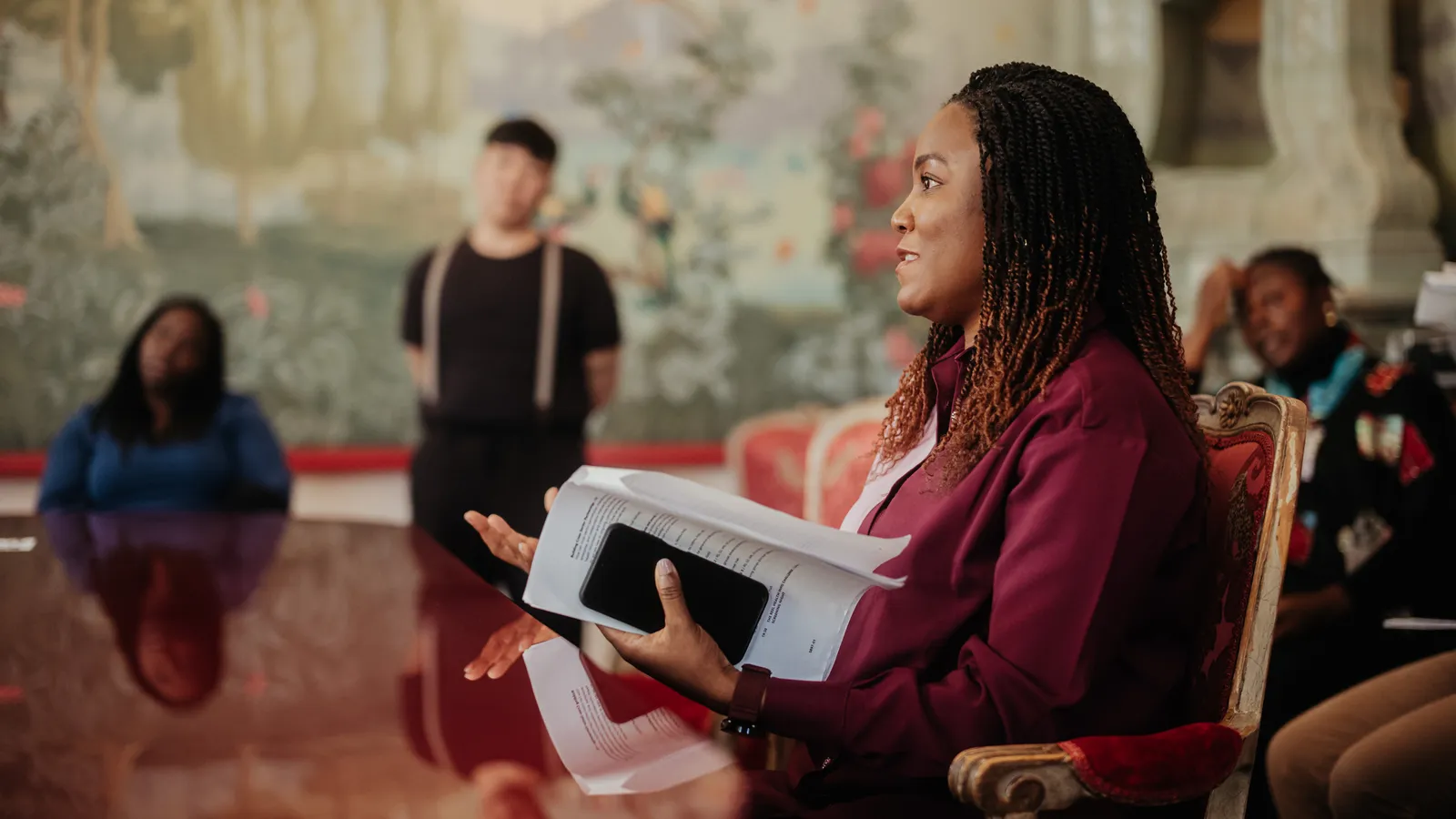
Dr. Kemisola Agbaoye at Salzburg Global in October 2025. Photo Credit: Richard Schabetsberger
Key takeaways
- Health information works best when it addresses people’s real questions and needs. Treating community input as evidence helps ensure health information is relevant, trusted, and effective.
- Social listening, using both AI and trusted community members, can guide better health decisions and policies. In Nigeria, where about half the population is offline, Dr. Kemisola Agbaoye combines AI online monitoring with offline listening to inform public health messaging.
- AI can improve access to timely information, but it also risks excluding offline populations or amplifying distorted information. People must be empowered to use information, ask questions, and demand better care.
Dr. Kemisola Agbaoye is program director for Nigeria Health Watch, a health communications and advocacy NGO. As a Fellow at the recent Salzburg Global session, “Transforming Information Pathways for Health, Well-Being and Equity,” she spoke to Salzburg Global Fellow Kitty Eisele about “social listening” - using AI and community input to identify and meet public health needs.
This interview has been edited for brevity and clarity.
Kitty Eisele, Salzburg Global Fellow: How did you decide to incorporate “social listening" into your work?
Dr. Kemisola Agbaoye: You can't really advocate for people if you don't systematically and continuously identify what their information needs are, map out the information pathways, and be able to use the information you get from them for their benefit. I wanted to share how we were listening to communities, identifying their needs based on how they framed it, and then filtering that up to policymakers, to governments, [and] to community leaders as well.
Social listening is a way of systematically and continuously collecting data and information within networks from people, analyzing that data, and then being able to identify what the needs are. Sometimes these are information needs. It's not always misconceptions or misinformation. Sometimes it's just questions, like, ‘is this vaccine free, or will I be asked to pay?’ And for me, it's important that we incorporate this into public health and see it as evidence, evidence that guides interventions, that guides policymaking, that guides the strategies that we put out there. Because you can't design solutions and interventions for people without their input. And one of the things that makes us stand out is that we're doing it in both online and offline spaces.
In Nigeria, about half of our population is still offline. We learned during the COVID-19 pandemic there was lots of misinformation online that was being discussed in offline spaces and was filtering into radio, for example. And since we're doing this listening continuously, we’re able to track how perceptions are changing. How are people reporting on how they are accessing healthcare? Have things changed? We’re able to measure that and take that back to the policymakers. Then they can see very clearly if what they're doing is changing anything.
KE: How do you do “social listening"?
KA: Online, we leverage AI. AI has access to certain platforms, social media, online forums, blogs. There are social listening tools that historically have been developed to help organizations understand what their customers' needs are. They scrape the web and gather mentions for you. You need to train the model to listen specifically for what you need it to listen to, and for us, that was a learning curve. It took some time to gain the expertise, [and] to customize the tools to meet our needs, because they were not originally developed for public health.
In offline spaces, we leverage people that community members know and trust. Sometimes they're healthcare workers, sometimes they're media practitioners, sometimes they’re religious leaders, traditional rulers, [or] persons with disabilities, for example. We gather that information, analyze it, tease out insights, look at what the data is telling us, and take the information back to communities, to these mobilizers themselves, and to their governments. And we convene meetings and dialogues between community members and governments so they can voice their needs and be heard.
Most of the time, what you're hearing is knowledge gaps: people genuinely don't understand some things - concerns they have about vaccines, questions they have around access - are really easy things to address. We use our platforms, and we support people in our network to use their platforms, to put out the right information, [and] to inform community engagement activities. The action could be for an ongoing public health campaign. Sometimes we listen around new vaccine introductions, we listen around outbreaks, and we support the government with that information so they can use it to tailor their interventions and how they push out messaging.
KE. What excites you most about the work you're doing?
KA: I think one thing that really excites me is when we've identified an issue based on people's voices and needs, and we've leveraged our platforms, our networks to address it. And it's actually addressed. And you can document and see the impact, that this has changed because of this work. And it started with people's needs and their voices. That's what excites me. It doesn't happen often that you close the loop. It's rare, but it happens. And when it happens, I get really excited.
KE: Is there something significant you're paying attention to, or concerned about, right now?
KA: I'm paying attention to how AI is disrupting the space, because it has the potential to either bridge the equity gaps or worsen it. If half of the people in my context are not even online, then they might not even know what Chat GPT is. But there's also the risk of people leveraging AI to distort the right kind of information. And like I said earlier, information flows online to offline, offline to online, because of how dynamic the space is. So, I'm really interested in how AI has the potential to either help bridge the equity gaps or worsen it.
KE: If your work succeeds, in the next five years, how is health information and public health different in Nigeria?
KA: Everyone has access. Everyone understands and uses the information, and they change behaviors and policies because of that information. I mean, it's utopia to think that everyone's voices and everyone's needs would factor in. But at least a significant proportion of people have their voices heard, have their needs met, and have their behaviors changed as a result. And then that translates into improved health outcomes.
In my context, the issue is not just information. There's also the wider health system and the inequities that exist there. Because a person can have the right information, can feel empowered, can want to change their behavior, but the health system is not equipped to meet their needs.
Which is why, alongside the information access work and the communications that we do, we do a lot of advocacy. Because someone has to make sure that when people have the right information and they are empowered and they interact with the healthcare system or whatever system meets their health needs, they are able to get the care that they need.
So, it's two-pronged for me. That the health system is stronger, better equipped to meet the needs of the people, and that the people are also empowered, and they know what questions to ask. They're engaged and they're involved and they're pushing for the change.
And the change actually happens.
Support for this program was provided by the Robert Wood Johnson Foundation. The views expressed here do not necessarily reflect the views of the Foundation.