-
Topics
TopicsOur programs create spaces where open-minded leaders can gather for breakthrough conversations on pressing global issues – each aligned to one of the following pillars:Get Involved
-
Events
EventsExplore the variety of events Salzburg Global hosts within Austria and in the rest of the world. Learn more about our programs and what else happens at Schloss Leopoldskron.
- Insights
-
Fellowship
FellowshipSince 1947, more than 40,000 people from over 170 countries have participated in Salzburg Global's sessions. Collectively, these alumni are known as Salzburg Global Fellows.
-
About Us
About UsSalzburg Global is an independent, non-profit organization committed to creating spaces that overcome barriers and open up a world of better possibilities.Our Approach
-
Support Us
Support UsYour generosity helps us gather open-minded leaders for breakthrough conversations, while creating space for dialogue that overcomes barriers and opens up a world of better possibilities.
- Donate

- Published date
- Written by
Share
Peace & Justice
Opinion
Competence Kills the Strongman
Published date
Written by
Share

Photo Credit: Shutterstock.com/2489895643
Key takeaways
- Authoritarianism feeds on the claim that inclusive democracy is broken, but it collapses when people experience competence, dignity, and belonging in everyday governance.
- A universal-rights strategy rooted in the Black radical project shows how delivery and usable rights can make intimidation costly and democracy routine.
- A “counter-playbook rooted in an American universalist tradition that champions governance, with moves people can watch in real time" can respond to authoritarian tactics.
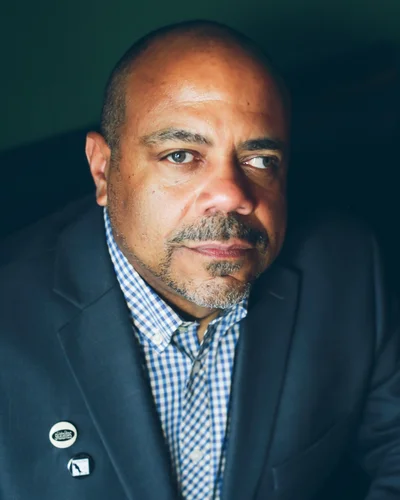
This article was written by Salzburg Global Fellow Eric Ward, who attended the Salzburg Global American Studies program on “What Next for the U.S.? What Next for America in the World?” in September 2025.
The views expressed here belong to this Fellow individually and should not be taken to represent those of any organizations to which they are affiliated.
Belonging Versus Control
Authoritarianism in the United States doesn’t arrive with tanks. It arrives as a promise to end chaos by shrinking who counts. The claim is simple: pluralism feels noisy and unsafe, therefore only a firm hand can keep you safe. Those committed to opposing authoritarianism, sectarianism, and political violence must start by asserting a different test.
We must demonstrate that the actual contest is consent against control. We win by making belonging work in public, where people can see and feel it. Over the next ten to twenty years, the central domestic issue will be whether the United States can run a multiracial democracy where belonging is routine, and intimidation is costly. The sides are crystal clear: universal rights versus ethnonational sorting, fact-based delivery versus grievance politics, and coalition discipline versus intercommunal fracture.
Before anything else, a term at the center of this argument needs to be clear. Belonging is not a mood. It is the everyday experience that your rights are predictable, your dignity is non-negotiable, and your voice can shape decisions without penalty. A quick test on belonging asks four questions. Can I enter public space as myself? Will the rules apply to me as they apply to others? Do I have a real way to influence outcomes? Can I do these things tomorrow, not just today? When the answer is yes, I believe people are more likely to defend belonging and democracy because it is defending them.
Delivery Beats Spectacle
This is also where an effective counter strategy begins. Authoritarians expect a culture war. They do not expect delivery and dignity to undercut their pitch. By delivery, I mean visible, verifiable improvements people can feel: the permit that moves on time, the bus that shows up, the meeting that ends with decisions and follow-through. By dignity, I mean clear rules that apply to everyone, neutral public workers protected for doing their jobs, and civic rooms where people can argue without being shamed or threatened.
Authoritarians run on the claim that inclusive democracy is broken and only a strong hand can keep you safe. Authoritarians expect the contest to stay symbolic. They expect opposition to appear as street demonstrations, litigation, or non-violent civil protest. They do not expect opposition to manifest as delivery and dignity. When residents experience both phenomena at once, the “only I can fix it” pitch falls flat. Grievance loses oxygen because daily evidence shows governance works and that you can show up as yourself without getting hurt. Spectacle stops paying because competence becomes the story.
The Black Radical Project
To ground that strategy in a tradition with a proven record, I often center the Black radical project, also known as the "Black radical tradition." It is not a separatist agenda or a romantic slogan. It is a successful, Black-centered tradition that argues for universally protected rights and liberties within a multiracial democracy as the only equitable antidote to discrimination, othering, and bias. It insists that equal protection, due process, and freedom of expression must cover everyone, everywhere, as routine practice rather than occasional mercy.
Historically, the Black radical project does five things at once:
- It converts rights on paper into rights you can use, which then extend to others.
- It develops practical methods for nonviolent power that turn mass participation into negotiated change.
- It stitches durable coalitions across race, faith, class, and ideology around concrete improvements, not signals.
- It generates governance tools such as equity budgeting, co-decision tables, and civilian oversight that make fairness repeatable.
- It offers a moral language the broad public can hear: A society where rules protect the most targeted will always protect everyone else more reliably.
Because it does all of this, the Black radical project has historically become the primary fuel for authoritarian backlash against belonging throughout U.S. history. History shows how that backlash operates.
The Backlash Loop
The American loop runs like this. Widen belonging, then punish it and call the punishment safety. After the Civil War, Reconstruction builds multiracial governments; Jim Crow strips that power and installs one-party rule. The Red Scare treats immigrant and labor organizing as sedition. McCarthyism turns suspicion into loyalty exams that chill classrooms and studios. The civil rights era gains ground; COINTELPRO targets Black leaders and allied movements, including lethal raids and repression. After 9/11, registries and surveillance marking Muslim communities as suspect is the response to growing societal tolerance towards immigrants and refugees. Recent years recast Black Lives Matters protests as criminal and push honest lessons about racism and societal discrimination out of schools.
This is not a museum tour. It is a live pattern. It follows a single throughline: Each time universal rights become usable for more people, a counter-story rises to claim those gains are a trick. That story often needs a hidden mastermind and a visible target. That is the role of white nationalism and its antisemitic engine in the present period.
At the core of today’s version of the pattern sits white nationalism as a political project and antisemitism is its narrative engine. In this conspiracy frame, Jews or the euphemistic "secret elites" are imagined as the hidden hand rigging belonging in a multiracial society, while efforts to expand social and economic opportunity are falsely cast as the visible outcomes of "Jewish" chaos and disruption.
This matters for anyone successfully opposing authoritarianism because antisemitism functions as a narrative. It reframes structural reform and equity as manipulation by a covert elite. It travels across ideologies, as Antisemitic narratives show up in different political clothes: On the right, code words like “globalist,” “Soros,” “replacement theory,” and “deep state” point to Jews as hidden masterminds; on parts of the left, some anti-elite critique recycle the same cues with talk of a “Rothschild cabal,” claims that “the media is controlled,” or language that treats Jews as a single power bloc, turning structural problems into a plot. Antisemitism offers deniability through code words, which stalls accountability while the conspiratorial toxin circulates. If we fail to name antisemitism as the engine, we end up fighting only the visible targets and leave the narrative machine running.
Trumpism did not invent this narrative. It merely translates it into everyday language and moves it through governing channels. The pitch sounds domestic: safety, pride, and protection. The subtext remains: narrow who counts. “Law and order,” “border security,” “parental rights,” and “protect the children” convert exclusion into common sense. The pipeline from fringe to policy is efficient. Message boards feed talk shows. Talk shows feed candidates. Candidates feed allied think tanks that produce one-page proposals. Those convert to executive actions, agency guidance, model bills, and budget riders. Statehouses copy and paste. School boards and sheriffs act as force multipliers. Hotlines and bounty laws deputize neighbor against neighbor. Procurement rules, accreditation threats, and funding audits pressure institutions without the headline bans. From a distance, this looks procedural, but up closely, the competitive authoritarianism tightens the noose around civil society.
The Communication Machine
A communication machine amplifies that tightening. Cable hits, podcasts, meme pages, and grievance influencers keep a constant hum that frames backlash as civic duty. Antisemitic code slips in through words like globalist, Soros, replacement, and international cabal so the same master plot can travel while speakers deny intent.
Multiracial coalitions committed to equal justice, equality under the law, and inclusion then get presented as proof of the conspiracy. Direct orders to repress these movements quickly become unnecessary. Signals create an atmosphere where someone acts while leaders claim to defend order. Street tactics, litigation tactics, and screen tactics reinforce each other and advance repressive and draconian policies. Rallies feed school-board disruptions. Truck convoy protests wrap physical intimidation in spectacle. Legal funds, friendly media, and donor networks provide cover. Influencers monetize outrage. Non-sectarian actors and bridge builders pay a price for stepping off the ride, so many stay quiet. The result is politics that makes pluralism feel risky.
Still. Even with a clear view of that machine, we who oppose authoritarianism and racial and religious nationalism lose if we don’t look into our own mirror. There is a vulnerability inside the opposition to authoritarianism. Intercommunal tension and intercommunal violence weaken coalitions that claim inclusion and belonging. I am not describing far-right attacks. I mean mistrust and identity-targeted behavior among would-be allies: sectarian rumors that outrun corrections, contempt that becomes identitarian habit, status fights over who speaks for whom, threats, doxing, swatting, and social media pile-ons that jump from screens into meetings. When civic space feels unsafe, families stay home. Public workers who apply rules as written get punished. Civil society organizers and leaders retreat to protect their corner. The popular front we need never reaches full strength.
A Counter-Playbook
Authoritarians do not have to invent this fracture. They point to it and promise order. The response to this challenge is not another jingoistic slogan calling for “solidarity.” It is a counter-playbook rooted in an American universalist tradition that champions governance, with moves people can watch in real time:
- Run government so fairness pays, and intimidation fails. Create standing decision-making tables where residents, workers, organizers, and public agencies set priorities and share credit. Not a midnight microphone, but a room with authority to solve defined problems, clear rules that protect dignity, and timelines that keep momentum.
- Tie equal protection and due process to budgets, contracts, hiring, inspections, and audits so fairness appears in daily delivery. When a permit moves on time, a bus route improves, or a shelter line shortens, rumor gives way to evidence. Make intimidation expensive and visible: post conduct rules, train chairs and marshals, ensure even enforcement of rules, verify chats on live streams, and host public incident dashboards for reporting.
- Protect public worker neutrality with straightforward covenants, then back staff who uphold them. Build rapid repair capacity. When a hot incident hits, convene a seventy-two-hour repair team with agency reps, cross-community leaders, and a facilitator authorized to implement small fixes quickly and schedule larger ones. Speed beats rumor. Tangible fixes beat statements.
- Narratives can break the conspiracy. Name antisemitism as the engine inside white nationalism so allies fight the whole machine. Teach the narrative code and the illiberal logic so people can refuse it in their own spaces. Pre-bunk wedges. When communities know the play, they recognize it in curriculum fights, budget riders, and “protect the children” hearings.
- Tell competence stories that connect dignity to delivery. Not branding, but evidence. Publish before-and-after snapshots of services and show residents how to join the next improvement. Build a shared heat map that tracks intimidation, rumor spikes, and coalition fractures across a city or county. Share it with press, libraries, schools, unions, and faith networks to coordinate calm.
- Uphold culture as civic infrastructure. Fund venues, festivals, zines, and cultural scenes as places where strangers learn each other’s political, cultural, and social edges. Pair grants with simple, real safety standards. A club that posts norms, trains staff, and protects all audiences teaches a city how to share space. Partner those spaces with libraries and local newsrooms for “first facts” nights after a flare-up so rumor does not win the week.
- Back local news with real money through philanthropy, public models, and markets that protect editorial independence. Let libraries host newsroom hours. Teach students source evaluation and fair-fight debate. These habits travel home and shrink the market for scapegoats.
International Implications
The consequences of getting this right or wrong do not stop at our borders. What happens in the United States travels as law, money, media cues, and street habits. Americans have long fallen for a local version of exceptionalism that says, “it cannot happen here”.
Many outside the United States fall for a mirrored version that says it will never get that bad there. Both errors delay hard choices. Partners abroad keep treating the current Washington administration as a stable counterparty even as the rules and outcomes shift. That is not prudence. That is mispriced risk. The United States is not yet a consolidated authoritarian regime, but the national executive is operating as if that is the destination. We still have elections and courts, but leaders in power tilt the playing field using government power, extra media access, and legal pressure. That’s competitive authoritarianism and that is the yardstick by which we should judge what’s happening in the United States right now.
The strategic implications internationally are direct. Business as usual with an illiberal U.S. administration grants legitimacy where leverage is needed, produces photo-ops that become domestic propaganda, and sidelines the only U.S. networks that can constrain illiberal drift: local multiracial coalitions led by those most often targeted, the same coalitions advancing universal rights as routine practice.
If you want a United States that can keep its promises, organize with those coalitions, not around them. Washington controls large foreign-assistance flows. The dollar’s central role in global finance gives U.S. sanctions and foreign aid unusual reach, and U.S. weight shapes lending and aid signals far beyond our borders. Point those levers the wrong way and you get aid steered to ideological loyalists, sanctions used to reward clientelism, and procurement and grants used to coerce universities, registries, and election bodies. No country’s NGOs can out-organize that case by case. In short, the way we settle these domestic cleavages over the next decade determines not only our own stability, but the rules other democracies will copy or resist.
From Diagnosis to Public Mandate
While the diagnosis is complete, the task is for civil society to convert it into a public mandate that people can see and allies in the defense of inclusive democracy can join. Do that and grievance politics loses its market. Fail and the tilt hardens.
Taken together, these moves shift the ground under authoritarians. We make competence, not chaos, the story. Authoritarians will harvest grievance for at least a decade, if not more, but it is within our power to shorten the time between the problem and the fix to starve the authoritarian outrage cycle. They plan to punish neutral governance into silence; we should shield neutrality and show our work. They plan to smear belonging as the scheme of a hidden cabal; we must name the antisemitic frame, expose the trick, and keep the focus on visible fairness. The boring parts of government that we embrace become the sharp edge of democracy in the days to come.
This is not reformist unity at any price argument. It is the discipline of inclusive governance. It refuses emotional reactions or the implementation of our own chaos narrative as effective tools. Under these conditions, movements become known as legitimate and serious by holding space for complexity while drawing a hard line against bigotry and othering. Governments deliver fairness and involve residents as creators. Cultural leaders build spaces where disagreement does not require erasure. Philanthropy trades prestige for patience and funds the long haul. Centering the Black radical project is not symbolic, but an imperative for success.
Set one test and live by it: Can the most targeted person in your city move through public life with their rights intact and their dignity untouched, even when tempers are high? When that answer is yes, as a matter of routine, the autocrat’s script has nowhere left to play. The Black radical project demands that standard and treats anything less as drift. Hold to it in public, make it visible, and keep going. That is the country I am building toward: Meet me there.