-
Topics
TopicsOur programs create spaces where open-minded leaders can gather for breakthrough conversations on pressing global issues – each aligned to one of the following pillars:Get Involved
-
Events
EventsExplore the variety of events Salzburg Global hosts within Austria and in the rest of the world. Learn more about our programs and what else happens at Schloss Leopoldskron.Upcoming EventsOct 19 - Oct 22, 2026Peace & JusticeThe Collective Action Problem: How Should Democratic Societies Respond to Increasing State Violence without Exacerbating Polarization and Political Violence?Violent Threats to Democratic SystemsOct 21 - Oct 25, 2026Peace & JusticeDemocracy Across the Frontlines: How Can Democracy Movements Collaborate To Build Resilience Across Borders?Democracy Resilience Forum
- Insights
-
Fellowship
FellowshipSince 1947, more than 40,000 people from over 170 countries have participated in Salzburg Global's sessions. Collectively, these alumni are known as Salzburg Global Fellows.
-
About Us
About UsSalzburg Global is an independent, non-profit organization committed to creating spaces that overcome barriers and open up a world of better possibilities.Our Approach
-
Support Us
Support UsYour generosity helps us gather open-minded leaders for breakthrough conversations, while creating space for dialogue that overcomes barriers and opens up a world of better possibilities.
- Donate

- Published date
- Written by
Share
Peace & Justice
Opinion
America’s Path Forward: Rebuilding the Civic Fabric
Published date
Written by
Share
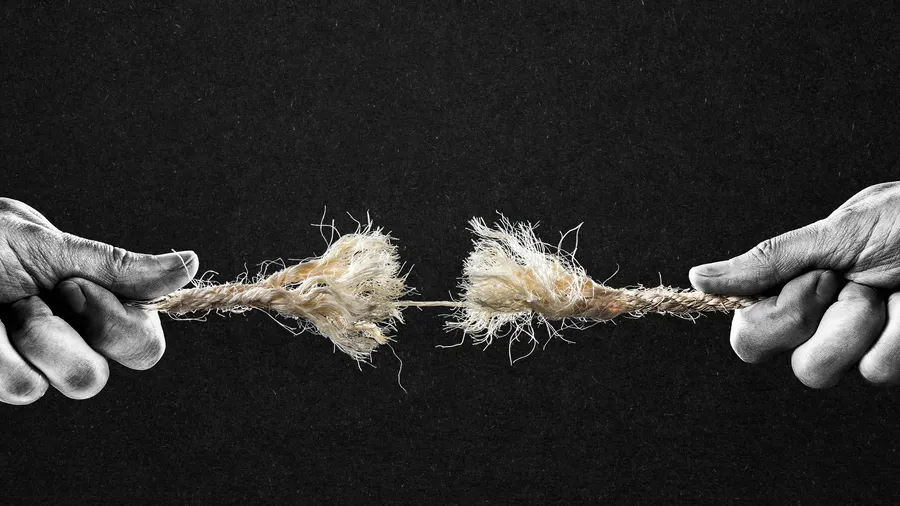
Photo Credit: Shutterstock.com/2480426941
Key takeaways
- Civic trust in the U.S. is collapsing, fueled by polarization, partisan division, online echo chambers, and outrage-driven culture.
- Both political parties are contributing to a dangerous cycle of overreach, fragility, and escalating cultural conflict.
- A more stable political future requires dialogue, fair elections, restraint in leadership, and protections for pluralism and rights.
This article was written by Salzburg Global Fellow Lisel Petis, who attended the Salzburg Global American Studies program on “What Next for the U.S.? What Next for America in the World?” in September 2025.
The views expressed here belong to this Fellow individually and should not be taken to represent those of any organizations to which they are affiliated.
Eroding Trust in Government
The United States enters the next decade facing not just political disagreements but a collapse of civic trust. This breakdown is measurable. Only one in five Americans trust the federal government to do what is right most of the time, and just fifteen percent of young adults believe the country is on the right track. Over three quarters say our divisions pose a direct threat to democracy itself. These statistics do not reflect a confident republic, but rather a persistent and growing polarization - with some serious fallout, including violence and abuse of power.
As the divide grows, each political party casts itself as the noble victim of the other’s overreach. Each claims to be defending freedom and fighting tyranny, but what they often mean is the freedom to live under - and impose - their preferred rules. That is, they accept control, as long as it is their control; and when in power, they use the very tactics they once condemned. This is highlighted by the fact that Americans tend to trust the federal government merely when their party is in control of the White House. As a result, we have evolved into a society governed by “rules for thee but not for me,” and both sides bear responsibility for this corrosive pattern. And, while it may feel acceptable when your party holds power, setting this precedent means accepting its use by future opponents.
Growing Polarization
Death threats from the powerless and forced firings by the powerful have both become normalized ways to express political dissatisfaction. Each side points the finger at the other side as the problem, labeling opponents as “fascists,” “antifa,” “Nazis,” or “terrorists.” But at some point, we have to recognize this as a cultural problem, not simply a partisan one. And this growing polarization is fueled by a growing culture of fragility, public shaming, manufactured outrage, and a refusal to engage in civil discourse.
More than half of Americans now get some portion of their news from social media platforms. Unfortunately, algorithm-driven echo chambers present citizens with a steady diet of content that confirms their beliefs while inflaming their sense of grievance, leaving little chance to see opponents as other human beings. “Rage bait,” content engineered and incentivized to provoke anger, is often created or amplified by the very political groups it targets to boost engagement. This, combined with a growing “call-out culture,” which turns isolated or minor missteps into public spectacles to signal loyalty, claim moral high ground, or discredit opponents, is fueling division and cutting down healthy debate and conversation.
The general public seems to be getting worn down by the tension. Over the past several decades, Americans have been clustering geographically into politically like-minded communities. In 1976, only about one in four Americans lived in a county where one presidential candidate won by a margin of twenty points or more. Landslide victories gradually increased and then exploded in the 21st century. One study found that almost all of the country lives among people who share their partisan identity.
For others, they are now finding themselves as “politically homeless.” These individuals are exhausted by extremes in the red versus blue battlefield and do not see their values being prioritized by either party. Yet they are trapped in a system that offers no real alternatives. The dominance of two parties leaves moderates and independents powerless, reinforcing the sway of the loudest extremes.
So, what is America’s path forward? There’s no silver bullet to heal a fractured nation, but there are certainly steps worth pursuing.
Rebuilding a Healthy Democracy
First off, a healthy democracy requires leaders who practice restraint and place service above self. That means resisting the temptation to expand power for short-term gain and being unwilling to ignore the dangers of concentrated power. Instead, policymakers must take action to strengthen the policies core to our liberal democracy. Executive orders should be used sparingly - limited to carrying out laws passed by Congress or addressing genuine emergencies - rather than as a substitute for legislative debate. Elections must be fair, with independent redistricting commissions ensuring that voters choose their representatives instead of representatives choosing their voters. And lawmakers must demonstrate fidelity to the Bill of Rights: State sovereignty under the Tenth Amendment must be protected, even when it is politically inconvenient; the First Amendment must be upheld, even when the speech is offensive; and due process must be preserved, even when the outcome feels deserved.
For communities, face-to-face engagement with those who hold different views is essential, and Americans must step out from behind screens to have those conversations in person. Programs that encourage dialogue across divides - whether through schools, workplaces, or civic organizations - can help rebuild trust. But they must protect room for honest and respectful debate, not simply highlight bipartisan agreement as an end in itself. Institutions also have a responsibility to respect pluralism by not just creating bipartisan caucuses, but granting them real influence in congress and state legislatures.
All violence - whether during protests, targeted at political leaders, or carried out in the name of a cause - must be condemned. And blame cannot be placed on entire communities or movements. What we are seeing is not yet widespread political violence, though the warning signs are there. Recent acts have been committed by individuals who use public figures and community spaces to create a stage for their grievance or notoriety. These events are tragedies and should remain just that, not used for political leverage.
Election reforms must also create space for broader participation. Electoral changes such as ranked choice voting could encourage coalition building and allow for a wider range of political thought. By creating space for more voices, these reforms would allow Americans to vote for representation rather than against the lesser of two evils. Blanket and open primaries would also weaken the grip of extreme voices that thrive in closed systems. And compromises must be made to ensure voter access and security.
The next decade will be defined not just by policies on immigration or climate, but by whether Americans can rebuild the civic fabric that makes disagreement constructive and power restrained. The nation has weathered crises before and grown stronger, but it requires clear strategy and collective action.