-
Topics
TopicsOur programs create spaces where open-minded leaders can gather for breakthrough conversations on pressing global issues – each aligned to one of the following pillars:Get Involved
-
Events
EventsExplore the variety of events Salzburg Global hosts within Austria and in the rest of the world. Learn more about our programs and what else happens at Schloss Leopoldskron.Upcoming EventsOct 19 - Oct 22, 2026Peace & JusticeThe Collective Action Problem: How Should Democratic Societies Respond to Increasing State Violence without Exacerbating Polarization and Political Violence?Violent Threats to Democratic SystemsOct 21 - Oct 25, 2026Peace & JusticeDemocracy Across the Frontlines: How Can Democracy Movements Collaborate To Build Resilience Across Borders?Democracy Resilience Forum
- Insights
-
Fellowship
FellowshipSince 1947, more than 40,000 people from over 170 countries have participated in Salzburg Global's sessions. Collectively, these alumni are known as Salzburg Global Fellows.
-
About Us
About UsSalzburg Global is an independent, non-profit organization committed to creating spaces that overcome barriers and open up a world of better possibilities.Our Approach
-
Support Us
Support UsYour generosity helps us gather open-minded leaders for breakthrough conversations, while creating space for dialogue that overcomes barriers and opens up a world of better possibilities.
- Donate

- Published date
- Written by
Share
Education
Opinion
Adults Need Exitbait Too: The Case for Less Screen Time
Published date
Written by
Share
Key takeaways
- The real harm of excessive screen time is the reading, sleep, and human connection we've quietly stopped doing.
- What's needed to change our technology-dependent behavior are realistic, incremental changes that shift norms.
- Tech companies could help users reduce their screen time, such as by developing "exitbait" - algorithm-informed nudges that send you back to your actual life.
This article was written by Joe Hallgarten, a Salzburg Global Fellow who attended our Education session in 2015 on "Untapped Talent: Can Better Testing and Data Accelerate Creativity in Learning and Societies?"
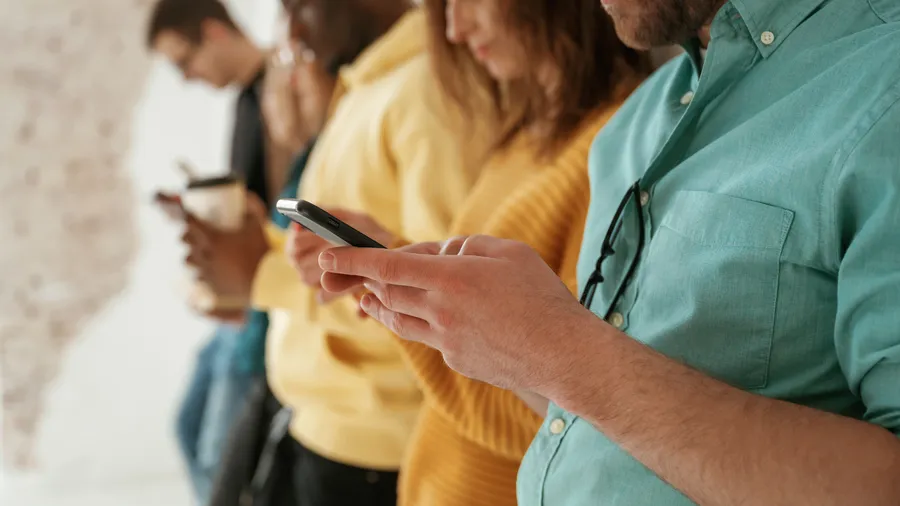
Something strange is happening to us. We are reading less, talking less, sleeping less, exercising less, connecting less. Not because life has gotten busier, harder, or worse – but because, globally, we are spending around five hours of our daily leisure time staring into a phone.
The damage isn’t mainly about what we do on our screens: the algorithms, the outrage. It’s about everything we’ve stopped doing because of them. Every hour on a screen is an hour not spent on something else.
The Tech Machine is Winning
The obstacle is obvious. Pervasive technology, the internet, and in particular the screens that dominate our lives, have become the defining feature of daily existence. The finest minds and richest budgets in the world are working to keep us on our screens for as long as possible.
Consider the UK’s National Year of Reading, currently underway with donor and government funding and sixty partners. It aims to reverse the steep reduction in reading - amongst children and adults alike, for pleasure and for work. As Maryanne Wolfe put it in “Reader Come Home”:
“…the act of reading is a special place in which human beings are freed from themselves to pass over to others and, in so doing, learn what it means to be another person with aspirations, doubts, and emotions that they might otherwise never have known.”
With respect to everyone involved, they are probably spitting into the wind. Despite the celebrity support and strong publicity, the chances of reversing the decline in reading feel remote. This is David versus Goliath, without the happy ending. We might rage against the machine, but the machine is winning.
Risks and Responses
Social media carries real risks for some – access to harmful content, harassment, negative impacts on mental health. But the broader crisis is less dramatic and more universal. We are all losing hours we will never get back.
Governments have begun to act. The UK, for example, has issued new guidance for parents of under-fives, and many countries are considering a ban on social media for under-16s following Australia’s lead.
But what about the rest of us? What examples are we setting our children as we try to regulate their behavior? What are we doing to ourselves in the average five hours of leisure time we spend staring into our phones?
This is not a situation that society necessarily needs to accept.
A New Temperance Movement
This year’s BBC Reith Lecturer, Rutger Bregman, has called for a new temperance movement – designed to reduce screen addiction in the same way the first temperance movement aimed to reduce alcoholism 150 years ago. It’s the right instinct.
But in the same way the temperance movement sometimes felt elitist and patronizing, we need practical, realistic ways to change our behaviors. Smug columns about “digital detoxes” won’t cut it. Full-day phone bans are unaffordable – financially and practically – for most of us. What we need are realistic, incremental changes that shift norms without shaming anyone.
The Year of Looking Up
So what might this actually look like? Governments could establish a recommended daily maximum screen time for adults, as a 2022 study from Leeds University suggested, and set goals for reductions, with places competing against each other.
Bars and cafes could close down Wi-Fi for a few hours each day. The tech companies themselves could be encouraged – or pressured – into playing a part. We know that Silicon Valley executives don’t let their own children near screens. What if some of those same fine minds developed “exitbait”: subtle, algorithm-informed nudges designed to send you back to your actual life and, in the words of the 1970s children’s show, "Why Don’t You…?", “switch off your phone and do something less boring instead.”
Individuals, including online influencers, could go public about their screen time and set goals to cut it. Norms can shift faster than we think. Remember the early days of COVID-19, when nobody walked and scrolled simultaneously because they were too frightened of bumping into someone infected? The screen zombie briefly died. We could try to kill it off again.
Perhaps we could start by making 2027 the International Year of Looking Up, or the Year of Less Screen Time. There is no shortage of international years on the UN calendar, but none feel as urgent as the global need to change how we use our screens.
All our norms need changing, not just our children’s.