-
Topics
TopicsOur programs create spaces where open-minded leaders can gather for breakthrough conversations on pressing global issues – each aligned to one of the following pillars:Get Involved
-
Events
EventsExplore the variety of events Salzburg Global hosts within Austria and in the rest of the world. Learn more about our programs and what else happens at Schloss Leopoldskron.Upcoming EventsOct 19 - Oct 22, 2026Peace & JusticeThe Collective Action Problem: How Should Democratic Societies Respond to Increasing State Violence without Exacerbating Polarization and Political Violence?Violent Threats to Democratic SystemsOct 21 - Oct 25, 2026Peace & JusticeDemocracy Across the Frontlines: How Can Democracy Movements Collaborate To Build Resilience Across Borders?Democracy Resilience Forum
- Insights
-
Fellowship
FellowshipSince 1947, more than 40,000 people from over 170 countries have participated in Salzburg Global's sessions. Collectively, these alumni are known as Salzburg Global Fellows.
-
About Us
About UsSalzburg Global is an independent, non-profit organization committed to creating spaces that overcome barriers and open up a world of better possibilities.Our Approach
-
Support Us
Support UsYour generosity helps us gather open-minded leaders for breakthrough conversations, while creating space for dialogue that overcomes barriers and opens up a world of better possibilities.
- Donate

- Published date
- Written by
Share
Education
Opinion
Active Listening for Empathetic Media
Published date
Written by
Share
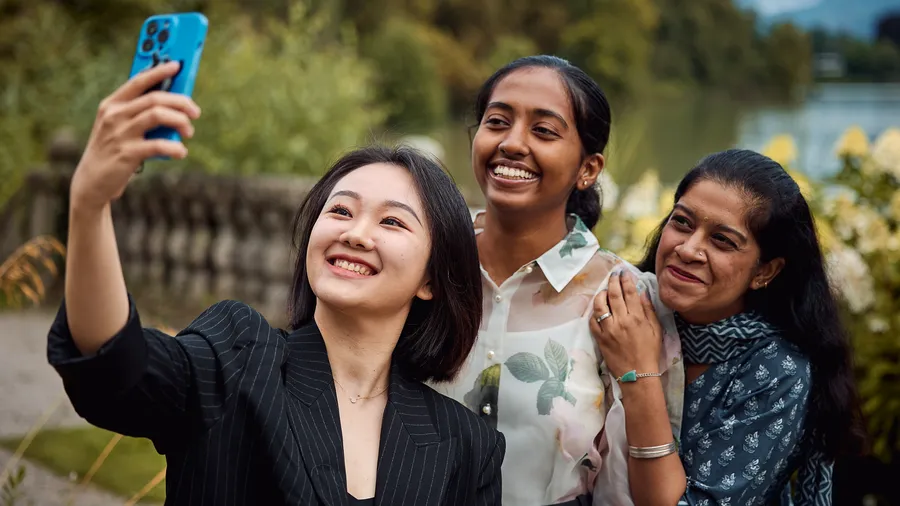
Purvi Ramtilak (center) at the Salzburg Academy on Media and Global Change in July 2025. Photo Credit: Christian Streili
This article was originally featured on Medium, which includes more coverage from the Salzburg Academy on Media and Global Change session on “Local Media Futures and Democratic Health.”
The Salzburg Academy on Media and Global Change is an annual program that convenes emerging leaders in media fields to build networks for positive change. If you would like to find out more about the Academy, please email Paul Mihailidis, Faculty Chair and Program Director.
My time at the Salzburg Academy on Media and Global Change was an immersive experience in terms of art, culture, history, the newness of travelling alone, but most importantly, the people. To be a part of the stories of people who care and believe in change was a true gift. There were countless moments to learn from, and many experiences and conversations that I wish I could relive.
One of my favorite lectures was by Professor Karen Fowler-Watt, titled “For the lack of journalism”.
One of my peers at the Media Academy asked, “How can we engage in a way that fosters empathy in media?”
“Active listening,” said Professor Watt.
While global change can be brought about by the next revolutionary technology or by reducing our carbon footprint, it can also be brought about by caring and listening. It is about voicing the opinions that people are scared to say out loud. To make a change is to try. In a world surrounded by so much media all the time, we have learnt how to tune things out. We listen only to the things we want to hear. We have normalized indifference to people who speak up. When people speak of climate change and world peace, we are no longer prompted to reflect or think critically of what we just heard. It is thought of as just more words and nothing that can be changed.
We have never been exposed to so much media and yet been so disconnected. Professor Watt’s presentation filled me with hope for the future that change is possible, so long as consistent effort and genuine intentions precede the actions.
The lecture emphasized that active listening and empathy as virtues are often overlooked when documenting or narrating significant global events. The Grenfell Tower tragedy, talked about by Professor Watt, was one such oversight reported. Grenfell Tower, located in one of the richest boroughs in London, caught fire and led to devastating loss. The Grenfell action group raised concerns about the fire safety of the building multiple times through their blog. The blog published concerns as close as 6 months before the fire, where the founder of the blog foreshadowed the disaster. The situation was not created due to people not talking, but by indifference toward the ones speaking. Professor Watt's lecture drove home the need for us to listen with intent and foster empathy to drive change, both personally and globally.
“Storylistening” is the perfect example that envisions this global change through sharing emotions and collective reflections. Professor Watt discussed her work on developing storylistening as a method for peacebuilding. It helped child soldiers who survived conflict from the indigenous Nasa community of the Cauca region in Colombia to tell their stories. This helped destigmatize their lived experiences and foster empathy for what they went through. Listening with intent and care allows for a more open dialogue and urges collaboration across generations and cultures of listeners and storytellers. This effort is an extraordinary glimpse into how the intersection of creativity, active listening, and empathy can bring about positive global change!
On a personal front, I believe these principles should be a guiding light for the work I aspire to do. This lecture perfectly tied in to how the most simple yet fundamental virtues can be the ones that really make a difference. Professor Watt's message will always serve as a reminder to be an active listener and never tune out of the things that surround me. The few weeks spent at the Media Academy inculcated in me a greater sense of empathy for the people and things happening around the world. To have been among such passionate and caring people at the Media Academy was truly a privilege, and I will hold my experiences from Salzburg with me forever.