
-
Topics
TopicsOur programs create spaces where open-minded leaders can gather for breakthrough conversations on pressing global issues – each aligned to one of the following pillars:Get Involved
-
Events
EventsExplore the variety of events Salzburg Global hosts within Austria and in the rest of the world. Learn more about our programs and what else happens at Schloss Leopoldskron.
- Insights
-
Fellowship
FellowshipSince 1947, more than 40,000 people from over 170 countries have participated in Salzburg Global's sessions. Collectively, these alumni are known as Salzburg Global Fellows.
-
About Us
About UsSalzburg Global is an independent, non-profit organization committed to creating spaces that overcome barriers and open up a world of better possibilities.Our Approach
-
Support Us
Support UsYour generosity helps us gather open-minded leaders for breakthrough conversations, while creating space for dialogue that overcomes barriers and opens up a world of better possibilities.
- Donate

- Published date
- Written by
Share
Peace & Justice
Workshopping International Law in Troubled Times
Published date
Written by
Share
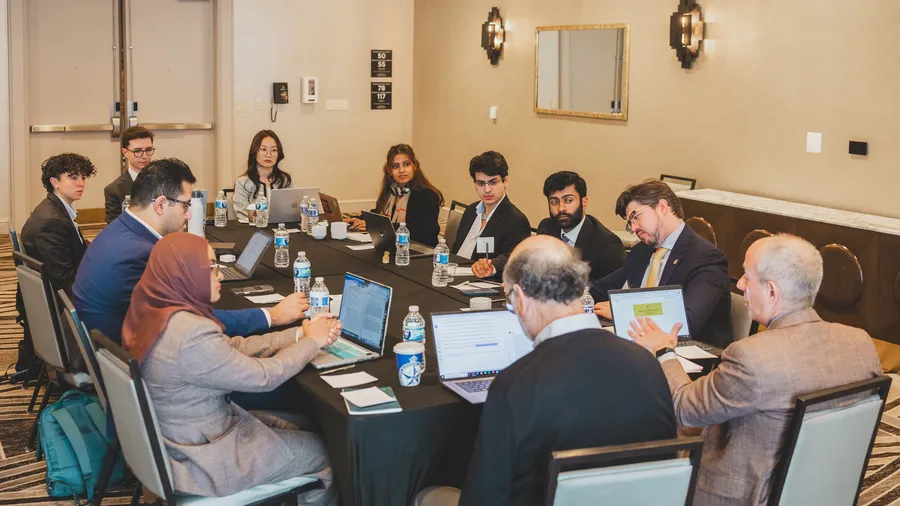
Fellows engaged in paper workshops during the 2026 Salzburg Cutler Fellows Program. Photo Credit: Stefan Agregado
Key takeaways
- The Salzburg Cutler Fellows Program highlighted collaborative, incremental approaches to strengthening human rights and the rule of law.
- Emerging legal scholars examined how international law is evolving amid declining compliance and rising political backlash.
- Paper workshop discussions revealed persistent legal gaps affecting marginalized groups and cross-border challenges.
This reflection was written by Salzburg Global Fellow Andreas Müller, who attended the 2026 Salzburg Cutler Fellows Program on "Disruption and Renewal: Charting the Future of the International Rule of Law, Democracy, and Pluralism".
“Almost all nations observe almost all principles of international law and almost all of their obligations almost all of the time” - Louis Henkin
If one follows only recent headlines on geopolitics, Louis Henkin's statement may appear questionable. Against a backdrop of assertions that international law is transforming from a discipline of crisis to a discipline in crisis, the Salzburg Cutler Fellows Program provided an invaluable opportunity for emerging scholars to reflect on their commitment to the legal field.
The 2026 session, convened under the topic “Disruption and Renewal: Charting the Future of the International Rule of Law, Democracy, and Pluralism,” placed an emphasis on its paper workshop sessions. Participating law students collaborated in small groups to discuss their work-in-progress academic papers across different fields of international law, under the auspices of two leading scholars in international law.

The workshop I attended focused on international law’s interfaces with individual rights. The notable breadth of papers defies summary: One contribution examined how international legal tools can assist with preventing and investigating digitally-assisted crime across jurisdictional borders. Another addressed the challenges nomadic communities encounter due to the statist focus of international law. A third paper explored the multi-level governance of gender markers in passports. These examples demonstrate how international law harbors opportunity for scholarly inquiry in both legal-theoretical and everyday-practical dimensions.
Among a variety of interests, several cross-cutting themes could be identified. Many Fellows grappled with decreasing compliance and growing backlash in the realm of human rights. Governments – both authoritarian and, increasingly, non-authoritarian – have become more willing to openly disparage or defy international institutions. This trend re-surfaces challenges of enforcement, legitimacy, and ultimately even the universality of international human rights law: Between abolitionist visions, backsliding, and reform proposals, the path forward appears more uncertain than at most times since World War II.
Our workshop also uncovered “dead spots” in the law: Areas where individuals or groups fall through proverbial doctrinal or institutional cracks. Discussions both descriptive and normative about methods and appropriateness of their mitigation ensued. Despite the variety in their scope of inquiry, Fellows identified similar avenues for redress that remain open and feasible under international law. These evident challenges of invisibility and exclusion underscored why (re-)considering the conditions under which international law can meaningfully serve as a reservoir of justice for those at the margins remains an important task for international lawyers today. The workshop left ample opportunity to reflect and converse on this question.
A significant advantage of this format was the interplay between substantive discussions and methodological input. The professors who joined the group, Laurence R. Helfer and James J. Silk, not only provided meaningful commentary on the doctrinal and theoretical ideas of each paper, but also offered concrete advice on framing, research design, and optimal case selection. Peer feedback complemented this guidance, with all participants building on one another’s insights and constructively challenging views to bring out the strongest possible form of each argument.
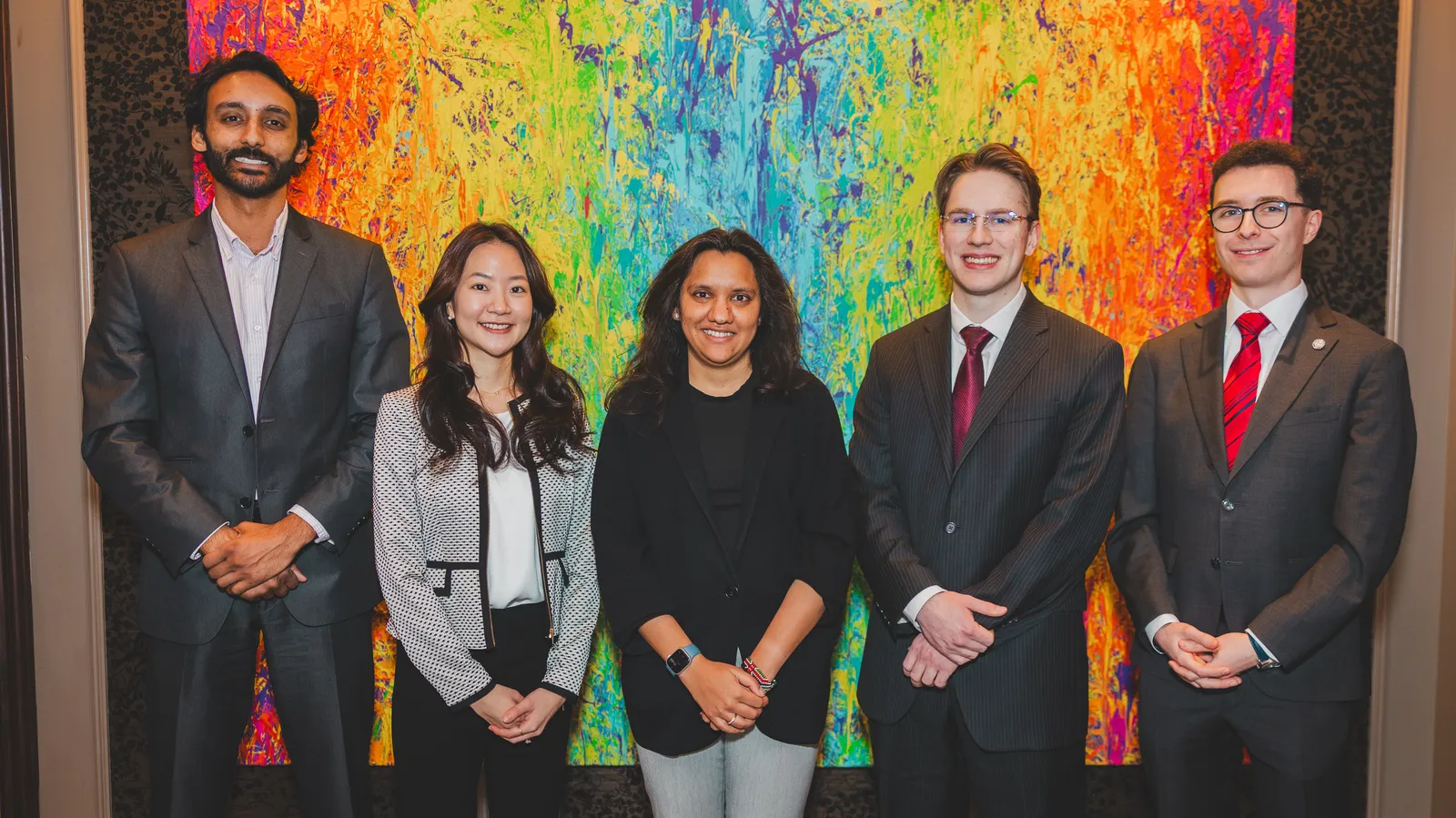
The workshop’s most significant insight lies at the intersection of substance and method: As scholars, we cannot address every problem on our own. What we can do is chip away at them, incrementally and steadily. Sometimes the most optimal path forward for a contribution lies in identifying a particular legal problem, exploring its preconditions, and showing why it matters – not necessarily in resolving it. Once a problem is revealed, someone, somewhere – whether in national governments, international organizations, NGOs, or academia – will be positioned to take up the lead: Such is the power and beauty of international law.
Ultimately, the workshop highlighted that international law is sustained by those who practice, critique, and live by it. In bringing together emerging international lawyers with different backgrounds and future trajectories, the Salzburg Cutler Fellows Program cultivated a sense of shared purpose at a time when the discipline’s foundations seem unsettled. It demonstrated that even in moments when international law appears to be in crisis, many remain deeply committed to its potential as well as acutely aware of its role in safeguarding individual rights and peaceful coexistence. This knowledge, and the energy one can draw from it, will surely stay with Fellows for a long time.
