How AAPI communities could shape the 2024 U.S. presidential election’s outcome and America’s future
As the 2024 U.S. presidential election approaches, Asian Americans, the fastest-growing racial group in the country, are concerned about what the future political landscape entails for them.
Coming from different communities across East Asia, Southeast Asia, South Asia, and the Pacific Islands, there are more than 24 million Asian Americans and Pacific Islanders living in the U.S. Often referred to as AAPIs, this population makes up seven percent of the total American population; their votes are crucial in an election where a small margin of victory could be decisive.
As both political parties in the U.S. compete for AAPI votes, understanding and addressing the concerns of people within these communities is key to engaging an increasingly influential voting bloc.
Through the Salzburg Global program on “Crossing the Pacific: The Asian American Experience in U.S. Society and Discourse,” experts explored the concerns of these communities, their political preferences, and the steps candidates can take to reach out to them.
Diverse Identities of AAPIs
The AAPI population is incredibly diverse, with different ethnicities, historical experiences, and socioeconomic backgrounds, each with distinct concerns and priorities.
While AAPIs lean Democratic, with 62% of registered AAPI voters identifying as Democrats, this may be changing. Wai Wah Chin, an adjunct fellow of the Manhattan Institute who is of Chinese descent, commented, “Asian Americans have been assumed to be a Democratic voting bloc, but we are seeing a shift now. In 2020, Chinese-majority districts in New York City voted for Trump, and then the year after that, they voted for [U.S. Representative] Zeldin, who was Republican.” She thinks that many AAPI voters feel they have a better shot at achieving the American dream if they vote Republican.
Shifting priorities can be observed across several AAPI communities. For instance, many Vietnamese Americans, due to their experiences fleeing communism, tend to lean toward the Republican Party. Sophal Ear, Associate Professor at Thunderbird School of Global Management at Arizona State University, moved to the U.S. as a Cambodian refugee at the age of 10. He explained that “Vietnamese Americans see China as the historical enemy of Vietnam. So, for them, supporting a candidate like Trump means supporting whoever is most anti-China in their view.”
Kamala Harris is a popular presidential candidate among many AAPI voters, especially because of her South Asian identity. Manjusha Kulkarni, Executive Director of AAPI Equity Alliance and Co-Founder of Stop AAPI Hate, shared that people from the South Asian community like herself feel seen for the first time. “Growing up in the 1970s and 80s, I felt people had no idea who I was. Now to be in a place where people know what it means to be South Asian or Indian through the struggles of Kamala Harris and her family has energized voters.”
However, a candidate’s race is not a decisive factor for everyone. Nicole Neilly, president and founder of Parents Defending Education, is an American of mixed Irish and Japanese descent. She believes in a strict meritocracy where a candidate’s race should not affect their ability to serve as president. “Is Kamala Harris the best candidate for the job? In my mind, no; in other people's minds, yes. Does her coming from a specific racial group make her a better candidate? I don't know,” she commented.
Socioeconomic Differences Shape Voting Concerns
The political concerns of AAPIs are also shaped by their varied socioeconomic backgrounds. According to a Pew Research Center survey, Asian Americans are one of the most economically diverse racial or ethnic groups today.
The median income among AAPI households was $100,000 in 2022; while many are financially stable, others struggle to make ends meet. This disparity creates contrasting priorities for each subgroup, influencing the political landscape.
“Local issues are very important to the different Asian American communities,” explained Wai Wah. Many Asian Americans, especially first-generation immigrants, want to build a better life for their children, so they prioritize issues like safety, economic well-being, and education when voting.
Nicole agreed that education is a primary concern of AAPI communities, explaining that, “People did think about the economy, public safety, immigration, and all of these other things before; now they're voting certainly about education.”
However, not everyone shares the same socioeconomic concerns. Sophal cited the example that while many Chinese Americans are concerned about transferring wealth to their children, many Cambodians worry about finishing high school. He is concerned that treating everyone the same may make matters worse for other groups and clarified that equity is “about seeing who is missing what and giving them what they're missing so that they can be at the same level as others.”
Manjusha believes that the path to American citizenship should be made easier for immigrants and is of the opinion that “a majority of our South Asian community would support that given that many more are immigrants and not yet U.S. citizens.” The community also wants “better access to education and stricter gun laws.”
The Role of Anti-Asian Racism
The rise in anti-Asian hate crimes, particularly during the COVID-19 pandemic, has deeply affected many AAPI voters. At that time, “Trump crossed out the word corona in front of the coronavirus and put in the Chinese virus; that was his way of targeting China. But the intended or unintended consequence was that all Asian Americans became targets of the hatred that arose from his choice of words," said Sophal.
Manjusha believes that this election is pivotal to all Asian Americans, as Trump’s anti-immigrant policies will have a long-lasting impact. In previous elections, individuals who were concerned about anti-Asian hate were more motivated to go to the voting booth, demonstrating that “when people see their communities threatened, they often feel more engaged”, said Manjusha.
Radicalization within segments of the Asian American community has been fueled by fears of losing economic or educational opportunities. This is especially relevant following the Supreme Court's 2023 decision to end race-based college admissions policies. The reactions to this decision on affirmative action have exposed the deep divisions within the community, as some Asian Americans oppose affirmative action, while others are more supportive.
Coalition building between groups is critical to energizing AAPI and other minority voters. Manjusha recommended “coalition building within the Asian American and Pacific Islander community and coalition building with other communities of color.”
Winning Over AAPI Voters
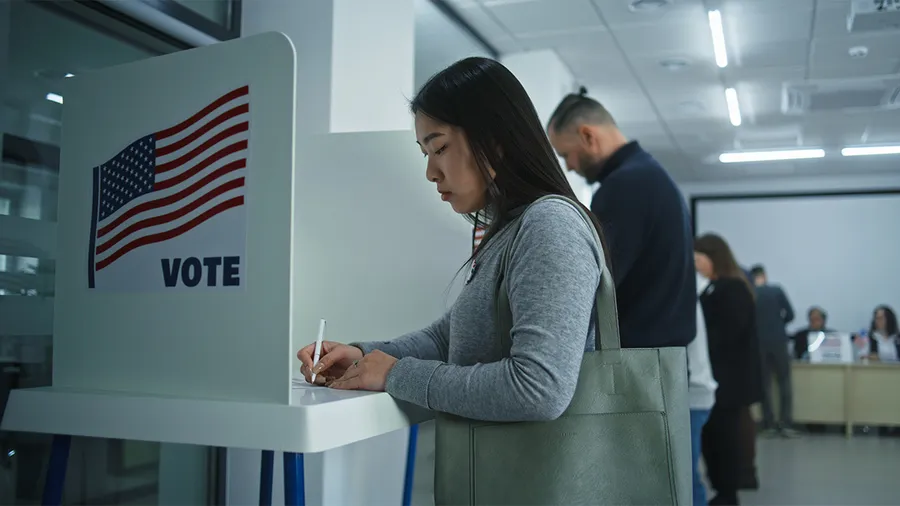
Both major political parties want to win the votes of Asian American voters, but this population is often ignored in political discussions. Manjusha criticized both political parties for not conducting enough outreach to Asian American communities as compared to other groups. She suggested that to reach these voters, materials need to be translated into different languages for better understanding. Wai Wah observed that when people feel they are actively involved in the political process, “the better we are as a community.”
To reach the diverse communities of Asian Americans, Sophal believes “candidates should take a balanced approach when targeting different communities this election year without causing people to have to say, either you're with me or you're against me.” He also believes that “the candidates who create the most or aim to create more opportunities for Asian American voters will have the best chance of being elected from the Asian American vote.”
The 2024 presidential election is pivotal and marks a critical moment for Asian American voters. Many fear that another Trump presidency would result in a “drastic threat to communities of color,” as Manjusha described it. As the election draws near, the candidate who can genuinely address the diverse concerns of AAPI communities stands to gain a significant advantage.
Wai Wah Chin, Sophal Ear, Manjusha Kulkarni and Nicole Neilly attended the Salzburg Global program on “Crossing the Pacific: The Asian American Experience in U.S. Society and Discourse” in September 2024.