

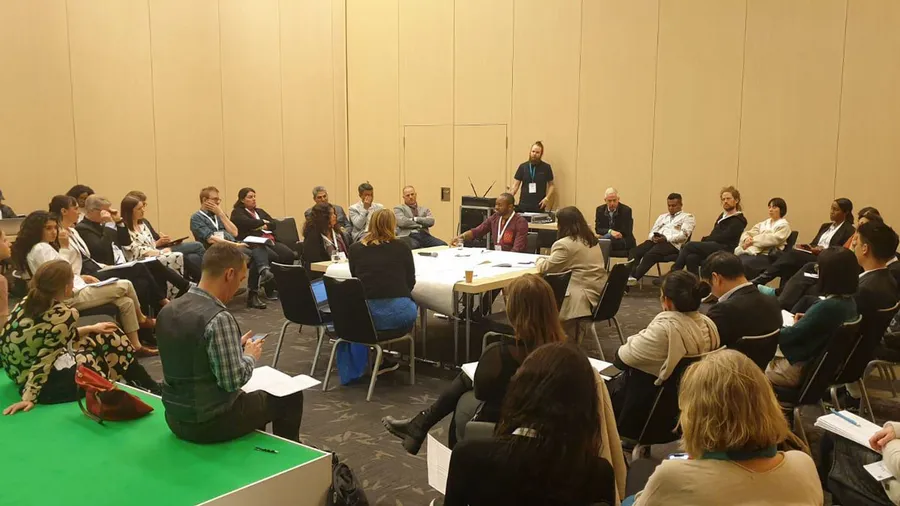
Program Director for Culture Faye Hobson recounts her key takeaways of Salzburg Global's Long Table discussion at Stockholm’s World Summit on Arts and Culture
In May 2023, the 9th World Summit on Arts and Culture took place in Stockholm, Sweden. Salzburg Global Seminar was a partner in this global gathering which brought together cultural policymakers, practitioners, artists, and experts from around the world.
During the Summit, the threats to artistic freedom posed by technology emerged as a prominent concern. Participants expressed apprehension regarding uncontrollable AI surpassing human intelligence, intellectual property issues, algorithmic mediation of knowledge access leading to echo chambers, and more. The media's recent focus on these concerns, including warnings from AI pioneer Geoffrey Hinton and policymakers calling for investments in AI safety and control, has amplified fears and anxieties.
Salzburg Global convened a Long Table discussion on May 3rd, “The Arts on the Frontline, the Arts in the Online”, focusing on the challenges, opportunities, and responsibilities faced by cultural policymakers and artists in the digital environment. The Long Table session was moderated by Faye Hobson, Program Director for Culture, and involved Salzburg Global Fellows Ayodele M. Ganiu, Anasuya Sengupta, and Kira Xonorika.
Here are some of the key takeaways:
Engaging with the Digital Landscape
Cultural policymakers and artists must contemplate how to effectively engage with the internet, AI, chatbots like Chat GPT, and online image generators such as Midjourney or Dall-e. One essential aspect is supporting each other within the sector and remaining cognizant of the potential suppression, surveillance, and lack of accountability that exist online. Simultaneously, it is crucial to harness the opportunities for freedom of expression, creation, and community that the digital space offers.
Avoiding Replicating Inequities
In order to prevent the perpetuation of existing inequities and systems that marginalize individuals, cultural policymakers and artists must prioritize several key actions. First and foremost, bridging the digital divide and ensuring equal access to digital tools and resources is crucial. Additionally, adopting inclusive design practices that involve diverse voices and perspectives in the development of digital technologies is essential. Promoting digital literacy programs that empower artists and communities to navigate the digital landscape effectively is another important step. Lastly, fostering global collaboration and establishing partnerships are vital in amplifying the voices of artists from the majority world and ensuring their inclusion in the digital age. By actively engaging in these efforts, cultural policymakers and artists can work towards a more equitable and inclusive digital ecosystem.
Ethical and Responsible Use of Technology
Cultural policymakers and artists must navigate the ethical implications of AI, algorithms, Web 3.0, and other emerging technologies. They should advocate for transparency, regulation, and policy development, ensuring the human-centered design of technology. Continuous dialogue between artists, technologists, policymakers, and stakeholders is essential to shape the evolving relationship between art, technology, and society.
Opportunities in the Online Space
The online space presents numerous opportunities for artists and cultural practitioners. It allows for digital collaboration, community building, and creative exchange on global platforms. Open access initiatives, Creative Commons licensing, and knowledge sharing enable artists to freely share and build upon each other's work. Emerging technologies, including AI-powered chatbots and image generators, offer avenues for experimentation, innovation, and pushing artistic boundaries.
The World Summit on Arts and Culture highlighted the complexities of engaging with the digital landscape. Recognizing the threats posed by technology, such as AI and algorithms, cultural policymakers and artists must navigate these challenges responsibly, while actively seeking opportunities for creative expression, cultural exchange, and community building. By prioritizing inclusivity, digital literacy, and global collaboration, we can shape a digital age that supports artistic freedom, empowers marginalized voices, and fosters a more equitable and diverse cultural ecosystem.
