-
Topics
TopicsOur programs create spaces where open-minded leaders can gather for breakthrough conversations on pressing global issues – each aligned to one of the following pillars:
-
Events
EventsExplore the variety of events Salzburg Global hosts within Austria and in the rest of the world. Learn more about our programs and what else happens at Schloss Leopoldskron.Upcoming EventsFeb 05 - Feb 07, 2026Peace & JusticeDisruption and Renewal: Charting the Future of the International Rule of Law, Democracy, and PluralismSalzburg Cutler Fellows Law ProgramApr 13 - Apr 18, 2026CultureCreating Futures: Rethinking Cultural Institutions, Infrastructure, and InvestmentCulture, Arts and Society
- Insights
-
Fellowship
FellowshipSince 1947, more than 40,000 people from over 170 countries have participated in Salzburg Global's sessions. Collectively, these alumni are known as Salzburg Global Fellows.
-
About Us
About UsSalzburg Global is an independent, non-profit organization committed to creating spaces that overcome barriers and open up a world of better possibilities.Our Approach
-
Support Us
Support UsYour generosity helps us gather open-minded leaders for breakthrough conversations, while creating space for dialogue that overcomes barriers and opens up a world of better possibilities.
- Donate

- Published date
- Written by
Share
Culture
Opinion
Rebuilding Democracy From the Ground Up: Foundational Changes to Our System
Published date
Written by
Share
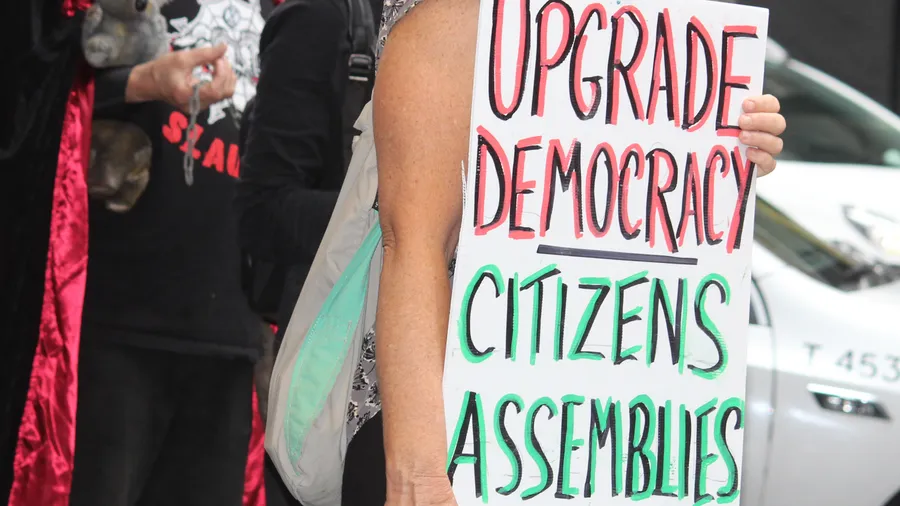
Photo Credit: Shutterstock.com/1926527963
Key takeaways
- People are moving because the world is changing, and instead of turning on each other, we need solutions that protect everyone’s dignity.
- A Citizens’ Assembly gives everyday people, both locals and newcomers, a real say in shaping the future of their community.
- When we sit together, share food, and hear each other’s stories, fear fades and a stronger, more united community can grow.
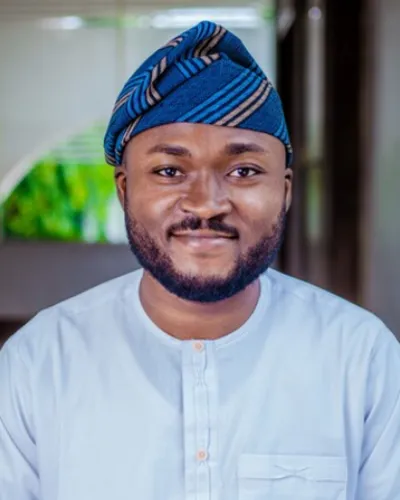
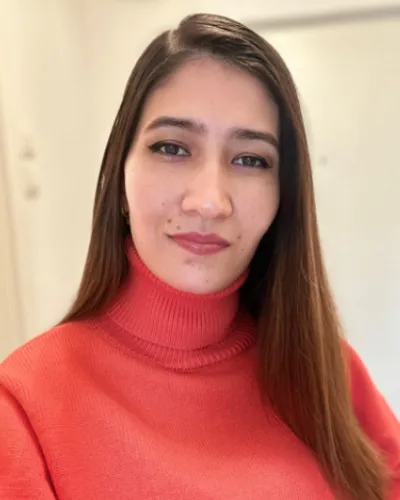
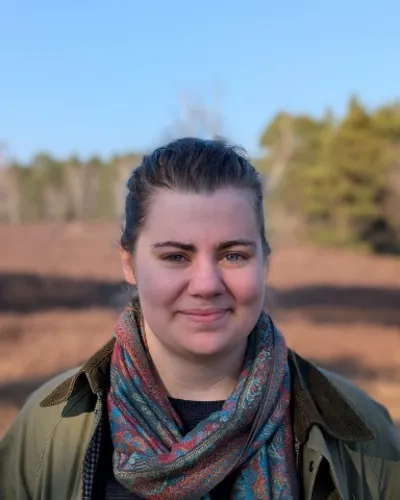
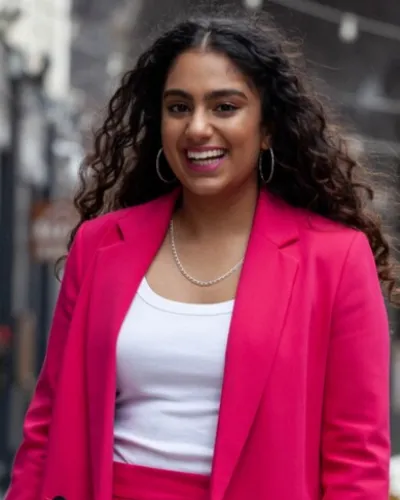
This thought piece was written by Salzburg Global Fellows Princewill Ejiro-Oghene Ahante, Farida Amiri, Pauline M. Hastenteufel, Sophia Kaur Badhan, and Dylan Pereira. They attended the Public Policy New Voices Europe session on "Rebuilding Trust and Cohesion in European Public Policy".
The views expressed in this article are those of these Fellows individually and should not be taken to represent those of Salzburg Global or any organizations to which they are affiliated.
Rebuilding Our Community From the Ground Up
Moving to a new city always brings new expectations, challenges, and a certain level of anxiety, but then, once you start getting to know the neighbors, creating routines, and exploring the area, feelings of home emerge.
Throughout history, migration has been a constant, as the so-called Great Atlantic Migration where tens of millions of Europeans moved to the Americas (especially 1820-1980), or the Great Migration in the U.S. when approximately six million African Americans moved from the American South to Northern, Midwestern, and Western states roughly from the 1910s until the 1970s.
Now, with climate change making parts of the world unhabitable, particularly in South Asia, Africa, and coastal regions, this movement of people will only increase. Yet, instead of preparing for this reality with compassion and smart planning, politics have weaponized migration. Politicians and media often blame newcomers for society's problems, using them as scapegoats for deeper failures in our systems. This division is already destabilizing democracies worldwide.
We cannot stop climate-induced migration. The question is not if people will move, but how we will respond. To avoid a deeper crisis, we must shift the debate toward creative solutions that protect human dignity, integrate newcomers, and strengthen our communities.
Why the Solution Is Local
The weaponized narrative of migration depends on abstraction - on seeing people as a faceless crowd. This narrative shatters when we put a human face to it. It is hard to fear a "migrant" when they are your child's classmate, your neighbor's caregiver, or the owner of a local shop.
Furthermore, the systems that determine successful integration, schools, housing, and local economies, are fundamentally local. A national policy is meaningless if a family cannot find a home or a welcoming community. Therefore, the most critical work happens not in distant capitals, but in our own cities and neighborhoods.
A Local Solution: The Citizens’ Assembly
So, how do we build this practical infrastructure of belonging? We propose a local Citizens' Assembly with real power.
This Assembly will be a diverse microcosm of the community, meticulously selected to include lifelong residents and newly arrived migrants, young adults, and seniors. It is designed to give a voice to everyone who feels unheard, regardless of their background.
From Abstraction to Action
This group won’t just talk; it will act. The Assembly will be entrusted with allocating a portion of local funds to improve their city. They will face real-world choices: Should they repair the playground or fund more language courses? Do they invest in a public safety initiative or grants for new businesses?
There are no perfect answers, only collective priorities. This process forces a conversation beyond individual needs and toward a shared vision for their neighborhood. It is a masterclass in democratic compromise.
A successful example can be found in Ireland, where Citizens' Assemblies are randomly selected, demographically representative groups of citizens. They deliberate on complex policy issues to provide recommendations to the parliament (Oireachtas). They use expert testimony and public input for thorough discussion, aiming to offer balanced, informed advice, fostering public trust, and helping break political deadlock on challenging topics, proving a key part of Irish deliberative democracy.
The Foundation: A Shared Meal
Before this difficult work begins, we will share a meal. At the start of every meeting, everyone is encouraged to bring a dish - a taste of home and a family recipe.
This simple act is foundational. Around a table, passing plates and sharing stories, we are no longer "us” and “them.” We are simply people. The discussions that follow are not between strangers, but between familiar faces. It becomes harder to dismiss someone's argument for the playground when you've just enjoyed their homemade baklava.
This is how we rebuild: not from the top down with abstract policies, but from the ground up, one shared meal and one shared decision at a time. It is how we replace fear with familiarity and build a community resilient enough to face the future together.
Citizens’ Assembly
We propose a Citizens' Assembly that intentionally brings together long-term residents who feel unheard with migrants and asylum seekers who are eager to integrate and contribute, but do not feel welcome.
Participants will be selected using statistical methods to reflect the full diversity of the community, including gender, age, income, education level, religion, ethnicity, and migration status. This ensures that no voice is left behind.
To reach everyone, we will show up in the places people already gather:
- Pubs, event centers, and barber shops for residents who feel frustrated and ignored.
- Religious centers, community hubs, cultural associations, language schools, and food banks for migrants and asylum seekers seeking support and settlement.
Our message will be carried by trusted community leaders, civil society organizations, and neighbors who know the reality of everyday life.
Sharing a Meal
Food is a universal language. At each Assembly meeting, everyone will be encouraged to bring a dish. Sharing a meal will allow for conversations to take place naturally. Not as “us and them” or “citizens vs. migrants,” but simply as neighbors.
Financially, part of this civic exercise will include voluntary contributions from neighbors, with partial support by local funds coming from taxpayers, in a logic of enhancing democratic participation, agency capacity, and civic trust.
If we do not start building community movements from the ground up with the resources available and, most importantly, with our shared commitment to a better society, we will never be able to transcend the current social fragmentation. Let's build our common future!