

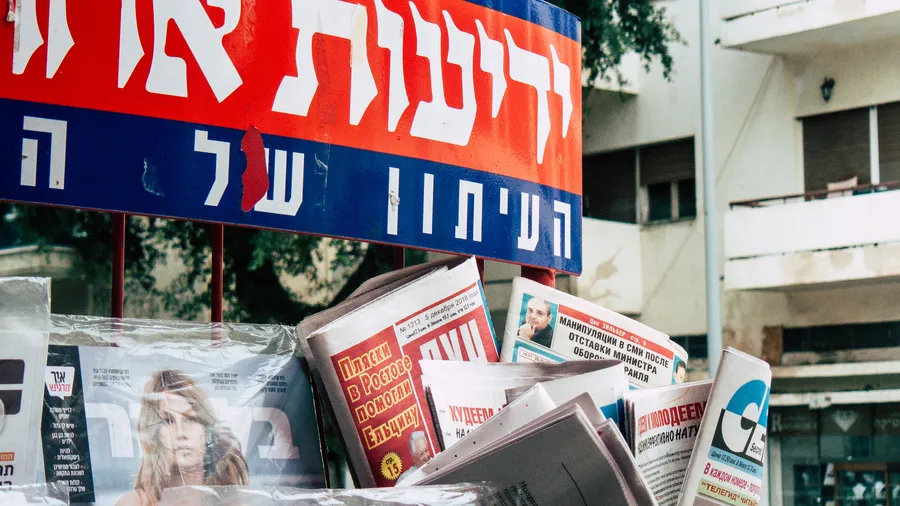
Salzburg Global Fellows examine challenges to press freedom in Israel and propose reforms
This thought piece was written by Salzburg Global Fellows Harun Abubakar, Najla, and Vishal Parkash. They attended the Public Policy New Voices Europe session on "Toward Inclusive Democracy: Nurturing Diverse Leadership in Public Policy".
The views expressed in this article are those of these Fellows individually and should not be taken to represent those of Salzburg Global or any organizations to which they are affiliated.
Free and independent media play a crucial role in achieving broader democratic goals, including fostering an inclusive society, ensuring an informed citizenry, protecting minority rights, and reducing polarization. When media outlets reflect diverse perspectives, they empower marginalized voices and promote trust in democratic institutions. By contrast, restricted media environments exacerbate societal divisions, erode public trust, and deepen political biases.
Protecting media freedom is not just about journalistic integrity - it is a means to uphold democratic principles and safeguard the rights of all citizens. This raises a pressing question: How can free, independent media and diverse sources of information be promoted to ensure an informed public?
Media freedom is the cornerstone of any democracy, enabling transparency, accountability, and the free exchange of ideas. In Israel, however, media independence has been increasingly under threat. Under Prime Minister Netanyahu’s government, concerns over the concentration of media ownership, political interference in public broadcasting, and the suppression of dissenting voices have grown. These trends point to a troubling pattern of democratic backsliding, where the erosion of free media undermines the broader democratic fabric.
The Israel-Hamas war serves as a stark example: Narratives favoring government positions dominate the discourse while dissenting perspectives are sidelined under the pretext of national security. This narrowing of voices threatens to distort public understanding and stifle critical dialogue, making the fight for media freedom in Israel more urgent than ever.
What Challenges Hinder Media Freedom in Israel?
Several challenges currently counteract the promotion of free, independent media relying on diverse sources of information in Israel. These include the concentration of media ownership, the prosecution of journalists, and legal restrictions.
One of the largest newspapers is Hayom, an Israeli right-wing daily newspaper owned by Sheldon Adelson, an American billionaire and a substantial political donor to the Republican Party and U.S. President-elect Donald Trump. As it is distributed for free, it is Israel’s most-read newspaper with a weekday readership exposure of 27.4%, according to the TGI survey in January 2024. The main beneficiary of this newspaper is Prime Minister Netanyahu and his Likud party, with increased support for the right bloc associated with the higher readership rates of this newspaper. Hence, this newspaper exerts significant electoral influence and demonstrates how the concentration of media ownership shapes politics.
The prosecution of newspapers and journalists has never been more relevant than it is in Israel. On November 24, 2024, Israel’s cabinet unanimously voted to sanction the country’s oldest newspaper, Hareetz, by directing all government-funded organizations to cease communications with them and withdraw advertisements. Hareetz, which is internationally recognized and has been critical of the war in Gaza, has described this move as an attempt to “silence a critical, independent newspaper.”
Similarly, Israeli forces stormed the Al Jazeera office in Ramallah in September 2024 and banned operations in Israel. Internationally, this was seen as an assault on the freedom of the press and a restriction on media freedom, as Al Jazeera is the only internationally recognized media network reporting from Gaza and the West Bank.
Another aspect that hinders media freedom is enshrined in Israeli law, namely the issue of military censorship. The Israeli Military Censor (Hebrew: הצנזורה הצבאית) is a division within the IDF Directorate of Military Intelligence responsible for implementing preventive censorship in Israel, aiming to regulate the publication of information that could impact the nation's security. Military censorship requires journalists to comply when reporting on security issues, and violations can result in criminal charges. Since October 7, 2023, there has been a dramatic increase in the number of news items that are fully or partially redacted by the military censor, with the highest number of articles banned in over a decade recorded in 2023.
How Could These Challenges Be Tackled?
Promoting free and independent media in Israel involves tackling entrenched structural and cultural barriers that threaten media diversity and democratic discourse. The following solutions delve deeper into the practical strategies required:
Legislative Reforms: Antitrust laws targeting concentrated media ownership can reduce undue influence on public narratives. For example, Israel Hayom, which is funded by Sheldon Adelson and supportive of Prime Minister Netanyahu, has been criticized for undermining media diversity. Breaking up such monopolies would open space for alternative perspectives. Similarly, anti-SLAPP (Strategic Lawsuits Against Public Participation) laws can shield journalists. As seen, investigative reporting by Haaretz that does not favor the government or politicians has resulted in punitive measures such as sanctions. They sometimes also face lawsuits from politically connected figures attempting to stifle critical coverage.
Financial Incentives: Government or private funding mechanisms, such as public-interest journalism funds, can ensure financial independence for media organizations. Subsidies conditioned on adherence to public-service reporting criteria could encourage fact-based journalism while reducing their dependence on commercial advertising. Tax incentives for outlets producing investigative work could further diversify funding sources, thus diluting political or economic influence over editorial choices.
Media Literacy and Public Awareness: Educational programs are key to combating misinformation. For example, Israel’s FakeReporter actively debunks false claims, such as conspiracy theories about COVID-19 or politically motivated rumors. Public education campaigns promoting media literacy are essential for reducing susceptibility to misinformation, imitating similar strategies by some Scandinavian countries. Schools should integrate critical media consumption curricula, enabling young citizens to discern bias and evaluate sources effectively. Fact-checking organizations like FakeReporter and The Whistle play a pivotal role in countering misinformation, not only by debunking falsehoods but by increasing the accountability of public figures who disseminate misleading narratives.
Israel’s media landscape faces significant challenges, from concentrated ownership and political interference to legal restrictions and censorship. These issues threaten not only journalistic freedom but also the broader democratic process. The EU, as a partner of Israel, should play a critical role in holding the current government accountable for these democratic backsliding trends.
To safeguard media independence, urgent reforms are needed, including antitrust laws, financial incentives for public-interest journalism, and enhanced media literacy programs. By addressing these structural barriers, the Israeli government can promote a more diverse and informed media environment, ultimately strengthening democracy and ensuring a free exchange of ideas.
Harun Abubakar, Bibi Najla Faizy, and Vishal Parkash are members of the third cohort of the Salzburg Global Public Policy New Voices Europe program. They attended the session on "Toward Inclusive Democracy: Nurturing Diverse Leadership in Public Policy".
In 2025, the program focus is on "Rebuilding Trust and Cohesion in European Public Policy".
Learn more about the Public Policy New Voices Europe program.
