
-
Topics
TopicsOur programs create spaces where open-minded leaders can gather for breakthrough conversations on pressing global issues – each aligned to one of the following pillars:Get Involved
-
Events
EventsExplore the variety of events Salzburg Global hosts within Austria and in the rest of the world. Learn more about our programs and what else happens at Schloss Leopoldskron.
- Insights
-
Fellowship
FellowshipSince 1947, more than 40,000 people from over 170 countries have participated in Salzburg Global's sessions. Collectively, these alumni are known as Salzburg Global Fellows.
-
About Us
About UsSalzburg Global is an independent, non-profit organization committed to creating spaces that overcome barriers and open up a world of better possibilities.Our Approach
-
Support Us
Support UsYour generosity helps us gather open-minded leaders for breakthrough conversations, while creating space for dialogue that overcomes barriers and opens up a world of better possibilities.
- Donate

Peace & Justice
Feature
How Can Genocides Be Prevented? What Rwanda Can Teach the World
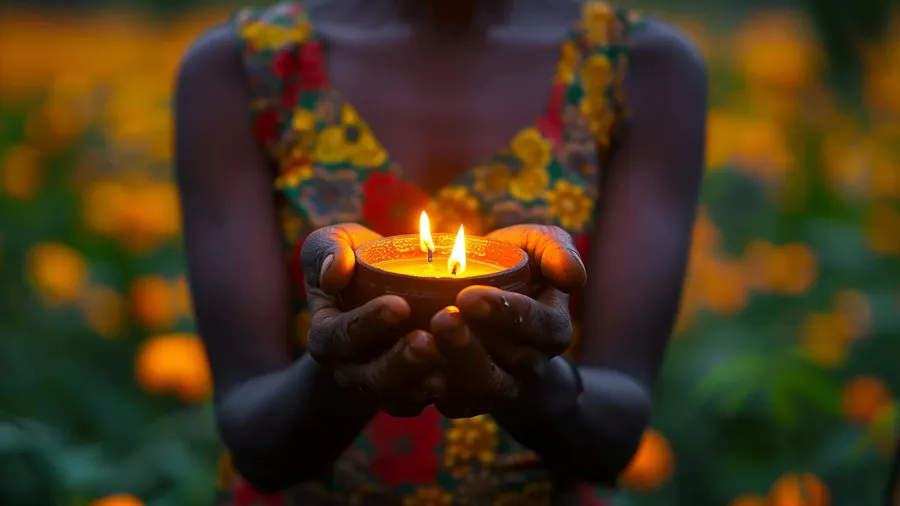
Photo Credit: SN/Jersh-stock.adobe.com
This article has been translated from German and was originally published by the Salzburger Nachrichten. The original article can be downloaded here.
One million people murdered within 100 days. The genocide in Rwanda is one of the worst mass killings in recent history - and it was foreseeable, says Salzburg Global Fellow Marc Gwamaka. The Rwandan is committed to ensuring that his country’s history does not repeat itself, and that other countries draw lessons from it.
Joelle Habiyambere, another Salzburg Global Fellow, has ten siblings. Not all of them are related to her by blood. “Seven of my brothers and sisters are survivors of the genocide; their parents were killed. We lived together with them in one house until they got married,” says the Rwandan woman, who was born five years after the genocide in her home country. The parents of her “siblings” are all dead. Her own mother, who had lived in exile during the genocide, took the orphaned children into her home.
So many children under one roof - this was nothing unusual for Joelle. “After the genocide, there was no family in Rwanda that did not take in at least one surviving child,” says the 26-year-old. “Stories like these show what humanity really means - and that it can become reality if we actively choose it.”
Rwanda has experienced the very worst. How does a country in which one segment of the population sought to wipe out another - where one million people were murdered within 100 days, women were raped, and children traumatized - manage to rebuild peaceful coexistence? And could the 1994 genocide have been prevented?
Marc nods in response to the latter question. He founded the Aegis Youth Champion Leadership Program, a training initiative in which young people learn what peaceful coexistence and humanity entail. “We give young people the resources to put peace into practice,” says Marc, who participated in Salzburg Global's Global Innovations on Youth Violence, Safety, and Justice Program together with his colleague, Joelle Habiyambere.
Both work every day to ensure that what happened in Rwanda in 1994 never happens again. Because the genocide could have been prevented, Marc says. “In 1988, Gregory Stanton, then a member of the U.S. State Department, was in Rwanda. He had developed the ‘Ten Stages of Genocide,’” the peace activist recounts. “At the time, he spoke with President Juvénal Habyarimana and said that, based on what he had observed in Rwanda, a genocide was likely within the next eight to ten years.” History proved him right.
“Genocide is predictable. One can scientifically identify when a country is heading in that direction,” Marc explains. Even before 1994, identity cards listed ethnic affiliation, and state media spread messages of hatred. “First discrimination begins, then propaganda and dehumanization follow,” Marc elaborates. “The opponent is described as an animal or a beast -someone who eats cats or kills children.” In the end, it becomes a matter of “us” versus “them,” accompanied by the accusation that the other side is evil and inhuman. “1994 was only the climax. The warning signs began decades earlier.”
Yet amid all the horror and suffering, Rwanda can also serve as a model - for how genocides can be prevented.
One key lies in the work that Joelle Habiyambere and Marc Gwamaka do every day: education and awareness. As peacebuilding trainers, they primarily reach young people - the future of the country. After all, 70 percent of the population is under 35. “They did not experience the genocide directly, but they carry the trauma passed down from their parents and grandparents,” Joelle says.
In the trainings, young people learn to put themselves in others’ perspectives, to understand their thoughts, feelings, and actions. Compassion is essential, Marc believes: “When we lost precisely that - our empathy - we killed a million people.” It is just as important to train young people to become critical thinkers so that they can more easily expose hate propaganda. “When young people think critically, manipulation becomes difficult.”
Education alone, however, is not enough. For the prevention of violence, equality is crucial. When population groups are systematically discriminated against - when their access to education, jobs, and housing is restricted - action must be taken. “Whether in the U.S., Europe, or Central Africa, the patterns are the same. It starts with difficult living conditions,” Marc explains.
The 37-year-old also works in countries where people’s lives are already shaped by conflict, such as Nigeria, South Sudan, or the Central African Republic. “Rwanda should serve as an example so that other countries do not have to go through what we did,” he says.
That Rwanda has managed to move from a deeply traumatized society to a state of relative security is largely thanks to women, Joelle believes. Like her mother, many women took in children as if they were their own. “We discovered that we have a big heart - and that we are capable of forgiving one another.”
