

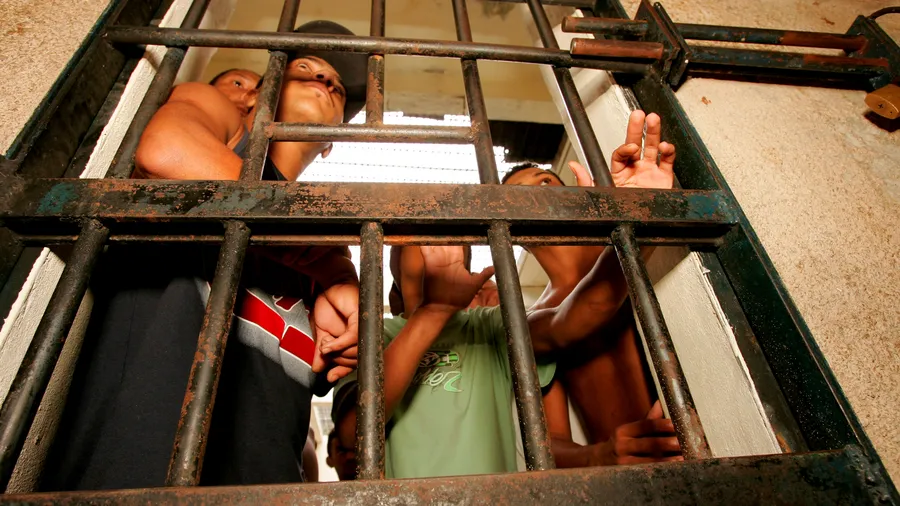
Salzburg Global Fellow Eduardo Melo calls for protective justice and policy reform for juvenile drug offenses in Brazil
This article was written by Salzburg Global Fellow Eduardo Melo, who participated in the Global Innovations on Youth Violence, Safety and Justice initiative.
Drug Trafficking as the Worst Form of Child Labor
Until recently, Brazil faced an ambiguous situation regarding the characterization of adolescents charged with selling drugs. According to the ECA (Statute of Children and Adolescents), an apprehended adolescent must be sanctioned with one of the socio-educational measures: Warning, Community Service, Probation, Internment and other punitive-educational forms. According to ILO Convention 182, these adolescents are exposed to a specific type of work in its worst forms.
The National Council of Justice (CNJ) has published the “Manual for Classifying Drug Trafficking as one of the Worst Forms of Child Labor”. In cases of drug offenses, it recommends that the judge apply the Control of Conventionality, recognizing that the adolescent is a child worker, with an analysis of the compatibility between domestic acts in the face of international norms.
The CNJ recommends reorganizing the flow of identification and referral of adolescents charged with drugs, with a focus on protective and non-infringing actions. However, it makes suggestions for flows that are still incipient and need to be improved, with the qualification and articulation of existing social protection services, increasing the articulation and integration of people and institutions. To this end, the roles of the actors, the flows, and the sharing of responsibilities, objectives, and strategies need to be defined in another governance model for these situations.
In the fields of sociology and legal sociology, the literature points out how difficult it is for the Juvenile Justice System to recognize the characterization of these activities as child labor. The legal qualification of problems does not occur only by legal operators, but is the result of a chain of qualifications of conduct throughout the care network, with emphasis on the mode of social reaction to this type of practice.
Besides conflict on legal interpretation, there is an inherent economic challenge for the state, whose monetary transfer programs are not competitive regarding earnings from drug trafficking by youth. This context seduces youth with the possibility of autonomy and identity affirmation in a context of naturalization of violence and devaluation of inherent values of human security, human rights, and democratic coexistence.
Strands of Research
These are the core values that, according to the Inter-American Commission on Human Rights, (IACHR) should inspire the re-evaluation of actions and strategies in new policies for these youth, instead of merely criminalizing their conduct. In this context, scientific research aims to assist in improving public policies based on four strands.
The first strand will focus on tracking the trajectory of children and adolescents through protection services and the intersectoral dimension in practice, with the production of a database.
The second will analyze social assistance plans for adolescents and their families.
The third, focused on territories in the city where the project is taking place, will analyze the impact of territorial opportunities on the trajectory of children and adolescents in child labor.
Finally, the fourth will primarily analyze the critical or “analyzing” moments in the legal classification of cases, i.e., when certain rationalities and repertoires are naturalized or undergo shifts, as well as the solutions for resolving conflicts over overlapping or conflicting modes of inter-institutional care, in the light of the guidelines of the IACHR.
Fields of Analysis
There will be three fields of analysis: Firstly, the discourses and results from network rearticulation meetings, which will result in flows and mechanisms for managing cases and the fields of practical-professional incidence of these flows. Secondly, the expression of these discourses in the operational documents of the systems, both the protection system and the security and justice system, in order to identify the ways in which the services perceive the problem, the corresponding practices adopted and the grounds for including or not including services that may qualify the situations in different ways. In this context, the aim is to carry out an action-research dimension aimed at introducing new evaluation and intervention methodologies, particularly those related to restorative justice, with an evaluation of the impact on institutional players, particularly in the justice system, in terms of representations and work perspectives. As a third axis of analysis, the research will focus on adolescents' perceptions of the role of the rights guarantee system, particularly the justice system, and the impact of alternative methodologies in guaranteeing greater access to rights and the exercise of citizenship. The importance of adolescent participation has been emphasized in order to transform the ways in which justice is provided to offenders, as well as in the training of magistrates.
The aim of the research, in its four main fields, is to improve the public policy at local level, but also allow a better understanding of what could be a more coherent and comprehensive approach for youth involved in drug trafficking. This should provide the basis to a national response to this challenging phenomenon in contemporary Brazil.
Since 2021, Fellows participating in the Global Innovations on Youth Violence, Safety and Justice initiative have contributed to the Global Innovations on Youth Violence, Safety and Justice Report. Each section highlights the key challenges and opportunities identified by the initiative’s international participants, with illustrative case studies, recommendations for consideration and action, and suggestions of where the research agenda should focus in future. This report is continuously updated to reflect new findings, case studies, and resources.
Explore the full digital report here.
Learn more about the Global Innovations on Youth Violence, Safety and Justice initiative.
Salzburg Global is grateful to the MacArthur Foundation and the Harry Frank Guggenheim Foundation for their generous support and partnership that made this program possible.
