

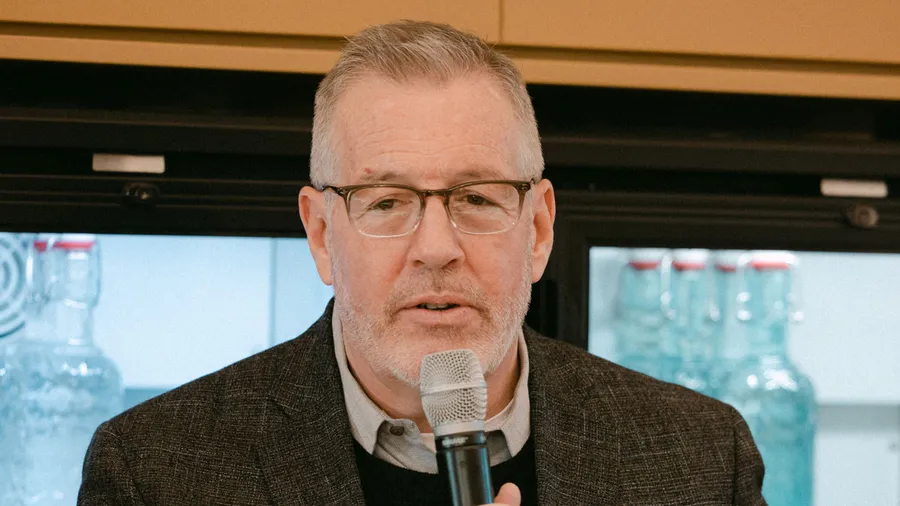
Dan Wilhelm, president of the Harry Frank Guggenheim Foundation, discusses the opportunities that have emerged since the creation of the Global Innovations on Youth Violence, Safety and Justice initiative
The Global Innovations on Youth Violence, Safety and Justice initiative seeks to tackle youth violence and promote youth safety and criminal justice reform. The initiative is supported by three partners: The John D. and Catherine T. MacArthur Foundation, The Harry Frank Guggenheim Foundation, and the David Rockefeller Fund.
In February 2023, Daniel F. Wilhelm, president of The Harry Frank Guggenheim Foundation, spoke with Salzburg Global Seminar about the Foundation’s research agenda, new approaches, whether violence is becoming more prevalent, and what’s emerged from the Global Innovations on Youth Violence, Safety and Justice initiative so far.
This interview has been edited for length and clarity.
Alex: What are the new research agendas the Foundation is developing with respect to youth violence?
Dan: We're very interested in the issue of democracy and how violence threatens democratic institutions, norms, and practices. We are in the process of planning a new project that looks at that topic. Youth violence fits to the extent that we seem to be at a period in world history where young people feel increasingly alienated and disconnected from the systems of government that are supposed to keep them safe and protect them.
Alex: Why is that?
Dan: In many places, it’s because these systems have failed young people. Our continued interest in youth violence, how to understand it better, and how to prevent it will be a key part of how we look at this issue in relation to broader threats [to] democracy.
Alex: What has come out of the Global Innovations on Youth Violence, Safety and Justice initiative since 2021?
Dan: I think the initiative here has provided some very rich opportunities to develop a more coherent understanding of what youth violence means. As the participants in the [program] have noted repeatedly, there is no such thing as a youth justice system. There are, in fact, many different systems and factors that affect young people, their safety, and their propensity toward violence.
The topic is difficult and hard to define. Accordingly, we need to examine it from a variety of perspectives, not just through a US or European lens. Beyond that, we need to further sharpen the definition of youth violence in order to more effectively prevent and ameliorate it.
Alex: Are there any approaches you've discovered since you've been here you think could be very useful for the US?
Dan: The Harry Frank Guggenheim Foundation is primarily a research organization, so what I think I've been most impressed by is the high quality of research that has emerged globally to examine the occurrence and prevention of youth violence.
One of our colleagues from Scotland, for example, has been developing research for nearly two decades that looks at violence reduction from a public health perspective, placing greater emphasis on epidemiological and criminological approaches rather than traditional modes of looking at policing practices.
Other Fellows from the United Kingdom have been engaged in an extensive effort to catalog and evaluate the worldwide evidence base of research related to youth violence – how to measure it, prevent it, and respond to it. Their work complements efforts in the United States that have more broadly rated existing crime and violence research. But their specific focus on youth makes this undertaking especially relevant to our conversations in Salzburg and potentially valuable in developing effective practices and policies aimed particularly at youth violence.
Alex: Do you think funding should be equal across different research programs?
Dan: Well, in an ideal world, there would be plenty of money to support all types of research efforts. But the unfortunate reality is that any funding institution, even very well-resourced governments, has limited resources. All must make decisions about which projects are most reflective of their interests, which can produce the most useful knowledge, and which have the greatest likelihood of success. So, sadly, it’s unrealistic to think that all projects would be funded equally.
Furthermore, not all projects are of equal quality in terms of their rigor, conceptual design, or research methodology. So, money tends to go to those researchers who can meet the highest standards. But, some institutions, like Guggenheim, will encourage researchers with a promising idea who have been denied funding to do some further work on their research designs and reapply later. We try to be helpful and give worthy applicants second chances.
Alex: What are the Foundation’s plans with respect to research on populist threats to democracy?
Dan: We’ve already done some work by looking at the rise of white nationalism and other extremist groups in the United States. A great deal of attention is suddenly being paid to this threat after having been largely underappreciated in recent years. Obviously, the events of January 6th have focused new attention on this in the US.
We will also look at the rise of political violence both in the US and in Western Europe with an eye to understanding more fully the relationship between political violence and the phenomenon of democratic decline that we’re witnessing in Europe and North America.
Alex: Do you think that violence is becoming more prevalent in general?
Dan: If you follow what certain scholars, like Steven Pinker at Harvard, say, there has never been a better time to be alive. He says that the risk of death at the hands of another human being is the lowest it’s ever been in recorded history.
More relevant to the topic of this [program] and Guggenheim’s work generally is our interest in developing – and communicating – a better understanding of contemporary violence. In part, this is necessary because of relentless media narratives which create and amplify the perception that violence is out of control and rising at alarming rates. In the US context, this is particularly portrayed to be the case when it comes to violent crime crimes committed by strangers, youth violence, political violence, and mass shootings. While all these are serious issues that deserve vigorous research and analysis and energetic policy responses, the reality of each of these topics is far different from how they are portrayed in the media and on social media. Facts and context will be essential to restoring some perspective so these problems can be understood and acted on in appropriate and beneficial ways.
For example, if you pay attention to traditional and social media, as most of us do, one would think that democracy itself is at an extinction moment – the recent abortive coup in Germany, the attack on the Capitol in Washington, and other extremist events demonstrate conclusively that political violence is out of control and democracy hangs by a thread. There may well be sufficient reasons to be concerned about the future of democratic governance in the West, but research indicates that, while having increased, incidents of political violence in the United States are still quite rare.
One of the ways that we're trying to be useful is to identify facts about the actual dangerousness of our times and ask what is the appropriate amount of alarm that we should be sounding about, say, political violence. When we have a more nuanced and comprehensive understanding of a particular threat, we will be better positioned to do something about it.
Alex: What kind of future do you want to be a part of?
Dan: I hope, a less violent one. The Harry Frank Guggenheim Foundation exists to try to make a positive difference in the world by developing and applying knowledge to answer really tough questions [such as] "Why do people do harm to other people?" and to ask how we can understand such phenomena better so that we can prevent them.
Dan Wilhelm was a participant in the Salzburg Global program “A Whole Systems Approach to Justice: Creating a Brighter and Safer Future for Today’s Youth,” which is a part of the Global Innovations on Youth Violence, Safety and Justice initiative. The program was hosted in partnership with the MacArthur Foundation, the Harry Frank Guggenheim Foundation, and the David Rockefeller Fund.
