

American Studies academics and practitioners examine the connection between media and democracy with relation to US history and society
The American people’s voice seems to have become synonymous with democracy. But is it really? Salzburg Global Seminar explored the relationship between mediated storytelling, public opinion, and majoritarian will in the opening of its 2021 American Studies Program.
Fellows from 26 different countries convened for the first of three virtual town hall meetings as part of the American Studies Program’s multi-part series on the future of democracy, titled The President, The Press and The People: American History. The quick-fire program was designed to offer participants an opportunity to engage, collaborate, discuss, exchange, expand viewpoints, and guide thinking on what shapes the American narrative and media coverage of the US presidency.
Kicking off the online gathering, Salzburg Global Vice President and Chief Operating Officer Benjamin Glahn said: “We live in a time of real poignant change, a moment of global reconstruction, rebuilding, and renewal as we tackle the fallout of the global pandemic, the persistence of racial inequities, the entrenchment of social and economic inequalities, the rise of political populism, and the potential for very serious long-term climate change-induced devastation of the planet. In that context, international cooperation and innovation are paramount.”
Ahead of the program, Fellows were asked where they consume news stories, whether the president, the press, or the people sets the public agenda and determines public narrative, which of those three has the most powerful public voice, which is most responsible for misinformation, and what news stories people have been tracking most closely since the inauguration of President Joe Biden.
The trends presented by American Studies Program Director Terron Ferguson at the town hall meeting revealed the COVID-19 pandemic, the current political partisanship, race relations, the economy, and international relations as the most commonly followed themes. Each of these themes is awash with history, context, and nuance, particularly around whether or not the media accurately acknowledges the history and what role history plays in driving the public narrative, explained Ferguson. This led to a spontaneous poll on whether the US press presents American history accurately, to which an overwhelming 80% said No.
Providing an insightful counterpoint to this poll result was program contributor and guest, Vann Newkirk, senior editor of The Atlantic and host of the podcast series Floodlines. This podcast serves as a combined multidisciplinary approach to storytelling and an example of how the media can and should blend history with reporting. Through a thought-provoking Q&A session, Newkirk and Fellows explored how and why much of American media and journalism is seemingly inherently unconcerned with history, addressing the lack of concern for providing context or helping audiences understand when events are influenced by or diverge from history.
Simulation
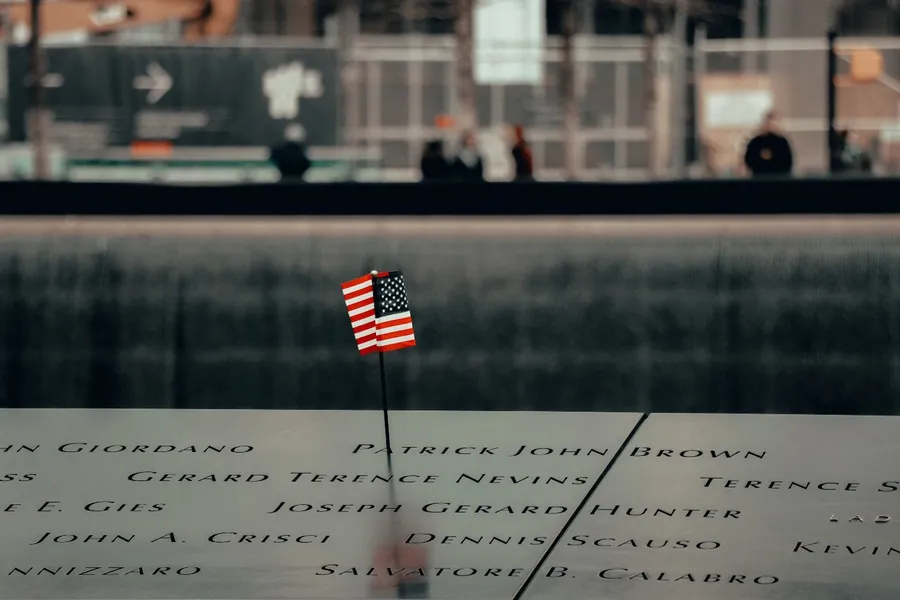
The third and final segment of the program moved on from questioning and conceptualizing these issues and paradigms and attempted to simulate in real-time what some media professionals experience on the ground. Fellows were divided into breakout groups, each representing a specific stakeholder community. Breaking news announcements popped up stating that a copycat 9/11 terrorist attack had just occurred, with some spray-painted messages sighted nearby. Teams were asked to compile a 280-character tweet to recount on the incident.
This exercise was a challenge for many, who admitted discomfort and uncertainty in what their response should be, thereby mirroring how journalists must conduct swift investigations and issue news reports with limited information. While some groups presented their Tweets with facts, others discussed various considerations on leadership, such as how to prevent widespread panic, the implications for certain decisions, and suggested action steps. This illustrated the immense relevance of positionality in the public narrative.
One group, representing an unidentified US-based news organization, reported:
“America under attack? Another possible terrorist attack just occurred in the US. Facts are still coming, but we know that several have died and messages have been spray-painted nearby. We’re sending journalists as we speak and will be sharing more shortly.”
Another example from a fictional group of independent activists in eight countries said: “Do not jump to conclusions. We call all groups to be patient. We recognize that there are two decades of pain. We condemn violence. We empathize with families, manifest solidarity with victims, and offer help by organizing the following community dialogue of facts.”
The group tasked with representing the US administration urged calm and caution but struggled to form an appropriate tweet in the short time given, highlighting the stress faced by politicians in such a situation, especially when an immediate response is now expected – a stark contrast with 2001, pre-social media.
Ferguson concluded the program by encouraging Fellows to continue these conversations using the resources shared, the questions posed, and the people convened ahead of the second town hall meeting on July 20, which will discuss how the media examines American culture.
