

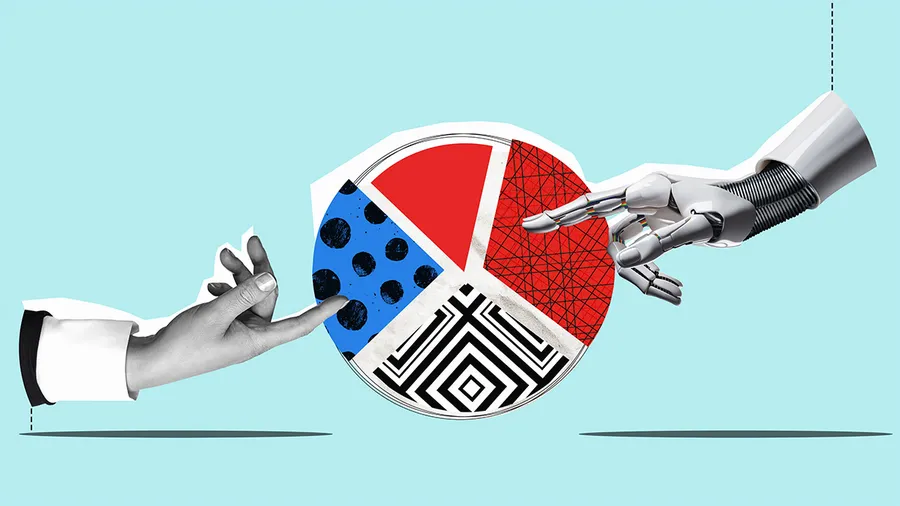
Artists are using artificial intelligence to expand their creative horizons, explore new aesthetic possibilities, and redefine the future of art
Art and technological developments have always gone hand in hand, with every new invention of color pigment, drawing tool, and image capture mechanisms leading to new aesthetics and artistic practices. Early computer-generated art experiments began in the 1960s, with artists such as Vera Molnar, Ernest Edmonds, and Harold Cohen testing the creative potential of the machine and developing programs capable of producing drawings autonomously. Recent advancements in machine learning and neural networks have significantly expanded AI's creative capabilities, with tools like DeepDream, GANs, and Midjourney opening up a range of artistic styles, collaboration, and co-creation opportunities.
The Salzburg Global program on "Creating Futures: Art and AI for Tomorrow's Narratives" brought together artists, filmmakers, and creative professionals from all over the world working with AI in a multitude of capacities. A selection of these creative practices and approaches is detailed below.
Amy Karle, an American artist exploring the implications of technology on humanity, has been working with AI and generative design since 2015—the beginning of the deep learning revolution that gradually brought artistic practices with AI to the forefront of contemporary culture. For Amy, AI is a key partner in the creative process that complements our human skills. She stated, "The synergy between an artist's intuition, creativity, and critical thinking combined with AI's analytical capabilities opens up new realms of possibility, prototyping, and creativity. This results in art that can be richer and more nuanced, and not possible to create in any other way. AI's potential may seem limitless, but it is our human imagination that gives it direction and purpose. By combining AI's capabilities with our critical thinking and creative vision, we can explore new frontiers and redefine the future."
Paraguayan artist Kira Xonorika explores AI's capacity for world-building through the colorful characters inhabiting imaginary worlds, as seen on her Instagram page. The artist commented: "I use AI because it expands my creative potential, but I'm also interested in the cross-pollination processes that occur with the machine. The strength of symbiosis in co-creation. It's different from other tools in the sense that it allows one to visualize a reflection of oneself and also actively create worlds. I'm interested in the potential of worldbuilding with AI."
As a film director and photographer, Kenyan artist Barbara Khaliyesa Minishi began working with AI in 2022 during the post-production of her short film "Inheritance" (2023). Her experience with AI tools has allowed Barbara to delve deeper into her narratives and expand the visual and thematic elements of her films, demonstrating how technology can complement traditional storytelling methods. After using the AI creative suite Runway, Barbara stated, "From then on, I realized the value of AI tools for indie filmmakers. Nonetheless, my view is both open and yet discerning. I still absolutely value and enjoy the 'analog' type of art such as film photography and will continue doing so. My approach to AI is... how can AI tools be an ally in helping me articulate ideas and solutions that can allow me additional space for play and experimentation as a film director."
Meanwhile, Eddie Wong, a Malaysian artist and filmmaker, commented: "In essence, all AI art is about AI—it reflects back on the technology itself, its potentials, and its limitations." His work includes the film "Portrait of the Jungle People" (2022), which uses text-to-image-based AI tools to generate images for the film, exploring the story of the disappearance of his grandfather and the memories of his closest relatives. Eddie’s perspective underlines the critical aspects of the technology, suggesting that AI not only serves as a creative tool but also as a medium for questioning the nature of technology and its impact on human life and memory. Through his film, Eddie engages audiences in a dialogue about the intersection of technology and humanity, using AI-generated images to evoke emotions and thoughts that resonate deeply with viewers.
Finally, Egypt-based digital and performance artist Mona Gamil, author of the short film "AI Confessions" (2023) about the impact of AI on film and video, noted that "AI is a matter of fact—as an idea, as your new job competition, as a specter or bogeyman. If you're into tech art, it's a natural progression, and equally natural to feel anxious about it." Mona acknowledges the dual nature of AI, balancing excitement with caution. By exploring the tensions and anxieties surrounding AI, Mona’s art serves as a critical examination of the technological landscape, encouraging viewers to reflect on the broader societal implications of these advancements.
The integration of AI into the creative process at the brainstorming, creation, and post-production stages is reshaping the nature of artistic expression. Artists like Kira Xonorika, Barbara Khaliyesa Minishi, Eddie Wong, Amy Karle, and Mona Gamil are at the forefront of this transformation, each working with AI as a collaborator, partner, or tool to probe its creative potential. Their practices demonstrate that while AI offers unprecedented opportunities for exploration, it also raises important questions about authorship, value, and the future of artistic labor.
As we move forward, the art community needs to engage in critical discourse around AI and creativity, ensuring that this powerful technology is harnessed responsibly. By embracing thoughtful, responsible, and inclusive approaches, artists can use AI to expand their creative horizons, explore new aesthetic possibilities, and redefine the future of art. This ongoing dialogue and experimentation will be crucial in shaping an art world where human ingenuity and AI coexist, driving forward the evolution of artistic practices in ways that honor both tradition and innovation. Through this reflective engagement with AI, artists can continue to create impactful work that pushes the boundaries of art as we know it.
The Salzburg Global Fellows featured in this article convened alongside around 50 other artists, technologists, futurists, curators, and activists for Salzburg Global's annual Culture, Arts and Society program in May 2024. "Creating Futures: Art and AI for Tomorrow's Narratives" explored the emergent possibilities at the intersection of creative expression, technology, and artificial intelligence.
This article featured in our Shorthand story, which includes more coverage from the program "Creating Futures: Art and AI for Tomorrow's Narratives".
