-
Topics
TopicsOur programs create spaces where open-minded leaders can gather for breakthrough conversations on pressing global issues – each aligned to one of the following pillars:Get Involved
-
Events
EventsExplore the variety of events Salzburg Global hosts within Austria and in the rest of the world. Learn more about our programs and what else happens at Schloss Leopoldskron.
- Insights
-
Fellowship
FellowshipSince 1947, more than 40,000 people from over 170 countries have participated in Salzburg Global's sessions. Collectively, these alumni are known as Salzburg Global Fellows.
-
About Us
About UsSalzburg Global is an independent, non-profit organization committed to creating spaces that overcome barriers and open up a world of better possibilities.Our Approach
-
Support Us
Support UsYour generosity helps us gather open-minded leaders for breakthrough conversations, while creating space for dialogue that overcomes barriers and opens up a world of better possibilities.
- Donate

- Published date
- Written by
Share
Culture
Opinion
After Graduation: Strengthening Talent Retention in Europe
Published date
Written by
Share

Photo Credit: Shutterstock.com/2655339353
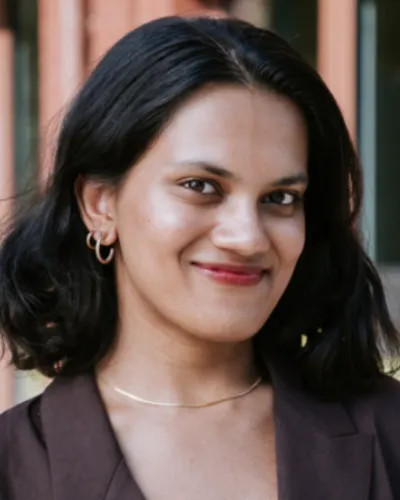
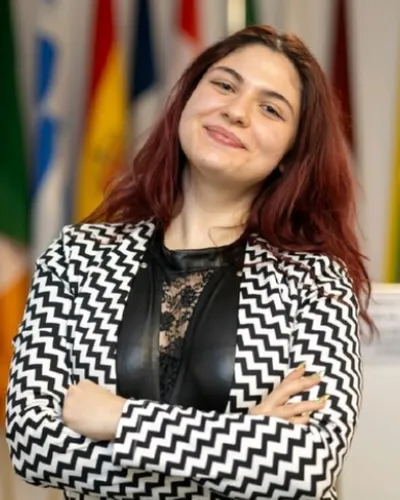
This thought piece was written by Salzburg Global Fellows Jessica Chukwu, Marina-Roxana Corneliu, Benson Innocent Edobor, Tanishka Murthy, and M.Giulia Vigiano. They attended the Public Policy New Voices Europe session on "Rebuilding Trust and Cohesion in European Public Policy".
The views expressed in this article are those of these Fellows individually and should not be taken to represent those of Salzburg Global or any organizations to which they are affiliated.
The Issue
For thousands of non-EU nationals who graduate in Europe, the moment their degree ends, uncertainty begins. A student may spend years building a life, learning a language, contributing to local communities, and excelling academically, only to face tight timelines and restrictive work rules once their diploma is in hand. Post-study extensions in several EU countries provide only short periods to secure employment, and many still limit graduates to part-time work. These conditions make it challenging to cover rent, stabilize income, or transition into skilled roles.
This is not just an administrative gap - it is a barrier to mobility, inclusion, and talent retention. Europe invests in these students during their studies, yet the current post-study rules limit their ability to stay and contribute.
Who Can Flip the Light Switch?
The power to reshape post-study residency frameworks lies with national governments and EU-level institutions responsible for migration and labor mobility. Ministries determine how long graduates may remain in the country and under what conditions they may work. Yet universities, employer associations, and private-sector coalitions also hold significant influence because they directly benefit from retaining international graduates who contribute to innovation, research, and growing labor needs.
Research has shown that restrictive post-study policies cause Europe to lose skilled talent. International economic bodies similarly highlight that closer coordination between employers and policymakers is essential to link migration policy to fundamental labor market gaps. A single actor cannot flip the light switch - this power is shared and shaped by policymakers, institutions, and civic voices advocating for fairness and opportunity.
The Roadmap
Reform begins with understanding. The EGO Play approach, which focuses on Empathy, Governance, and Opportunity, uses participatory storytelling and simulation to bring stakeholders into direct contact with the lived realities of non-EU graduates. Instead of debating policy in abstraction, participants step into roles, navigate post-study challenges, and experience firsthand how current rules constrain opportunity. This model draws inspiration from interactive tools that make migration policy tangible. It also aligns with simulation projects that demonstrate how institutional decisions shape mobility experiences. Piloting the EGO Play model in universities and city integration centers would allow policymakers, employers, and communities to co-create clearer pathways for graduates. When complex rules become human stories, solutions become more grounded and more inclusive.
The End Goal
The desired outcome is straightforward. Europe should see non-EU graduates not as temporary visitors, but as long-term contributors to knowledge, innovation, and community life. This means extending post-study residency periods to allow for a meaningful job search and lifting restrictive part-time work limits that prevent graduates from stabilizing financially. These steps would help align Europe’s talent needs with fairer, more humane migration policies. By integrating tools such as EGO Play and evidence-based simulations, policymakers can embed empathy into decision making, create smoother transitions from study to work, and strengthen the continent’s capacity to retain the global talent it seeks to attract. The real aim is to shift the conversation from permission to participation, and from temporary stay to belonging.
What It Means for Trust and Cohesion in European Democracy
At its core, this debate is about how democracy treats the people living within it. When graduates who study, work, and contribute to Europe still face systemic barriers to staying, it weakens faith in democratic fairness. Trust grows when people see themselves reflected in a system that promises inclusion and equality. As Hannah Arendt noted, democracy begins with the ability to see and be seen as equals.
If Europe wants to preserve social cohesion, it must design policies that recognize the human faces behind migration statistics. Extending post-study rights and easing work restrictions would not only strengthen Europe’s competitiveness but also affirm a more profound democratic truth. Democracy endures when every person feels seen, heard, and valued as an active participant in Europe’s shared future.