

Ukrainian civil society comes up with an action plan to address the country’s ongoing crisis
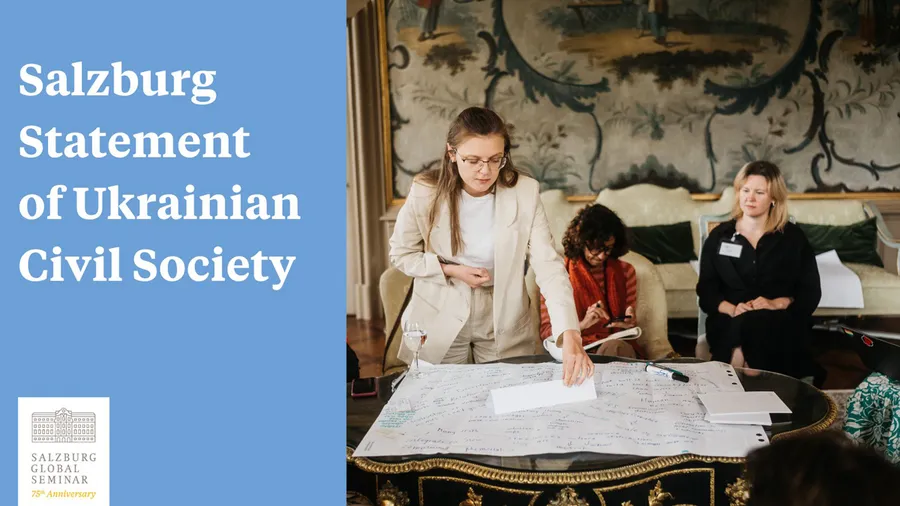
From July 11 to 15, Salzburg Global Seminar, in partnership with the United States Institute of Peace, 21st Century Trust, the German Marshall Fund of the United States and the Institute of International Education, brought together 48 Ukrainian civil society leaders, policymakers and members of the private sector to discuss Ukrainian post-war reconstruction.
Following this session, Fellows have drafted a Salzburg Statement, in which they set out the priorities and recommendations from Ukrainian civil society identified at this meeting. The document is available both in English and Ukrainian and brings key issues to the attention of policymakers and people of influence, acting as an advocacy tool for groups lobbying for change.
The statement outlines the crucial role of civil society in winning the war and rethinking Ukrainian reconstruction, lists priorities and recommendations, and calls for quick action to address the immediate needs of the Ukrainian people.
Download the Salzburg Statement as a PDF
Read the full Salzburg Statement below:
To access the Ukrainian language version of the Salzburg Statement, click here.
To download the Ukrainian language version of the Salzburg Statement as a PDF, click here.
Read an excerpt of the Salzburg Statement below:
SALZBURG STATEMENT OF UKRAINIAN CIVIL SOCIETY
Fellows of Salzburg Global Seminar, predominantly coming from Ukrainian civil society (including civil society leaders displaced inside and outside Ukraine), gathered at Schloss Leopoldskron in Salzburg, Austria, on 11-15 July 2022.
- Acknowledging that Ukrainian civil society is one of the key driving forces in Ukraine to win the war;
- Recognizing that Ukrainian civil society will play a vital role in rebuilding the country immediately and continuing after the end of the current war of Russia against Ukraine;
- Stressing that this meeting was for (not about) Ukrainian civil society, and sought to connect and support this work;
- Determining to ensure that women will be essential to, and displaced persons remain central in, planning and decision-making, and should be heard by international and Ukrainian political and development sector leadership; and
- Desiring a deeper intra-Ukrainian social cohesion, resilience, and cooperation.
