

This year’s program enables Korean and global leaders to explore the theme of “Connecting Technologies”
Salzburg Global and the Korea Foundation for Advanced Studies (KFAS) are proud to announce the second cohort of the KFAS-Salzburg Global Leadership Initiative.
This program, now in its second year, aims to equip Korean and global leaders with the necessary skills to address the challenges posed by our rapidly changing world. Through a series of virtual sessions and an in-person gathering in Salzburg, the KFAS-Salzburg Global Leadership Initiative is a global knowledge platform for mutual learning and exchange. It enables leaders at all levels to share the current global and local issues they are facing, as well as develop and disseminate innovative action plans.
With the theme "Uncertain Futures and Connections Reimagined: Connecting Technologies", 41 global leaders will convene from December 4 to 8, 2024 at Schloss Leopoldskron in Salzburg, Austria. Through their participation, these leaders will be given opportunities to develop the skills needed to address the diverse challenges that we face today.
In an era of rapid technological advancements, this year’s program invites Fellows to explore how technology forms a complex web influencing economic growth, governance, societal equity, security, and environmental sustainability. The integration of AI and other technologies across all spheres of life presents unparalleled opportunities for progress.
However, it also raises critical questions about the distribution of these advancements and their impacts on social equity. Policymakers and leaders are now faced with the dual challenge of catalyzing innovation while ensuring that the fruits of technological progress contribute to a fair and just society. This calls for visionary leadership and inclusive policies that bridge the gap between technological potential and equitable access and benefits for all.
The key topics of discussion for this year’s program revolve around five sub-themes: Technology, Growth, and Inequality: The Case of AI; Big Tech and Governance: Market Power and Regulation; Technology Ecosystem: Talent and Innovation; Economic Security: Technology Competition and Weaponization of Tech; and Technology and Sustainable Development.
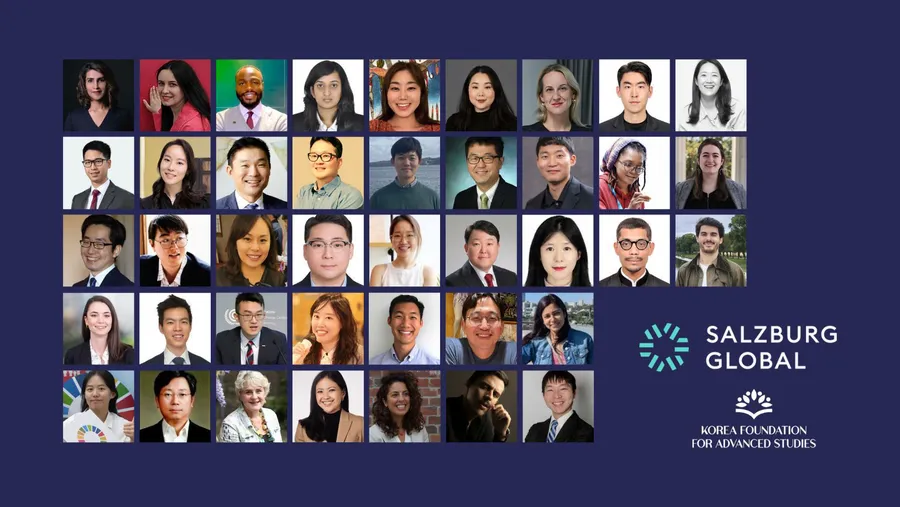
The 2024 cohort is comprised of the following notable Fellows from across the world:
- Jasvin Bhasin, Founder and CEO, bridge.the.NEXT(), Germany
- Carolina Chambel, International Cooperation Officer, Techo International, Portugal
- Aditi Chaturvedi, Head of Government Affairs and Public Policy for Platforms and Devices, Google India, India
- Jake Effoduh, Assistant Professor, Lincoln Alexander School of Law, Canada
- Deeksha Goel, Deputy Director, India Foundation, India
- Pedro Antonio Gonzalez, Co-Founder, Kaanbal.org, Mexico
- Ayake Hatano, PhD Candidate, University of Oxford, Japan
- Eunbee Jang, Responsible AI Architect, Telus Corporation, Canada
- Ieva Keskine, Gender Equality, Disability Inclusion and Intersectionality Consultant, UN Women, Lithuania
- Minseung Kim, Program Manager, Chey Institute for Advanced Studies, Republic of Korea
- Gowun Kim, Advisor, Embassy of Denmark, Republic of Korea
- Neville Lai, International Affairs Strategist, Independent, Hong Kong SAR
- Jennifer Lee, Principal, The Asia Group, United States
- Bittna Lee, National Consultant on Green Recovery and Transition, UNDP Seoul Policy Centre, Republic of Korea
- Sanghyun Lee, Director, Google, Singapore
- Jung Woo Lee, Technical Director, Immerse, Republic of Korea
- Kun Lee, PhD Research Associate, Luxembourg Institute of Socio-Economic Research and Luxembourg Income Study Cross-National Data Center, Republic of Korea
- Daeyeol Lee, Bloomberg Distinguished Professor, Johns Hopkins University, United States
- Jongwon Lim, Graduate Research Assistant, UIUC, Republic of Korea
- Clarity Mapengo, Lecturer, Teesside University, United Kingdom
- Marisa McPherson, Program Officer, National Committee on North Korea, United States
- Chi-Min Oh, DPhil Candidate, University of Oxford, Republic of Korea
- Sungyeon Park, PhD Student, Hungarian University of Agriculture and Life Sciences, Hungary
- Sun Young Park, Emerging Leaders Fellowship Coordinator, Hawaii Asia Pacific Institute, United States
- You Won Park, Program Manager, Chey Institute for Advanced Studies, Republic of Korea
- MinChi Park, Head of Ecosystem, HyperPlay, Republic of Korea
- Steve Park, Senior Director and Head of Asia-Pacific Public Policy, Roblox, Republic of Korea
- Hyeyeon Park, Assistant Manager, Chey Institute for Advanced Studies, Republic of Korea
- Shaurya Patel, Policy Officer, Delegation of the European Union to India, India
- Jehan Salim, Project Manager, United Nations Development Programme, Canada
- Yuki Satake, Sales Lead, SourceNext Corporation, Japan
- Clare Shine, Non-Executive Director, The Crown Estate, United Kingdom
- Felipe Suárez Giri, Marie Sklodowska-Curie Doctoral Fellow, Polytechnic University of Madrid, Uruguay
- Alexia Tassios, Senior Public Policy Analyst, Deloitte, Australia
- Kevin Wei, Technology and Security Policy Fellow, Harvard Law School, United States
- Hong Xu, PhD Researcher, Swiss Federal Institute of Technology – ETH Zurich, China
- Pauline Yeung, Author, Hong Kong University Business School, China, Hong Kong SAR
- Eugune Yi, Chief Executive Officer (CEO), Loci, United States
- Chang D. Yoo, Professor, Korea Advanced Institute of Science and Technology (KAIST), Republic of Korea
- Sunghee Yun, Co-Founder / Chief Technology Officer (CTO) - AI Technology and Product Strategy, Erudio Bio, Inc., United States
- Helen Zhang, Deputy Chief of Staff, Office of Eric Schmidt, United States of America
The KFAS-Salzburg Global Leadership Initiative kicked off with three virtual on-boarding workshops in October and November. It will continue after the December in-person convening through online network meetings to ensure further development and sustainability of the ideas developed in Salzburg.
The cohort plans to publish a digital publication that will be published in early 2025. This will highlight the work of Fellows through thought pieces from each sub-theme working group. It will be produced in a similar format to last year’s digital publication on “Uncertain Futures and Connections Reimagined: Connecting Generations” from the inaugural cohort.
Find out more about the KFAS-Salzburg Global Leadership Initiative. Keep up to date with further developments at Salzburg Global by registering for our newsletter.
