Report from the Public Sector Strategy Round Table addresses constraints and opportunities for the sector's future
Rapid global transformations place governments under intense pressure to perform to ever-higher expectations at a time of shrinking public budgets. Populations are aging, countries are urbanizing, and technology is transforming the future of work. Many citizens have lost trust in the ability of public officials to cope – let alone to excel – under these changing dynamics and constant media scrutiny.
How can governments transform their culture and operations to address such challenges and disruptions? What radical changes lie ahead for the design, delivery and funding of core public services? What is the role of government in helping to change mindsets and prepare citizens for the “new normal”?
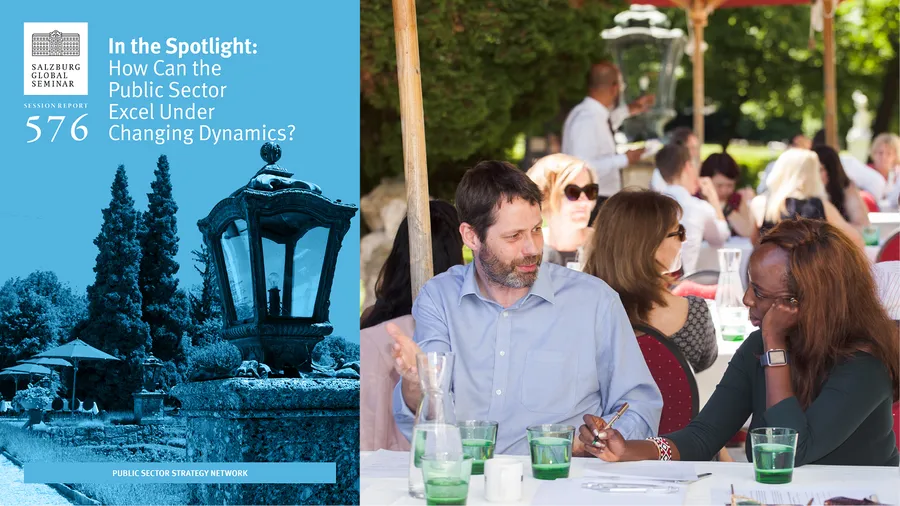
It was these questions and more that a high-level group of politicians, civil servants, and private sector experts came together in Salzburg to answer at the sixth meeting of the Public Sector Strategy Round Table. The report from this session - In the Spotlight: How Can the Public Sector Excel Under Changing Dynamics? - is now available to read, download and share.
The report addresses three key concerns raised by the participants:
Urgency
The dramatic pace of change and the growing number of disruptive influences are creating a situation wherein governments need to be prepared for challenges they do not yet understand or even know will exist. Three particular areas of unknowns with which governments are grappling are future-proofing societies for changes to jobs and skills; harnessing advances in technology to deliver public services more effectively; and increasing tax revenues from new forms of economic activity.
Trust
Levels of trust in government institutions and elected officials have dropped to unprecedented lows, restricting the public sector’s ability to innovate and take risks with new approaches. A shrinking tax base, combined with rising expectations from citizens and the need to balance demands for greater transparency with effective communication techniques are putting on a strain on states’ ability to uphold their end of the social contract.
Complexity
Finally, the public sector must employ a complex array of responses and strategies to cope with this environment, whether through adapting internal structures, undertaking large-scale efficiency reviews, establishing new external partnerships or experimenting with new policy intervention approaches.
Interviews
The report also includes several interview features, offering participants' insights on private sector innovation and risk-taking in the public sector, e-governance in Estonia, peace-building priorities in Colombia, and the need to "humanize" governments. All these interviews and more can also all be read on the session page.
Looking ahead
The intensive two-day session concluded with an agreement to transform the Round Table into a more formalized Public Sector Strategy Network. The Abu Dhabi Crown Prince Court, Salzburg Global Seminar, apolitical, and other partners are now taking the next steps to develop the terms of reference for the Network. You can read more about the plans for this new Network in the report.
Inquiries about how to become a member of this new Public Sector Strategy Network should be directed to Salzburg Global Program Director, Charles E. Ehrlich: cehrlich[at]SalzburgGlobal.org
Order a print copy: press[at]SalzburgGlobal.org
Salzburg Global Seminar convened the sixth meeting of the Public Sector Strategy Round Table – “In the Spotlight: How Can the Public Sector Excel Under Changing Dynamics?” - in partnership with the Abu Dhabi Crown Prince Court and apolitical, and with the support of Chatham House. More information on the session can be found here.