-
Topics
TopicsOur programs create spaces where open-minded leaders can gather for breakthrough conversations on pressing global issues – each aligned to one of the following pillars:Get Involved
-
Events
EventsExplore the variety of events Salzburg Global hosts within Austria and in the rest of the world. Learn more about our programs and what else happens at Schloss Leopoldskron.
- Insights
-
Fellowship
FellowshipSince 1947, more than 40,000 people from over 170 countries have participated in Salzburg Global's sessions. Collectively, these alumni are known as Salzburg Global Fellows.
-
About Us
About UsSalzburg Global is an independent, non-profit organization committed to creating spaces that overcome barriers and open up a world of better possibilities.Our Approach
-
Support Us
Support UsYour generosity helps us gather open-minded leaders for breakthrough conversations, while creating space for dialogue that overcomes barriers and opens up a world of better possibilities.
- Donate

- Published date
- Written by
Share
General
Update
Conversation Changers: The Radical Science of Flexible Thinking
Published date
Written by
Share
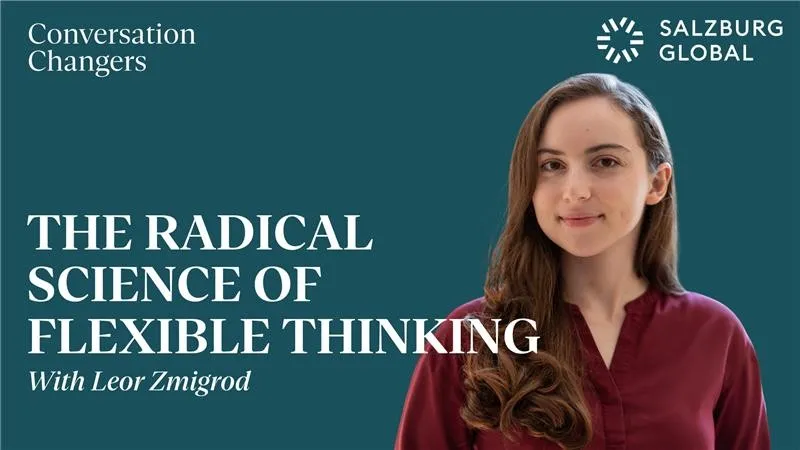
Conversation Changers, Salzburg Global's podcast, brings together thought leaders, artists, policymakers, and change-makers from around the globe to reframe dialogue, explore new ideas, and imagine better futures.
"The conversation I'd like to change is the one that constantly celebrates having rigid convictions... having a rigid ideology is not a prerequisite for being moral in the world." — Leor Zmigrod
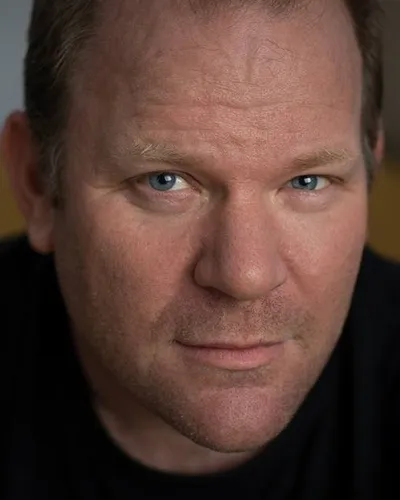
In the season two premiere of Conversation Changers, host Eric Olander explores the profound connection between our biological makeup and our political beliefs. While we often blame social media algorithms for the "echo chambers" of modern life, research suggests that the root of extremism might actually lie within the neural pathways of the human brain.
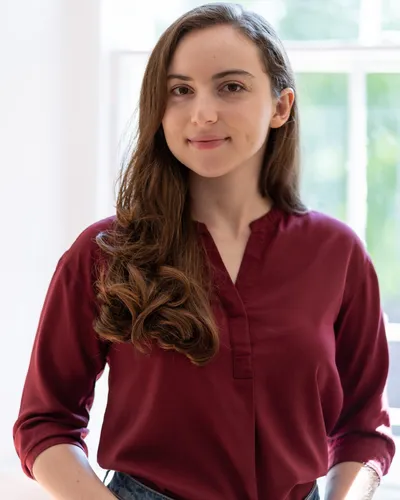
Eric is joined by Leor Zmigrod, a world-renowned political neuroscientist, to discuss her groundbreaking work on cognitive rigidity. Together, they examine how our mental capacity to adapt to change and uncertainty - or our struggle to do so - predicts our susceptibility to dogmatic and extreme ideologies.
Highlights From This Episode:
- The Spectrum of Rigidity: Everyone sits on a spectrum from highly flexible to highly rigid thinkers, a trait that can be measured through simple neuropsychological games rather than self-reporting.
- Childhood Origins: Levels of cognitive flexibility are visible as early as age nine or ten, influenced by both inborn dispositions and the parental environment.
- The Routine Trap: Why repeating the same habits and routines every day can actually hinder your brain's capacity to think "outside the box" and adapt to new information.
- Identity and Dehumanisation: How fusing personal identity with rigid politics can lead to the dehumanisation of others and, ultimately, oneself.
- Nurturing Resilience: Practical advice on infusing life with creativity and "bending the rules" to build intellectual resilience against extremist narratives.
Continue the Conversation
Click here to subscribe to Conversation Changers on your favorite podcast platform and join the conversation on social media using #ConversationChangers and tag @SalzburgGlobal.
Follow Leor Zmigrod on LinkedIn and explore her book, The Ideological Brain.