

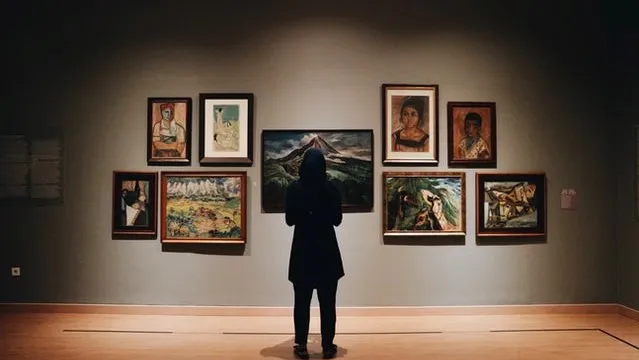
Fellows from the Education Policymakers Network discuss how to strengthen the connection between museums, education, and cultural heritage
Cultural heritage is both a simple and complex thing to define. It is both tangible and abstract, an indelible part of community and national identity, belonging, and cohesion. As education policymakers heard in Salzburg, “Cultural heritage is an expression of a living community, passed down from generation to generation. By understanding what heritage is, your community will value it.”
How does cultural heritage form part of childhood education? In a presentation focused on accessible learning and cultural heritage, participants of the Education Policymakers Network were walked through the work of museums in Barbados. There are over 55,000 art and history museums worldwide, with institutions such as the Louvre or the Metropolitan Museum of Art often held as the standard of what a museum should be and its positioning in society. But what if there could be a stronger connection between museum spaces, education, and cultural heritage?
Museums have a social responsibility to their communities to be educational resources. It’s a belief reflected in the work of Barbados’ Museum and Historical Society, and the country’s Ministry of Education, Technology and Vocational Training. A collaboration between the two organizations will improve the use of museums in supporting and reviewing the school curriculum.
The Historical Society has created programs for students, from special guided tours and theater internships to interactive games where children can learn about Barbadian history. Extending education beyond classroom walls gives students a dynamic understanding of their history and identity: “You learn by experiencing, by doing. Learning is active mental work and not passive reception.”
Cultural heritage is deeply connected to a community’s relationship with itself and others. It’s inseparable from Social and Emotional Learning: each needs the other for the development and growth of students. As conversations about historical legacy and contested pasts continue across cultural and geographic borders, incorporating cultural heritage into an educational curriculum requires the tools and insights that social and emotional learning skills offer.
Some participants shared experiences of how a lack of these skills led to tension and conflict during classroom discussions on sensitive historical topics. Others highlighted how different countries have fared in including cultural heritage in the school system.
Ultimately, teaching children about their community’s customs, cultural norms, and history will empower them with a stronger sense of self, a stronger connection to their surrounding environment, and a better ability to connect and share with others. As participation in the session’s discussion showed, it is through spaces such as the Education Policymakers Network that people in the education sector can learn from each other and create new ways of rethinking education.
This article featured in Issue 2 of the Breadth of Skills: Education Transformation program newsletter. Download and read the full issue.
