

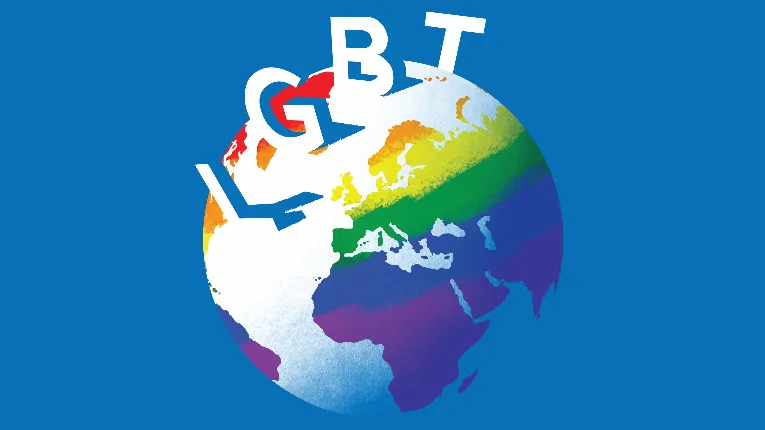
Sign up and endorse the Salzburg Statement of the Global LGBT Forum
Humankind’s strength is its diversity. Free expression of sexuality and gender increasingly defines the societies in which we want to live in the 21st century. But progress is uneven. In 2011, the first UN Resolution on human rights, sexual orientation and gender identity was supported by over 40 countries. Yet in many others, governments still legitimize and sponsor violence against LGBT* citizens through legal discrimination, condoned police violence and hate speech.
At its session ‘LGBT and Human Rights: New Challenges, Next Steps' (June 2–7, 2013), Salzburg Global Seminar brought together in June a diverse group of more than 60 LGBT and human rights activists, artists, lawyers, donors and academics from over 30 countries on five continents to discuss the new challenges facing LGBT people and communities all over the world –and work out what the next steps can be to address these issues.
The Salzburg Global Fellows tackled the topic from a multitude of angles, including the function of international institutions and the rule of law, the impact of both globalization and domestic party politics, the need for funding and where to get such money from, the threat of violence and how to tackle it, the growth and security of social media and online networks, and the role of religion, as well as exhibiting and examining the importance of culture and the media.
The result of these discussions has been compiled into a ‘Salzburg Statement of the Global LGBT Forum: Advancing human rights for LGBT people and communities’, proposing principles and recommendations to the following questions for all those working in the field of LGBT and Human Rights:
•Who should we work with?
•What do we need to do and where?
•How can international law help?
•How do we fund our work?
•How should we network and communicate?
•How can we use art and the media as tools for change?
•How can we address the urgency of transgender rights?
As written in the Statement, the recommendations are not exhaustive or prescriptive; instead the participants hope that the Statement will serve to “deepen future conversations and help us to reach out and build broader alliances across law, politics, activism and culture.”
The Statement will be accompanied by a full report to be published later in the summer.
Speaking at the seminar, session chair, Klaus Mueller, museums consultant, film-maker and historian, and whose academic work includes in-depth study of the persecution of homosexuals under the Nazi regime, said: “I strongly believe now is the time to create a Global LGBT Forum. A space to come together and reflect on the new challenges we are facing and consider the next steps needed to secure the safety, free expression and equality of lesbian, gay, bisexual and transgender people and communities.
“By bringing together leading voices from around the world and the diverse spheres of law, politics and culture, we hope to start a truly global, multidisciplinary conversation. Our goal is to build new alliances, learn from each other and strengthen fundamental human rights for all regardless of sexual orientation and gender identity,” Mueller added.
You can sign up and endorse the Salzburg Statement of the Global LGBT Forum: Advancing human rights for LGBT people and communities via change.org
