

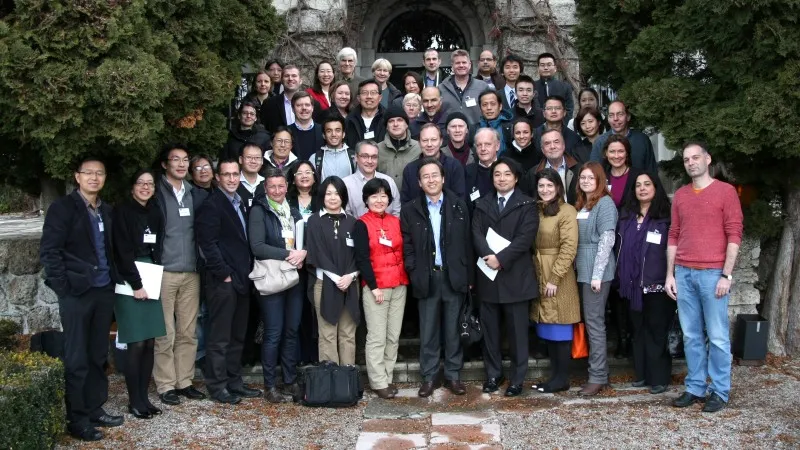
Experts from across the world come to Salzburg to consider the future of China
That China is on the rise is indisputable. In the past 30 years, China’s GDP has rocketed from $200bn to $7tn, making it one of the world’s largest economies, second only to the long-assumed only remaining global superpower, the USA. Its military spending has also increased, again placing it second behind the USA in the global rankings of total spend on its army, air force and navy.
The world’s most populous country is predicted by some to be world’s biggest economy by 2025, and whilst its spending on military lags far behind the USA, it is increasingly flexing its muscles in its back yard of the Pacific, most notably in the South China Sea, an area as replete with competing territorial and jurisdictional claims as it is with expected oil and gas reserves.
The question is no longer if or when will China rise, but what sort of power will China be once it does? It is this question that over 50 China experts from five continents have gathered at Schloss Leopoldskron, home to the Salzburg Global Seminar, Salzburg, Austria to answer. Led by SGS senior program advisor and former director of communications to former UN Secretary-General Kofi Annan, Edward Mortimer, and China expert and broadcaster, Isabel Hilton, the 53 Fellows from government, NGOs, academia, business and media will consider numerous aspects of China’s rise – from its geopolitical relations in the region and beyond, as well as the trade, economic and environmental implications – in order to put together policy recommendations for Western countries and developing economies dealing with China, and for China itself.
Whilst China’s rise has been watched with great earnest for many years, the People’s Republic finds itself at an important inflection point in 2012, with the announcement of the new Politburo Standing Committee in November. Although it was only the second peaceful transition of power since 1949's Communist revolution, the change in leadership held few surprises for China-watchers with Xi Jinping assuming the top position of party leader as long expected.
#But how will this change in leadership affect China’s exertion of power on the world stage? How will it affect its relationship with the US and Europe, its regional neighbours, and the other developing economies it is increasingly playing a key investment role in, especially in Africa? What will be the implications on global security; its regional integration; its thirst for energy and natural resources; and its growing societal, environmental and economic development challenges? And what role will the growing presence of social media in the country have to play in China’s rise?
The Salzburg Global Fellows have four days, seven plenary panel-led discussions, and 12 hours of intensive group work sessions to propose their answers.
